Clear to Dark
Aging
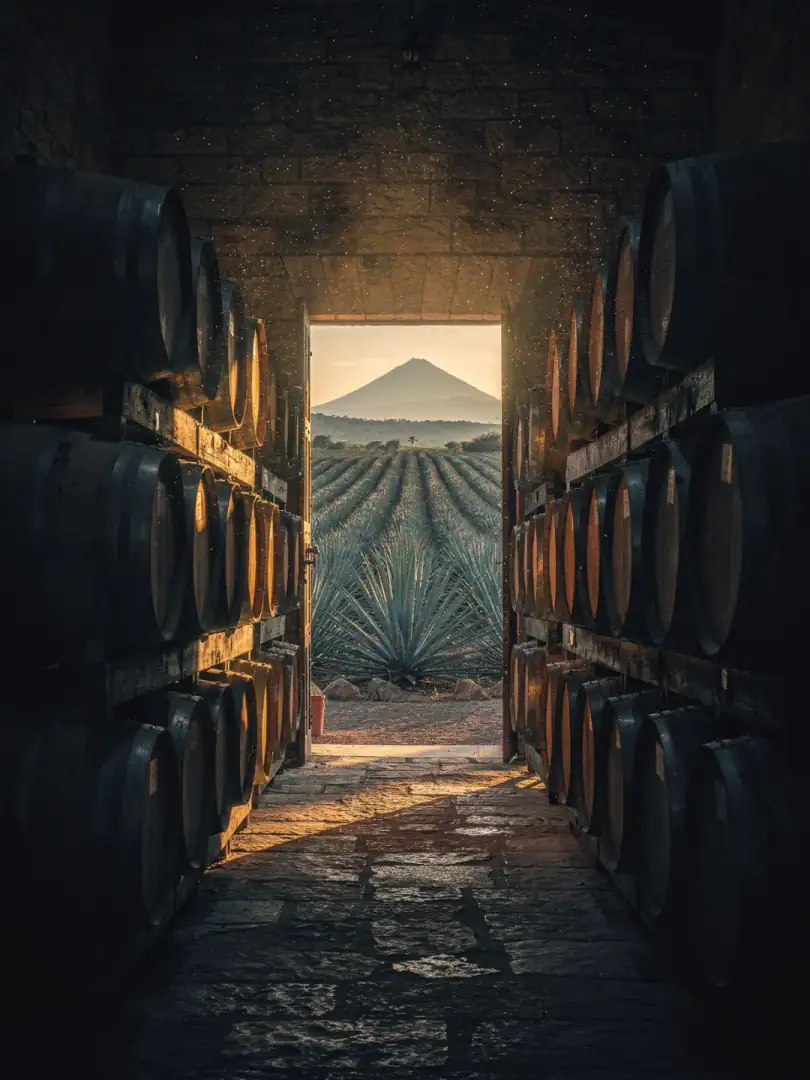
At the end of the still, what emerges is a clear, high-proof Tequila. What happens to it afterward determines its name on the label. It's called Blanco if bottled right away, Reposado after at least two months in an oak barrel. It's called Añejo after at least one year, Extra Añejo after at least three. A Joven is usually just a blend of Blanco with one of the aged types.
In the valley, you'll find the full spectrum of aging levels. José Cuervo and Sauza offer both young Blancos and multi-year Extra Añejos. Some age in barrels that previously held Bourbon or Sherry. Cristalino is a filtered, once-again-clear Añejo or Extra Añejo. It isn't a distinct legal category of its own, but simply a marketing name for an additional charcoal filtration step.
Fortaleza, by contrast, focuses most of its bottlings primarily on the Blanco, undiluted by barrel aromas. It's meant to show what agave, soil, and craftsmanship can achieve on their own. Aging here is more of an addition than a goal. That's exactly what sets it apart from its larger neighbors.
The label must state whether the product is "100% Agave" or simply "Tequila." Only in the first case does all the sugar come from Blue Agave. In the second, up to 49 percent may come from other sources such as cane sugar. Additives like caramel or oak extract are permitted in Reposado and Añejo, and don't need to be disclosed there. For Blanco, however, the rules are considered stricter, though the details remain debated among connoisseurs.