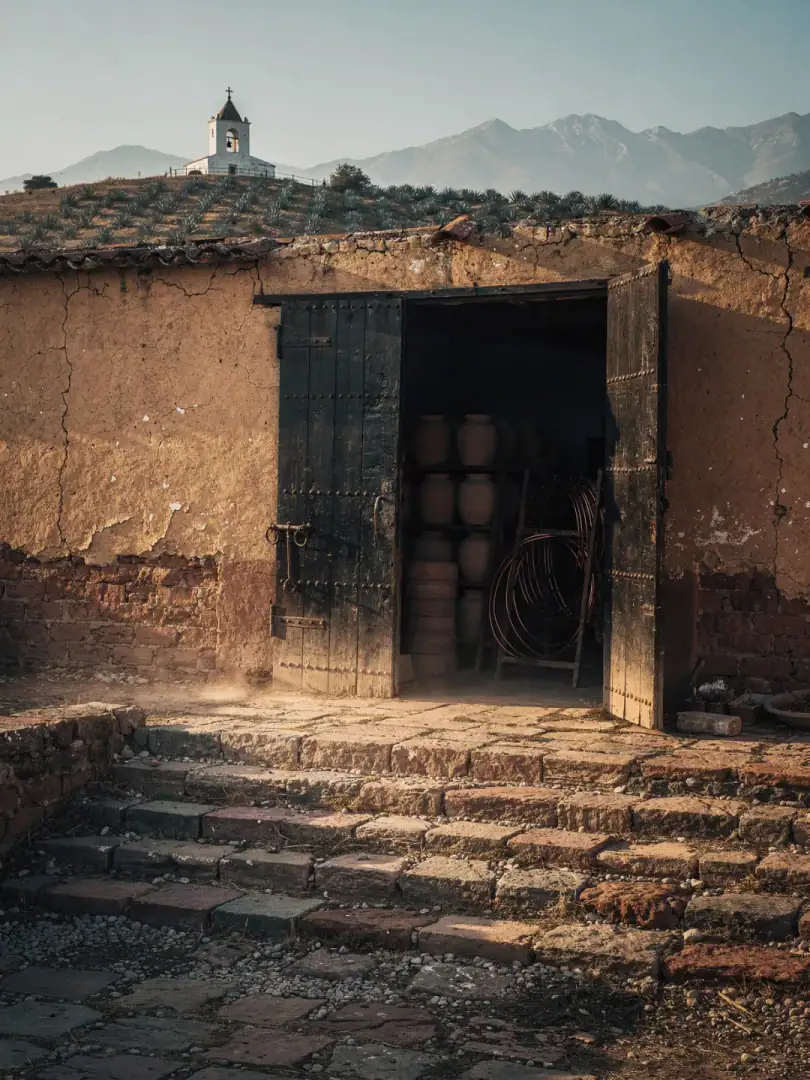
Border and Highland
Region & History
In 1718, the residents of Momax, Tlaltenango, and El Teúl were already paying a tax on their "vino de mezcal." The Spanish Crown periodically restricted distilling throughout the Viceroyalty of New Spain to protect wine imports from Spain. People paid anyway, openly or in secret. The distilleries in the south lay close to the border of what is now Jalisco.
When the Mexican government established the Denominación de Origen Mezcal in 1994, Zacatecas was among the very first states included, alongside Oaxaca, Guerrero, Durango, and San Luis Potosí. The protection has covered the entire state ever since. In practice, however, distilling is concentrated in a handful of municipalities: Teúl de González Ortega, Pinos, Juchipila, Jalpa, and Trinidad García de la Cadena.
These municipalities sit in two completely different landscapes. In the south, around Teúl de González Ortega, Huitzila, and Tlaltenango, Zacatecas nearly merges into Jalisco. The same Blue Agave grows there that becomes Tequila just a few kilometers away. In the east, on the high plains of Pinos, the rugged Agave salmiana has shaped the land for centuries. According to local records, mezcal was already being distilled there in 1621, with as many as thirty haciendas in 1828 alone.
This is exactly what makes Zacatecas the clearest example of a rule that surprises many people. The same plant does not yield the same name. Tequila may only come from 181 municipalities in Jalisco, Guanajuato, Michoacán, Nayarit, and Tamaulipas. Zacatecas is not among them. That holds true even for the distilleries around Teúl, which have processed the same Blue Agave for centuries as their neighbors in Amatitán or Tequila itself. Whatever comes out of the still here is called Mezcal, no matter how much it tastes like Tequila.
The history can be read in individual estates. The Ex-Hacienda La Pendencia in Pinos dates back to the seventeenth century. It's considered the oldest mezcal hacienda in the state and still distills from Agave salmiana today. In Huitzila, the Lamas family began distilling in 1930 in the hamlet of Tezontla. In 1970 they moved production to the village of Huitzila, and today the family, now known as Lamas López, carries it on. Locally, such a distillery is called a Taberna, not a Palenque as in Oaxaca.