Staying Young Is the Norm
Aging
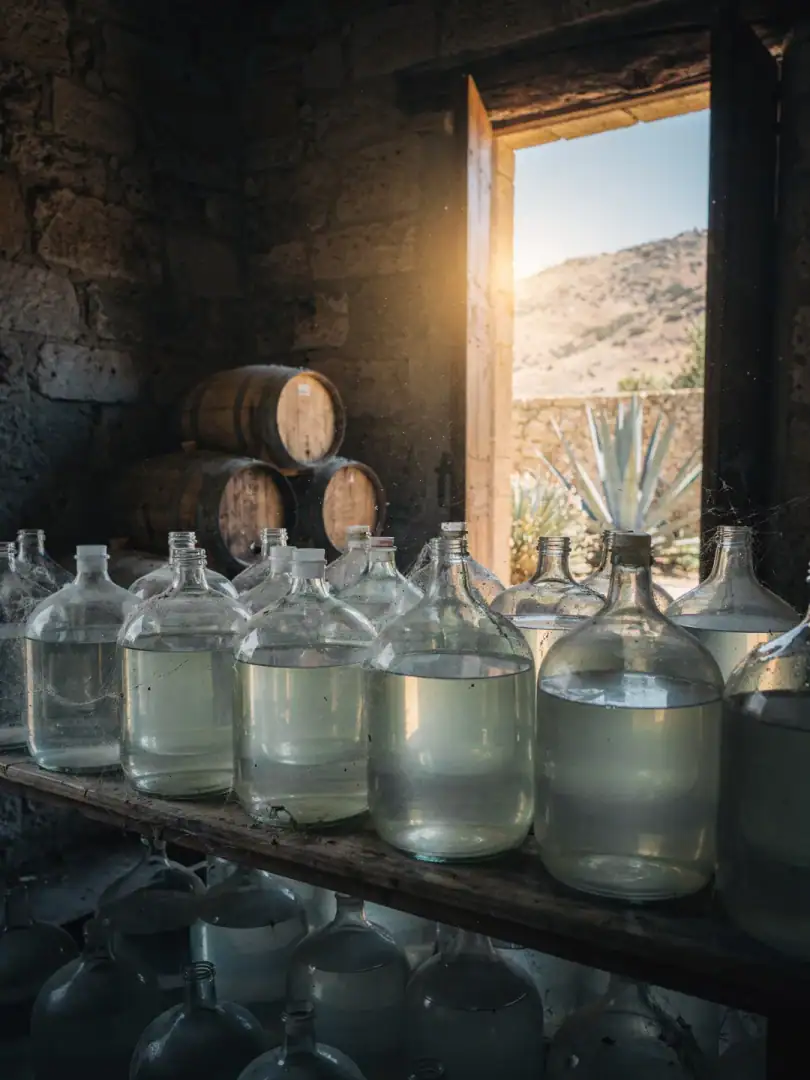
Most bottles coming out of Teúl de González Ortega, Huitzila, or Pinos are Joven: unaged and clear, bottled straight after distillation. That fits the reputation of Zacatecan mezcal, considered cleaner, fruitier, and less smoky than, say, mezcal from Oaxaca, a character that a barrel would only mask.
The Mexican standard recognizes six classes of mezcal. Joven or Blanco doesn't age at all. Madurado en Vidrio ages in glass demijohns instead of wood. Reposado gets brief barrel aging, and Añejo spends at least a year in a wooden barrel. Two special categories round this out: Destilado con, where ingredients like fruit are distilled together with the spirit, and Abocado con, where they're added only after distillation.
The label must state not only the alcohol content and the state of origin but also the production category: Artesanal, Ancestral, or industrial, depending on how the oven and still were used. This sets Mezcal clearly apart from Tequila. There, the aging class is mandatory, but the production method doesn't have to appear on the bottle in the same way.
Some tabernas still lay down barrels anyway, usually to offer international buyers something familiar. A few houses, like La Pendencia, bring a Reposado to market, but for everyday local drinking, clear mezcal remains the rule. This changes little about the character of Zacatecan mezcal. The region lives for the moment right after distillation, not for time spent waiting in a barrel.