Blanco, Reposado, Barrel
Aging
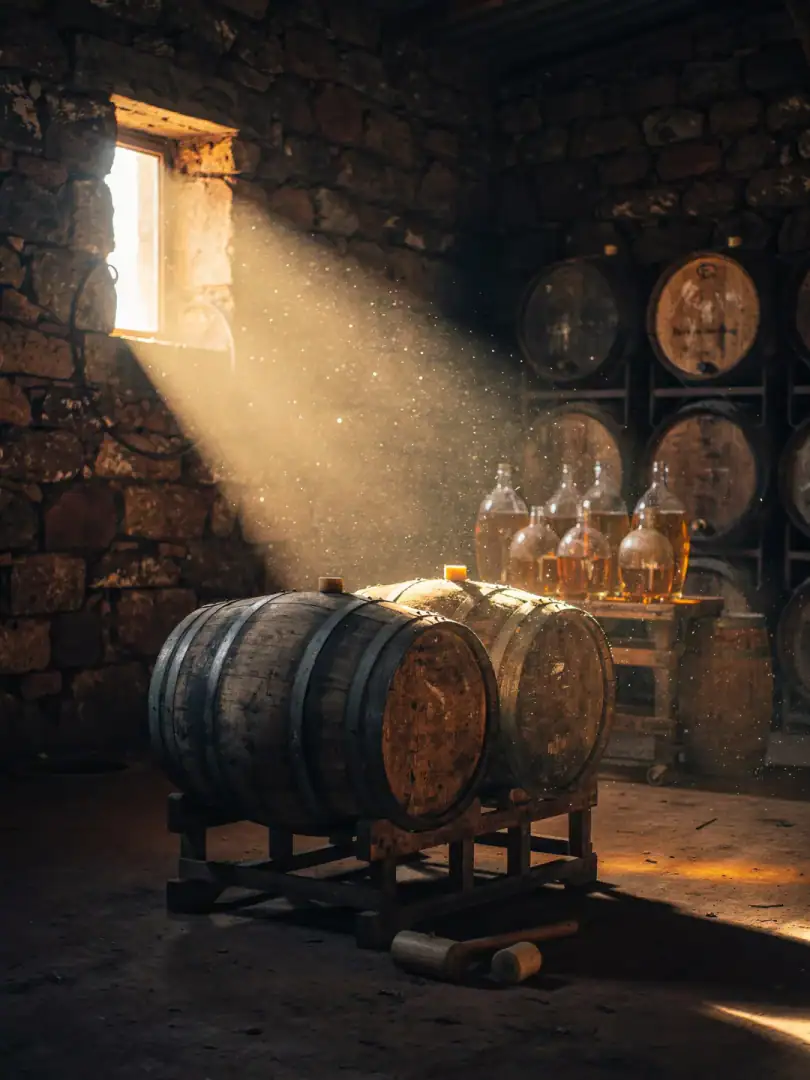
Most Karoo agave spirits leave the distillery unaged as Blanco, clear as water and carrying the full smoke of the cooking process in its flavor. Anyone wanting to wait longer reaches for a Reposado, which rests for several months in wooden barrels.
Alongside Blanco and Reposado, Leonista also produces a Honey Reposado, in which honey complements the barrel aging. The Blanco itself won gold at the Michelangelo International Wine and Spirits Award and silver at the San Francisco World Spirits Competition in 2018, despite being bottled completely unaged. Rocco Torro distinguishes between a Reposado aged in American oak and one in French oak. Both were awarded international medals in 2026, with the French oak version even earning double gold, among a total of five awards the distillery received that year. Sango also offers both a Blanco and a Reposado.
Unlike in Jalisco, no South African standard dictates how many months a "Reposado" must spend in the barrel before it can carry that name. The Mexican terms are adopted here as style descriptors, not as legally protected categories with a fixed minimum aging period.
What must appear on the label is instead governed by the Liquor Products Act: the designation "Agave Spirit," the minimum alcohol content of 35% ABV, and, if flavors have been added, their disclosure in the same font size as the product name. Tequila or Mezcal may never appear on the label under any circumstances.
For the barrels, distilleries use American and French oak, sometimes previously used casks from the country's wine or whisky trade. Madurado en vidrio, the pure glass-aging method used for some Mexican mezcals, has not yet appeared in the Karoo. Here, the barrel remains what matters most.