Category, agave, maestro
The mezcal label
A mezcal label tells you more than a tequila label does: which agave, which category, often even who did the distilling. Learning to read it explains why mezcals can taste so different from one another.
The category comes first: Mezcal, Artesanal, or Ancestral
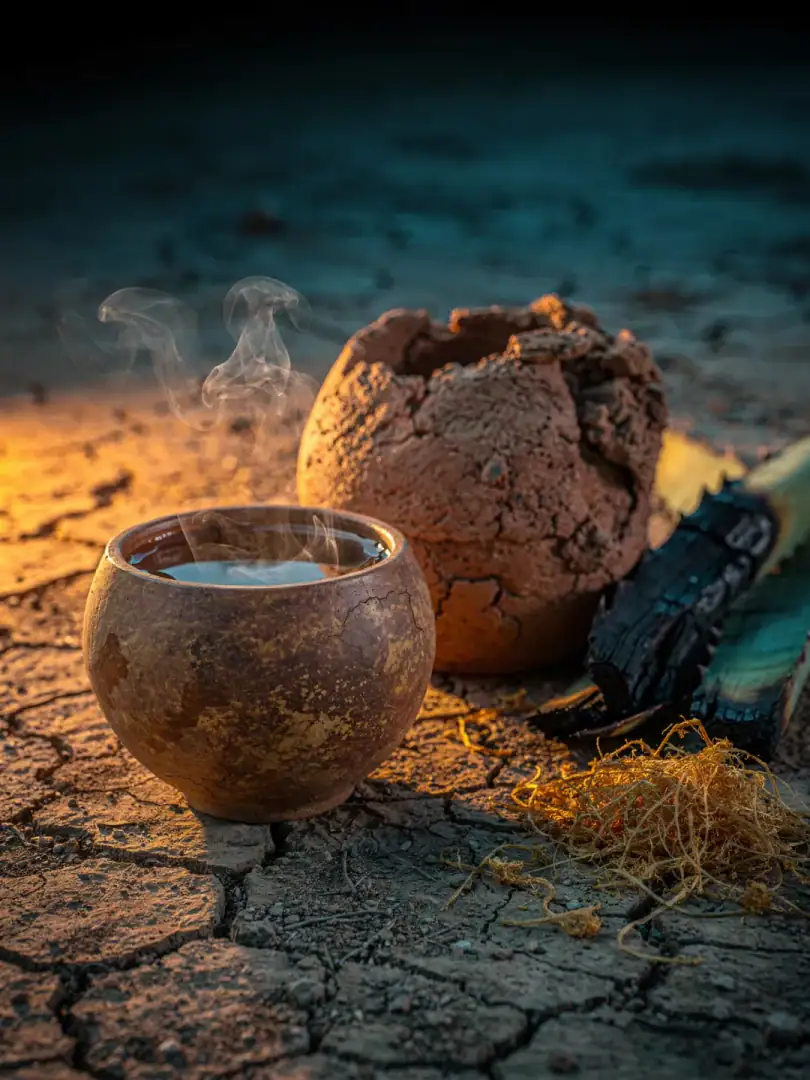
NOM-070 distinguishes three production categories based on the degree of mechanization. Mezcal Ancestral is distilled exclusively in clay pot stills over direct wood fire, and the agave is ground entirely by hand with a wooden mallet or stone roller — no mechanical mills allowed.
Mezcal Artesanal already permits more leeway, including mechanical shredders for grinding and stills made of wood, copper, or stainless steel. Industrial mezcal, finally, may use ovens, autoclaves, or diffusers — the entire spectrum from craft to factory production carries the same name "Mezcal," distinguished only by an added qualifier.
For buyers, this three-tier system serves as a rough compass for quality and price: Ancestral is rare and expensive, since the handwork sharply limits output, while industrial mezcal is produced in far larger volumes at lower prices.
Which agave is inside
Unlike tequila, which is always made from the same blue Weber agave, mezcal is produced from many different agave species. Espadín (Agave angustifolia) is by far the most common, but labels also feature names like Tobalá, Madrecuixe, or Arroqueño for rarer wild agaves.
Because the plant strongly shapes the flavor, the species name is almost always included on a good mezcal's label. When it's missing entirely, that's often a sign of an industrial, less transparent bottling.
Some labels even list several agave species, when a mezcal is blended from different plants at the same palenque, the traditional distillery. These blends are often called "Ensamble" and are explicitly permitted in mezcal, unlike the single, uniform raw material required for tequila.
The Maestro Mezcalero
Many artisanal mezcals name the person who distilled them: the Maestro Mezcalero or Maestra Mezcalera. This isn't a legal requirement, but it's common practice in an industry deeply rooted in family tradition and individual villages.
Naming the distiller functions like a signature: it makes a specific person and their process traceable, rather than letting the mezcal disappear behind an anonymous brand.
In some regions, the village or palenque where the spirit was distilled is also named, sometimes along with the harvest year. These details are voluntary, but they increasingly shape mezcal's image as a product with traceable origins right down to the individual family.
Madurado en Vidrio: aged, yet still clear
One of the six official mezcal classes is called Madurado en Vidrio: the mezcal doesn't age in wooden barrels but in large glass demijohns, often for months or years. The color stays clear, yet the flavor still rounds out.
This class shows that aging in mezcal doesn't necessarily mean wood and color — a contrast to the tequila system, which defines aging almost entirely through barrels.
Because glass, unlike wood, imparts no flavors of its own, this style of aging changes the taste more slowly and subtly than barrel aging does. For purists, Madurado en Vidrio is therefore seen as a way to work with time without masking the agave's original character.
Abocado con and Destilado con Pechuga
Two further classes permit additives but name them explicitly: "Abocado con" denotes ingredients added afterward, such as honey or fruit, while "Destilado con" denotes ingredients present during the final distillation run inside the still.
The best-known example is Pechuga: a raw chicken or turkey breast, sometimes fruit as well, suspended above the liquid in the still, lending extra aroma during the final pass. The ingredient's name then becomes a fixed part of the class name on the label.
Fruits such as pineapple, plum, or quince are also used for "Destilado con," depending on the region and season. Each variant noticeably changes the aroma and price, which is why connoisseurs treat the exact ingredient on the label as an important factor when buying.