What's Allowed In, Invisibly
Abocamiento and Additives
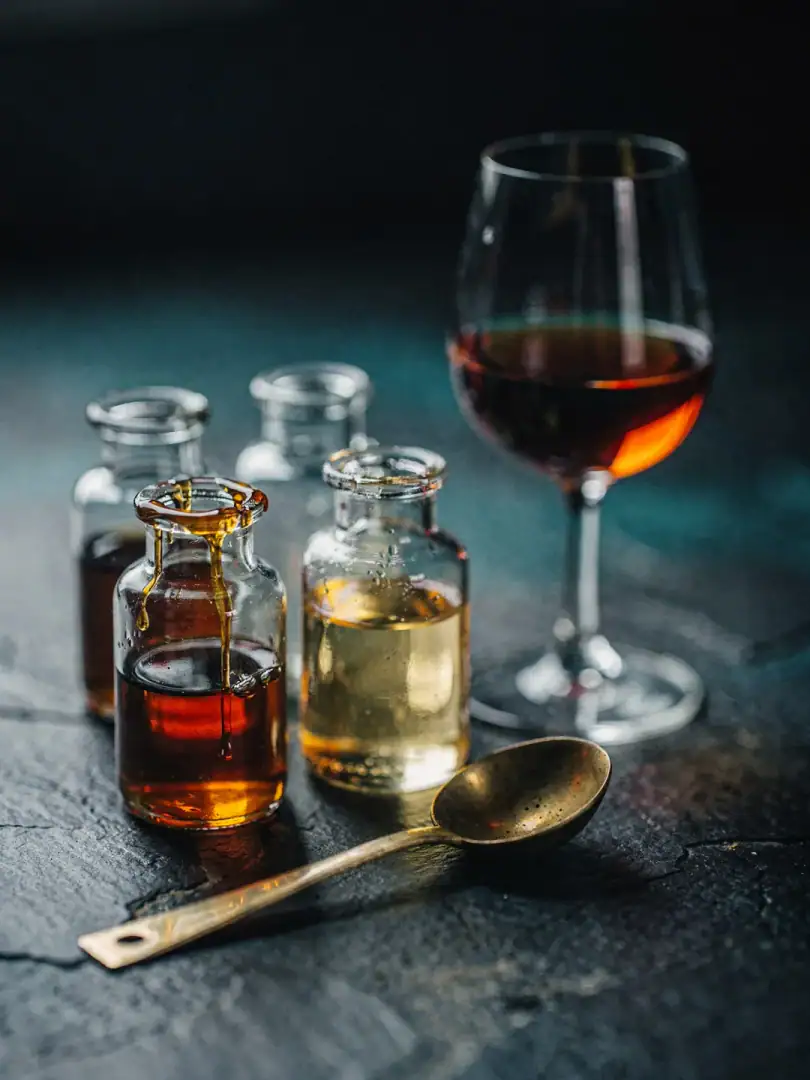
A small amount of caramel or sugar syrup is allowed in almost every Tequila, without the label revealing anything about it. That's exactly why an entire movement has emerged to look more closely.
What Abocamiento Is
Abocamiento refers to the subsequent addition of certain substances after distillation: caramel coloring, oak extract, glycerin, and sugar syrup. Together, according to several sources, they may make up to roughly one percent by weight — a small amount, but one that can significantly change color, sweetness, and mouthfeel.
The standard explicitly permits this because it allows producers to keep color and flavor consistent across different batches. Without any intervention, a natural product like agave spirit would vary from barrel to barrel.
The name "Abocamiento" comes from the Spanish word for mouthfeel and describes exactly the goal of this practice: to round out the taste in the mouth, not to fundamentally change the Tequila. For the distillery, it's a tool for consistency; for buyers, it remains largely invisible.
Why It Doesn't Have to Be on the Label
NOM-006 doesn't require producers to state Abocamiento on the label. Anyone with just the bottle in front of them therefore can't tell whether or how much caramel or syrup has been added — the "100% Agave" statement refers solely to the sugar source, not to any later additives.
For buyers, this means: two Añejos with identical label text can differ noticeably in sweetness and color, depending on how generously each distillery uses the permitted one percent.
This gap is one of the most widely discussed criticisms of NOM-006, because it gives consumers no way to identify the amount of additives purely from the label.
Blanco: stricter, but not entirely additive-free
With Blanco, the leeway is narrower than with aged classes, since there's less freedom for blending and coloring. Exactly how the limits for Blanco are defined in detail isn't described consistently across the available sources.
So the takeaway is this: Blanco is the most strictly regulated tier, but that doesn't add up to a legally guaranteed, one-hundred-percent additive-free product. Anyone who wants certainty has to rely on producer statements or independent testing.
This ambiguity isn't a one-off: many details of NOM-006 are only known through secondary sources, since the full text of the standard isn't freely accessible everywhere. Anyone wanting complete certainty remains dependent on producer statements or independent lab analysis.
The counter-movement: "additive-free"
Because the label alone gives no answers, independent testing bodies have emerged that specifically screen tequilas for additives and publish lists of "additive-free" brands — known, for instance, under the name Tequila Matchmaker. Such checks amount to producer claims or external analyses, not an official standard.
For newcomers, this means: the term "additive-free" on a bottle is itself just another voluntary claim, not a legal category. It fills exactly the gap that NOM-006 leaves open on the subject of abocamiento.
Mezcal does it the other way around
Mezcal doesn't allow additives to hide — it handles them through its own, explicitly named class: "Abocado con," followed by the ingredient, such as honey or fruit. The additive itself becomes part of the class name on the label.
This puts mezcal almost in mirror opposition to tequila: what's allowed to stay invisible in tequila must be spelled out by name in mezcal. Two standards, two completely different answers to the same question about transparency.
For buyers who value transparency, this is a strong argument in favor of mezcal: an "Abocado con Miel" reveals at a glance what's been added, while a tequila with silent abocamiento is permitted to withhold that information entirely.
What this means for buying
Anyone who wants to play it safe when shopping is best off combining several clues: the class stated on the label, independent additive-free lists, and, where available, direct statements from the distillery on its own website.
In the end, abocamiento remains a legal but largely invisible part of tequila production — worth understanding to read the label correctly, but no reason to view every bottle with suspicion.