Related, not an agave
Sotol: related, but not an agave
Sotol belongs to this family even though its source plant isn't an agave at all. It's still cooked, ground, and distilled like a Mezcal. Only the raw material is a different plant within the same large botanical order.
Dasylirion: related, but not an agave
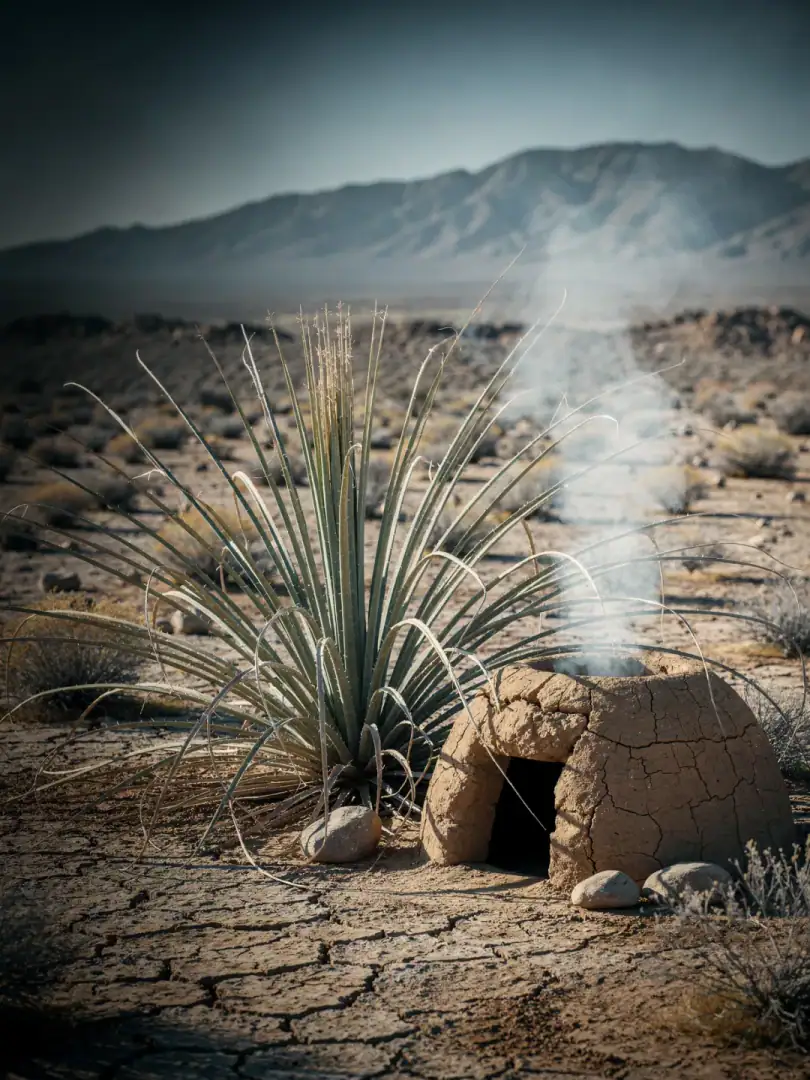
Sotol is made from plants of the genus Dasylirion. They're often called desert spoons, named for their long, spoon-shaped leaf bases. Botanically, Dasylirion and Agave belong to the same large family of asparagus relatives. Within that family, though, they sit in two separate subfamilies: agaves among the Agavoideae, Dasylirion among the Nolinoideae.
In everyday terms: related like cousins, but not an agave. Even so, Sotol is often treated as a distant cousin of Mezcal. Production method and region of origin are simply too closely linked.
Cooked like a Mezcal, from a different plant
As with Mezcal, the heart of the plant is traditionally roasted in an earthen pit. It's then ground, fermented, and distilled. This closeness in process explains why Sotol is often mentioned in the same breath as Mezcal. The raw material, though, is an entirely different plant.
The name has been protected since 2002. Its foundation is NOM-159-SCFI-2004, created specifically for Sotol. It clearly separates it from the agave standards.
Three states in the north
The Sotol territory lies far in northern Mexico. All of Chihuahua, all of Coahuila, and all of Durango are entitled to use the name. That's more than 140 municipalities in total. Only wild-harvested or cultivated Dasylirion is permitted. Any admixture of true agave would immediately invalidate the name Sotol.
The territory borders the United States directly. This proximity long made Sotol primarily a regional drink, far less known than Tequila or Mezcal.
Rarámuri tradition and its own aging categories
In the highlands of Chihuahua, Sotol has been closely tied for generations to the Rarámuri people, who live in the Sierra Tarahumara. For them, the distilled Dasylirion spirit was, across generations, part of festivals and communal rituals, far more than just a drink to unwind with. This knowledge is often passed down orally, from one generation to the next.
Sotol, too, has its own aging categories: Blanco or Plata stays unaged, showing the plant's pure character. Reposado ages briefly in wood, Añejo considerably longer. Each producer sets the exact duration themselves within the standard, much as with Tequila and Mezcal.
Depending on the region, different Dasylirion species are used, including Dasylirion wheeleri, Dasylirion leiophyllum, and Dasylirion cedrosanum. All yield the same starchy trunk that the Sotol standard requires, though they differ in growth form and yield.
Because Dasylirion regenerates slowly in the wild, some producers now harvest the plant more mindfully or cultivate it deliberately, rather than relying solely on wild collection. This concern for stock mirrors the debate around rare wild agaves in Mezcal, only with an entirely different plant.
Unlike Bacanora, Sotol has no single founding municipality that lent its name to the spirit. Even before the denomination of origin existed, the name referred equally to the plant itself and its drink, across large parts of northern Mexico and the adjoining southwestern United States. This linguistic double role sets Sotol apart from almost every other name on this journey.
A spirit for well-balanced drinks
In Texas, just across the border, Sotol has won many new fans in cocktail bars in recent years. Bartenders value its earthy, herbal character. It suits well-balanced drinks nicely, much as Tequila and Mezcal have long demonstrated.
This newfound popularity changes nothing about its legal status. Sotol remains not an agave, and yet still part of this family. That very contradiction makes it one of the most interesting names on this whole journey.