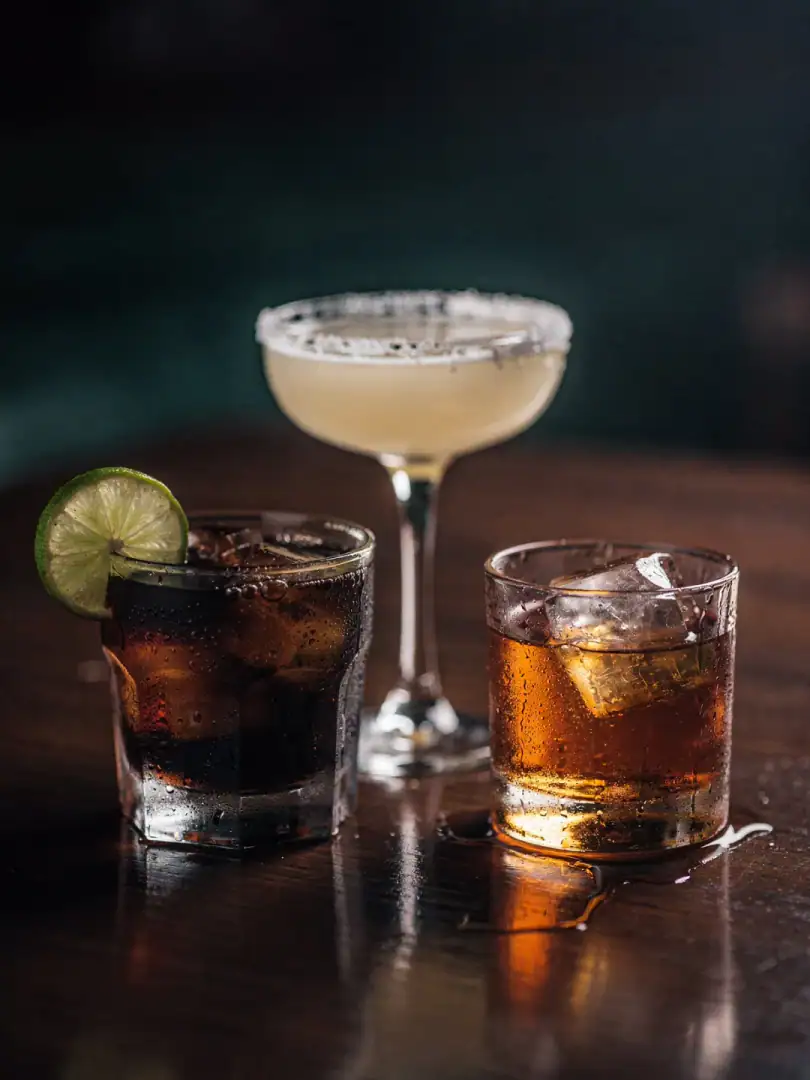
Margarita, Paloma, Batanga
Cocktails briefly explained
Margarita, Paloma, Batanga, Mezcal Negroni: four cocktails that bring tequila and mezcal from the ritual of the cantina into the bar. Their origins are documented with varying degrees of certainty—recipe and technique belong to a separate entry.
Margarita: the classic with an unclear origin
Known worldwide, the Margarita—tequila, lime juice, orange liqueur, often served with a salt rim—still has a disputed origin.
Several bars in Mexico and along the US border claim to have invented it, usually dated to the 1930s or 1940s. There's no single, verified story.
Paloma: simpler, and more common in Mexico
More often than the Margarita, it's the Paloma that gets ordered in Mexico itself: tequila with grapefruit soda and a splash of lime.
It needs no shaker and no liqueur, just tequila, soda, and ice in the glass—quicker to make than most other tequila cocktails.
Batanga: the cantina invention made with tequila
According to legend, the Batanga—tequila, cola, lime, salt rim—originated at La Capilla, a cantina in the town of Tequila in Jalisco. To this day, it's stirred there with a knife instead of a spoon.
It's hard to imagine a simpler tequila cocktail. Its origin story is also one of the few from the cantina world that's tied to a specific, real place.
Mezcal Negroni: a modern bar variation
In its mezcal version, the Negroni trades juniper for smoke. The classic recipe mixes equal parts gin, Campari, and sweet vermouth—here, the gin is simply swapped for mezcal, with everything else staying the same.
This and other bar variations live on technique and ratio, not ritual. Exactly how it's shaken, stirred, or served over which ice belongs to a separate entry.
Vampiro and Oaxaca Old Fashioned: two more cocktails
Less known outside Mexico but common in coastal towns like Puerto Vallarta or Playa del Carmen is the Vampiro: tequila with a spicy mix of tomato juice, orange juice, lime, and often a bit of sangrita, served with a chile-salt rim. The name plays on its deep red color, much like sangrita itself.
More modern is the Oaxaca Old Fashioned, a bar invention from the 2000s. New York bartender Phil Ward is credited with creating it at the bar Death & Co: tequila with a splash of mezcal instead of whiskey, along with agave syrup and bitters, garnished with an orange twist.
Like the Mezcal Negroni, the Oaxaca Old Fashioned shows how bartenders deliberately work mezcal's smoky note into classic recipes, without hiding the agave spirit. Both cocktails belong to a newer wave that takes mezcal seriously as a bar ingredient rather than treating it as a mere curiosity.
Like the Batanga, the Vampiro thrives on simple, readily available ingredients—none of the cocktails featured here need a shaker or rare liqueurs. That explains why they caught on so easily, especially in simple beach bars and cantinas.
Why tequila cocktails came later than the whiskey cocktail
Internationally, tequila cocktails became established later than whiskey or gin cocktails, even though the agave spirit itself is much older. It wasn't until the tequila boom in the US starting in the 1930s, and the Margarita's rise in the second half of the 20th century, that tequila entered the spotlight of the bar world at all.
Mezcal followed even later: only since the 2000s and 2010s have bartenders worldwide deliberately leaned into its smoky character; before that, it mostly remained a niche product for connoisseurs. The cocktail menu is now catching up to what had long been everyday practice in Mexican cantinas.
Almost all the cocktails featured here also rely on Blanco rather than aged tequilas. The reason comes down to flavor: vanilla and caramel notes from the barrel would often clash with lime, grapefruit, or cola, while a clear, young Blanco keeps its agave and citrus character even when mixed with other ingredients. Reposado or Añejo tend to appear in cocktails without much acidity, such as the Oaxaca Old Fashioned, where the barrel sweetness complements the bitters instead of fighting against lime.