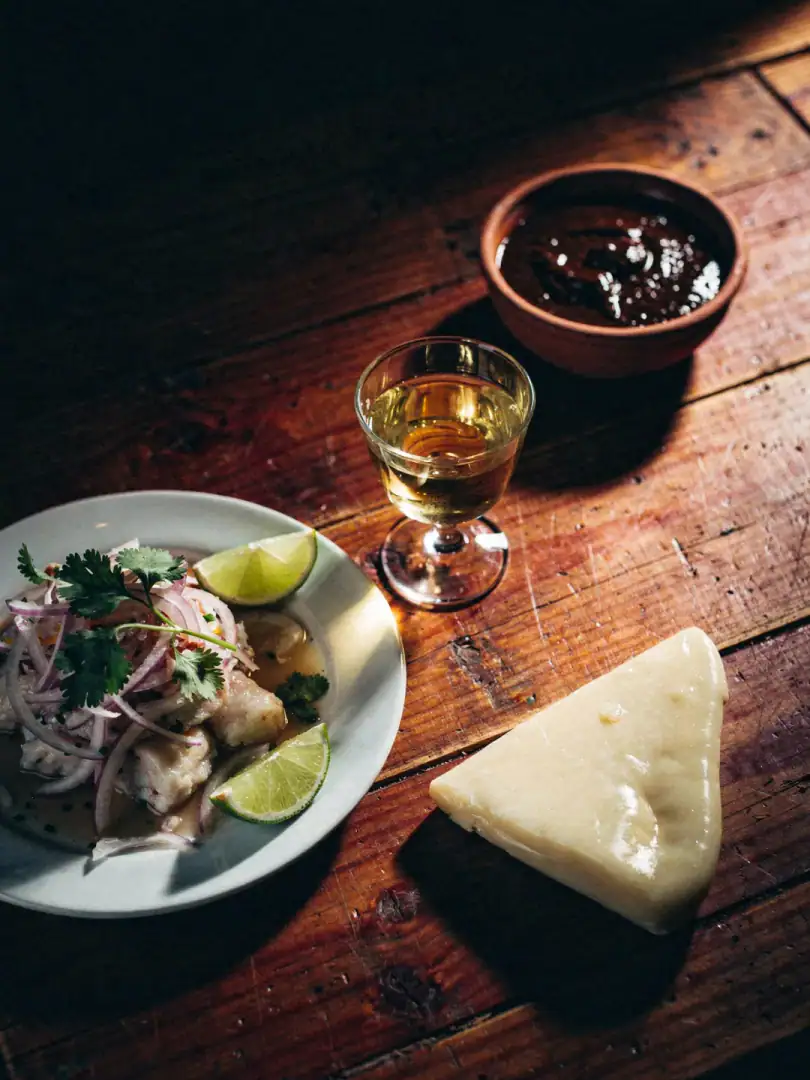
Tacos, mole, cheese
Agave spirit with food
Blanco with ceviche, Añejo with mole, mezcal with chocolate: which agave spirit suits which dish follows a simple rule. Aging and smokiness determine whether a tequila or mezcal carries a dish or gets lost in it.
Blanco with ceviche: fresh meets fresh
A Blanco tequila, young and bottled straight after distillation, brings green, slightly peppery, and citrusy notes.
That's exactly what suits ceviche, raw fish or shrimp cured in lime juice. Both sides are fresh, bright, and uncomplicated—neither dominates the other.
Reposado and Añejo with tacos and mole
Reposado, briefly aged in wood, brings gentle vanilla and caramel notes. These pair well with grilled meat like tacos al pastor, where charred flavors meet the light sweetness of the pineapple topping.
Añejo, aged at least a year in the barrel, is noticeably rounder and holds its own alongside mole, that complex sauce of chiles, spices, and often chocolate. The barrel sweetness of the tequila meets the depth of the sauce instead of getting lost in it.
Mezcal with cheese and chocolate
Mezcal's smoky flavor comes from roasting the agave hearts in an earthen pit. It finds a match in quesillo, the pulled Oaxaca cheese, and in dark chocolate.
The fat and bitterness in the cheese and cacao absorb the smoky notes without losing them. This pairing is a staple in Oaxaca.
The basic rule behind every pairing
Across all these examples, the same rule applies: intensity meets intensity. A delicate Blanco calls for delicate dishes, while a smoky mezcal or an aged Añejo can handle bolder flavors.
Anyone seeking this balance will find it more through trial and error than fixed recipes—taste, in the end, is always personal too.
This rule extends beyond Mexico: a light white wine with ceviche follows the same principle as a Blanco tequila, and a peaty whisky with smoked fish follows the same principle as a smoky mezcal with quesillo. Intensity seeks intensity, regardless of the spirit's name.
Why regional pairings often work best
Many of the best combinations come from the same region as the spirit itself. In Jalisco, tequila is often enjoyed alongside birria, a spicy stew of goat or beef, whose fat and chile depth can stand up to the freshness of a Blanco or the sweetness of a Reposado.
In Oaxaca, mezcal meets tlayudas, large, crisply baked corn flatbreads topped with bean paste, cheese, and often grasshoppers or chapulines—smoke meeting smoke from the comal, the hot clay griddle the tlayuda is baked on.
In northern Mexico, home to sotol and bacanora, wild game and grilled beef are kitchen staples—hearty dishes for spirits that themselves taste stronger and earthier than most tequilas.
Yucatán has its own tradition too: Xtabentún, an anise liqueur made with honey, is sometimes served alongside agave spirits with cochinita pibil, the region's slow-braised pork. It's not one of the agave spirits featured on this journey, but it shows that Mexico's drinking culture with food reaches far beyond tequila and mezcal.
Mezcal and seafood: a second coastal pairing
Besides cheese and chocolate, mezcal also pairs well with seafood from Oaxaca's coastal regions, such as grilled fish or shrimp with chile and lime. The smoky note works here much as it does with grilled meat: it enhances rather than masks.
Preparation matters here too: raw, very delicate dishes like a classic ceviche pair better with a pale, young Mezcal Joven than with a long-aged Mezcal Añejo, whose oak notes would otherwise overwhelm the freshness.
Serving temperature also affects how well mezcal pairs with food: served too cold, it loses its smoky and earthy notes; too warm, and the alcohol comes across harsher than it should. Room temperature or lightly chilled is the general guideline for most mezcals, while heavily chilled cocktail versions are better suited to the bar than the table.