Ritual and Reality
Salt and Lime
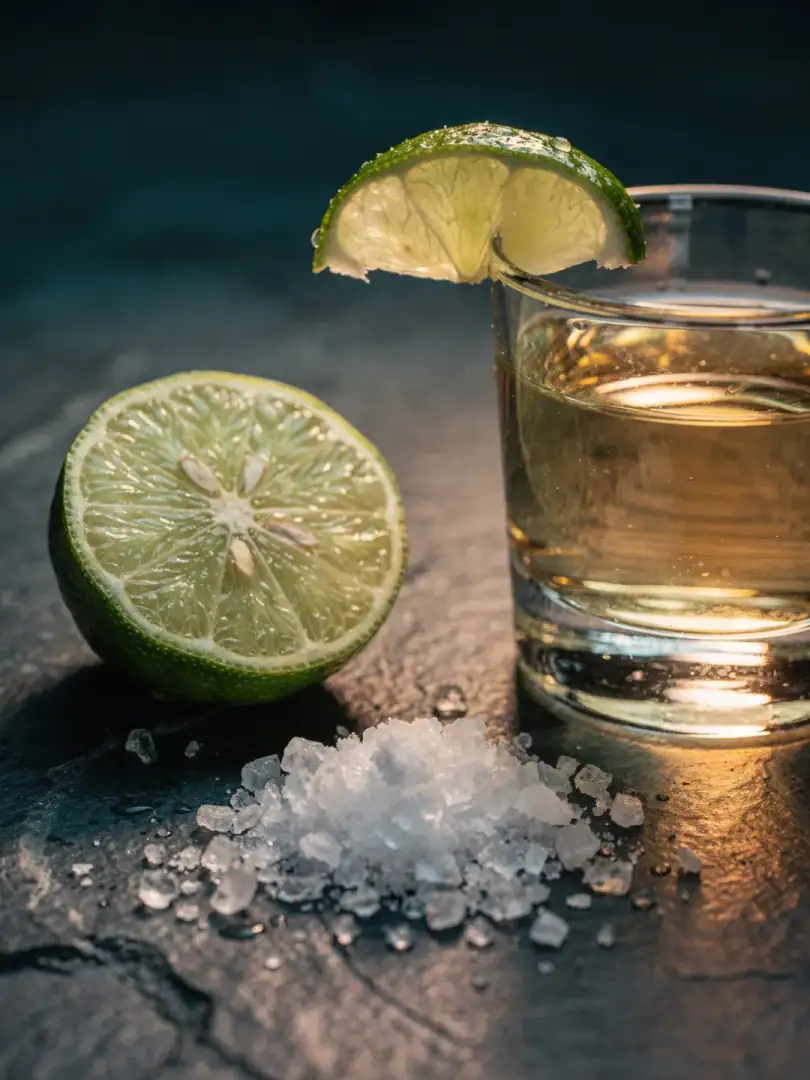
Salt, tequila, lime: few rituals are as well-known—or as widely misunderstood. Above all, it masks the harsh taste of cheaper tequilas. Those who recognize good tequila often drink it differently: slowly, neat, from a small glass.
Where the Ritual Comes From
Few images cling to tequila as persistently as the sequence of salt, spirit, lime. Where exactly it originated isn't clearly documented. A story often told traces it to border towns like Tijuana in the 1930s, where American tourists tried to make the sharp, young agave spirit more palatable with salt and citrus. Primary sources are lacking—it's a tradition passed down, not verified history.
What's certain is that the custom spread mainly outside Mexico, through American bars and later advertising campaigns by major brands. In Mexican cantinas, the traditional taverns, many guests still prefer to drink tequila neat, from a small glass, to this day.
Why It Masks Poor Tequila
Salt and lime aren't random choices—they work on a sensory level. Salt dampens bitterness and enhances sweetness, while the lime's acidity cuts through the alcohol's burn, making it feel milder. This is exactly what masks the flaws in a cheap tequila: harsh fusel notes from rapid distillation and the sugar content of a mixto, where up to 49 percent of the sugar may legally come from sources other than agave.
Anyone who drinks every tequila with salt and lime barely tastes the difference between a cleanly distilled 100 percent agave Blanco and a cheap mixto. This is exactly what many connoisseurs suspect: the ritual conceals more than it adds.
How to Drink Good Tequila Instead
A clean Blanco—bottled immediately after distillation, clear and unaged in wood—shows best when drunk neat. It pairs well with a copita, a small, tulip-shaped glass that concentrates the aroma upward, rather than losing it like a wide glass would.
Room temperature is fine; ice isn't necessary. A brief sniff of the glass precedes a small sip, which spreads across the mouth before reaching the throat—this is how agave aroma, citrus, and pepper notes emerge, notes that salt and lime would otherwise mask.
When Salt and Lime Still Make Sense
The ritual isn't forbidden, though. At a fiesta, with simple tequila for casual drinking, salt and lime have their place—even seasoned connoisseurs reach for it occasionally, simply because it's fun.
The difference lies in understanding it as one option among several, not as the only way to drink tequila. Those who know what's in the glass make a conscious choice—with or without salt.
The Tequila Slammer: A Related but Different Ritual
Related to the salt-lime ritual, but a separate practice altogether, is the tequila slammer. Here, tequila goes into the glass with a splash of lemon-lime soda or sparkling wine, a hand presses firmly over the opening, then the glass is slammed briefly on the bar counter. The carbonation foams up instantly, and it's drunk while still fizzing. Unlike the salt-lime ritual, salt plays no role in the slammer—the focus is on speed and the little show at the table, not the taste of the tequila.
The effect of salt and lime can also be explained scientifically. Sodium dampens the perception of bitterness via receptors on the tongue, while the lime's acidity briefly numbs the burning sensation of alcohol on the palate. For a moment, the drink tastes smoother than it actually is—an effect that fades quickly after the sip. With a cleanly distilled Blanco, this trick shouldn't really be necessary at all.
The sequence of salt, spirit, lime ultimately became a global image through advertising campaigns by major brands, promoted in American bars starting in the 1970s and 1980s. What began as a vague anecdote about border towns became a fixed ritual, long before most drinkers had ever tried a single-varietal Blanco.
Anyone familiar with both rituals quickly spots the difference: the slammer is a bar drinking game, while the salt-lime ritual is more of a crutch for simple tequila. Neither reflects how tequila is preferred in Jalisco itself—there, it stays with the small glass, sipped slowly, entirely without salt.