The Red Companion Glass
Sangrita and Verdadera
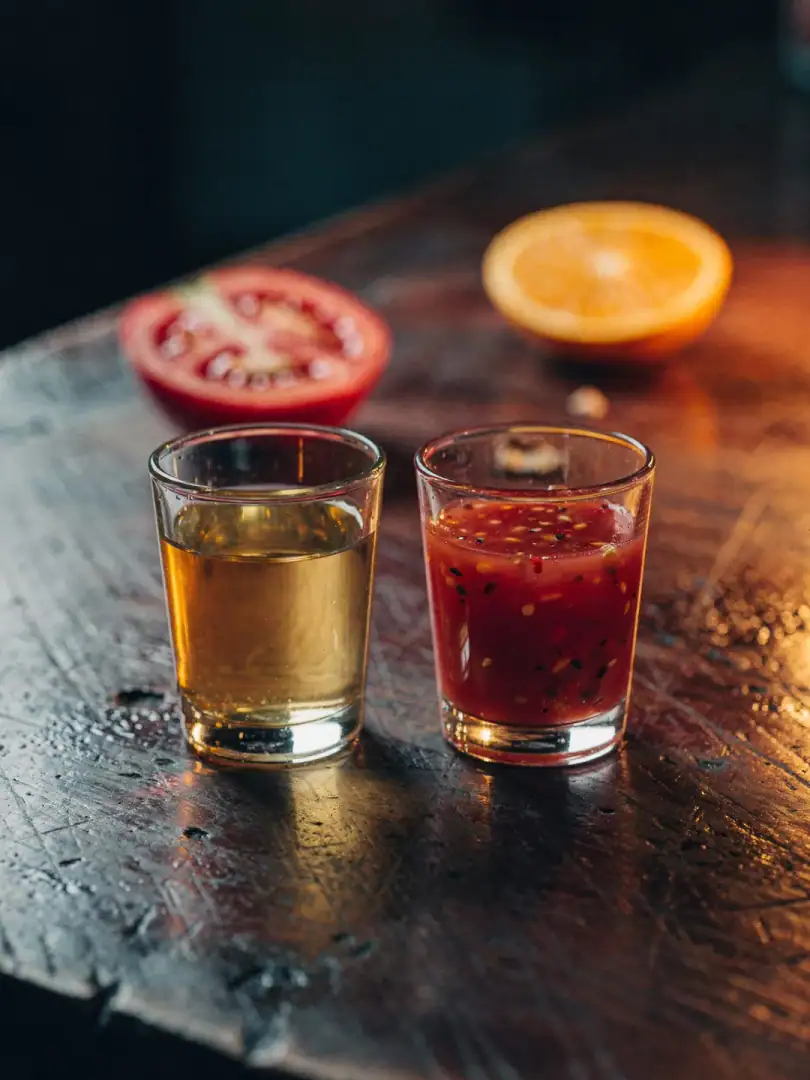
Next to every good tequila in Jalisco, there's often a second, smaller glass: sangrita, a spicy-sour tomato-chili blend. It's not mixed in, but sipped alternately—unlike the sweeter version that often goes by the same name outside Mexico.
What Sangrita Actually Is
In many cantinas, there's a second, smaller glass alongside the tequila: reddish, spicy, made with tomato and chili. Sangrita literally means "little blood"—a reference to its color. It's served separately, not mixed in, as an independent companion to the tequila.
Spicy, salty, and sour all at once describes the base mixture: tomato juice or paste, orange and lime juice, plus chili and salt. It's meant not to dilute the tequila, but to offer a contrast that plays against it in the mouth.
Verdadera vs. the Version from Bars Abroad
"Verdadera," meaning real or true, distinguishes two traditions: the tomato-based sangrita from Jalisco and a version found mainly outside Mexico—made with orange juice, grenadine, and a bit of hot sauce, sweeter and lacking the salty-tart depth of the original.
Both variants circulate under the same name, which is why "verdadera" appears in Mexican recipes and menus—as a clarification of which of the two sangritas is meant.
How Tequila and Sangrita Are Enjoyed Together
They're drunk in alternation: a sip of Blanco tequila from the caballito, the narrow shot glass, then a sip of sangrita—never mixed in the same glass. The interplay between the agave's sharpness and the salty-spicy sweetness of the sangrita is the real appeal.
In the cantinas around Guadalajara, this pairing has gone hand in hand for decades. Exactly how it originated isn't fully documented—only that it predates the tequila tourism that made salt and lime famous.
Where the Name Sangrita Comes From
Every region of Jalisco tells the origin of sangrita a bit differently; most stories point to a cantina by Lake Chapala or in the highlands, and to the 1920s. None of these tales are documented—like many cantina anecdotes surrounding tequila, it lives on mainly through oral tradition rather than written records. What remains is a mixture that has barely changed since: tomato, citrus, chili, salt.
The name itself is easier to explain than its origin. "Sangrita" is the diminutive of "sangre," blood, and simply describes the reddish color of the mixture. The drink has nothing to do with actual blood, though travelers occasionally misread the name.
Why Every Family Has Its Own Sangrita Recipe
There's no fixed recipe for sangrita, more a basic idea that every family interprets in its own way. Besides tomato juice or paste, orange and lime juice, pomegranate juice, Worcestershire sauce, or various dried chilies like guajillo, árbol, or piquín may find their way into the mix, depending on the region. Some kitchens season it further with a touch of onion juice.
In some households, the mixture simmers for hours and then rests in the refrigerator; in others, it's freshly puréed and served immediately. What remains constant is the principle: spicy, salty, sour as a counterpoint to the tequila. Which note comes through more strongly ultimately depends on the kitchen where the sangrita is made, not a standard recipe.
Sangrita Is Neither a Michelada Nor a Bloody Maria
Sangrita is occasionally confused with other red tomato-based drinks. The Michelada mixes beer with lime, chili, and Worcestershire sauce right in the glass, while the Bloody Maria swaps vodka for tequila in the classic vodka cocktail—both are combined and drunk like a long drink.
Sangrita, by contrast, always stays separate from the tequila, in its own small glass alongside. The difference goes beyond mere serving style: where the Michelada and Bloody Maria dilute the alcohol, sangrita is meant to accompany it undiluted, sip for sip, in alternation.