Cal-Mex, Considered Plainly
Food & Drink
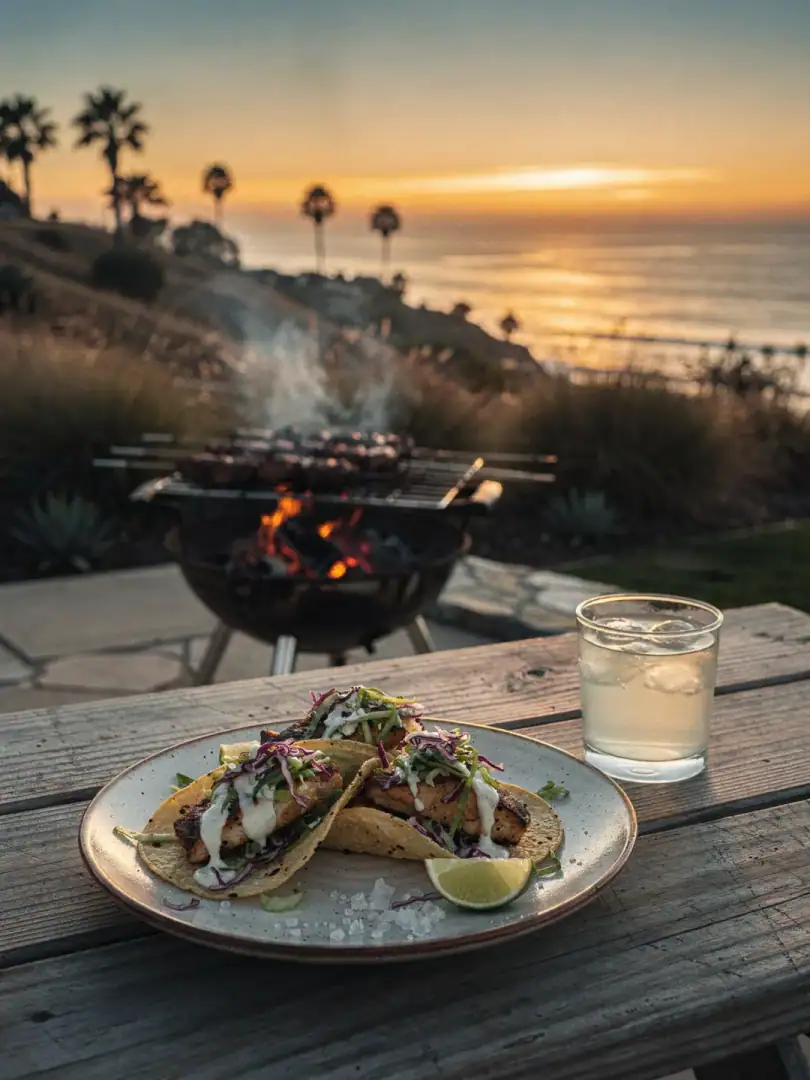
Between Yolo County and Riverside County, the food that dominates has grown out of proximity to Mexico. It's often called Cal-Mex, shaped by California's Mexican-American population. Fish tacos are part of it: fried or grilled fish in a corn tortilla, with cabbage, crema, and salsa. The dish migrated north from Baja California, Mexico, through San Diego in the 1980s.
Carne asada, marinated beef grilled over an open flame, is the other constant, from backyard grills to taco trucks. None of this has any historical connection to Agave Spirit. Both dishes predate California's agave movement and come from the very same region where the fields now stand. When the two turn up together today, it's mostly coincidence, at the same dinner table or the same festival grounds.
No drinking ritual has formed around Agave Spirit yet, the industry is simply too young. The first commercial bottlings only reached the market in the 2010s and 2020s. Events like the annual California Agave Symposium remain trade gatherings for growers and distillers, not public festivals.
Anyone who brings the two together is mostly connecting geography. The grassy, mineral Agave Spirit from Yolo loam or Riverside sand turns up along the same coastline and in the same valleys the agave itself comes from. There's no invented tradition behind it. Both simply belong to the same map.
At the table, then, California stays closer to the present than the past. That sets it apart from the centuries-old rituals surrounding Tequila and Mezcal, which still shape the copita and jícara today.