Farmers, Not Haciendas
Region & History
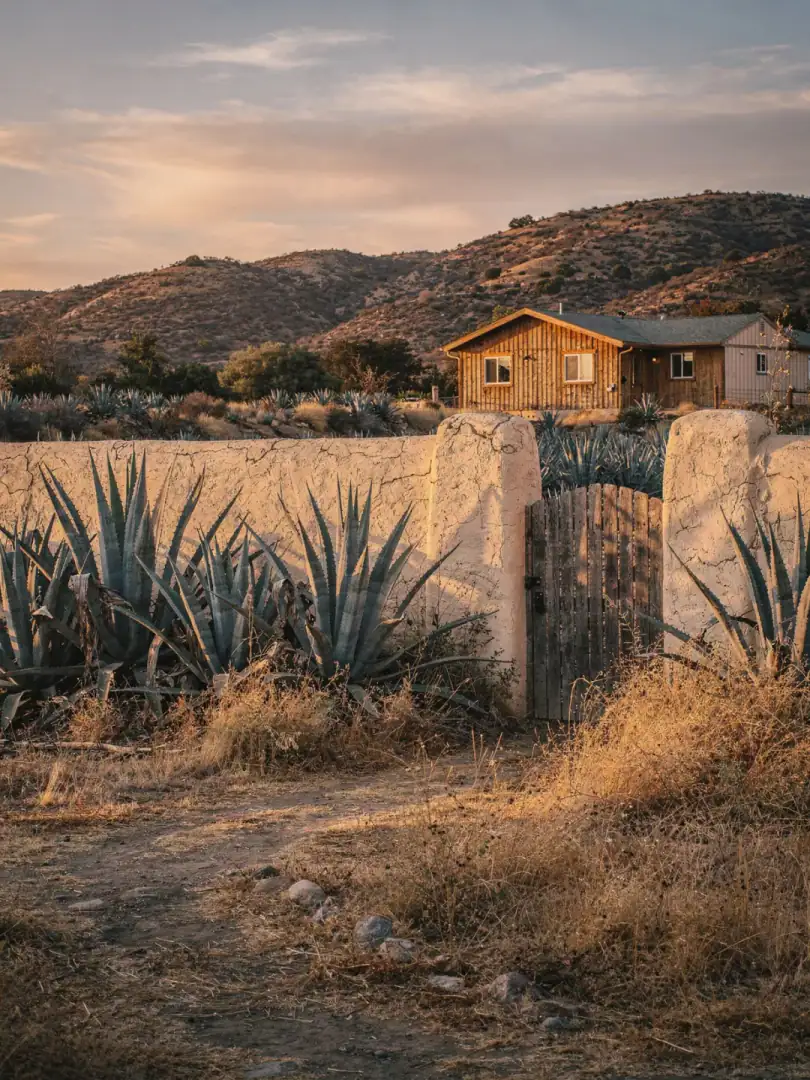
Agave americana has grown at Californian missions as an ornamental plant since the 18th century. The Spanish padres planted the spiky "Century Plant" as a living fence around gardens and pastures, never as a raw material for a spirit. For over two hundred years, that's how things stayed. It wasn't until the 2010s that someone had the idea to distill something from it.
That idea came from a man who previously had nothing to do with farming. Craig Reynolds spent thirty years working as chief of staff for members of the California State Legislature. During a volunteer stint for the organization Project Amigo in Colima, Mexico, he saw agave fields for the first time. He brought pups back to Yolo County, north of Sacramento, and planted his first rows.
A second source for the early plants lay to the south: Blue Agave was already growing on Mark Carlston's land in Riverside County, and pups from there made their way north. St. George Spirits distillery in Alameda also sourced agave from Riverside County in 2015 for its first test batch.
Individual experiments turned into a movement. In March 2022, Reynolds and others founded the California Agave Council, an association of growers and distillers. The council set its own voluntary standard: only a spirit made from one hundred percent Californian-grown agave may call itself "California Agave Spirits." The council now counts more than eighty growers across roughly 700 acres, or about 280 hectares, and eight distilleries.
None of it may be called Tequila or Mezcal, no matter how carefully it's distilled. The United States recognizes Mexico's protected designations of origin, much as the EU has done under an agreement dating back to 1997. In 2020, the US regulatory body TTB therefore created its own labeling category: "Agave Spirits," set out in 27 CFR 5.148. That, not Tequila or Mezcal, is where Californian agave spirit legally belongs.