Blue Agave Travels
Agave & Soil
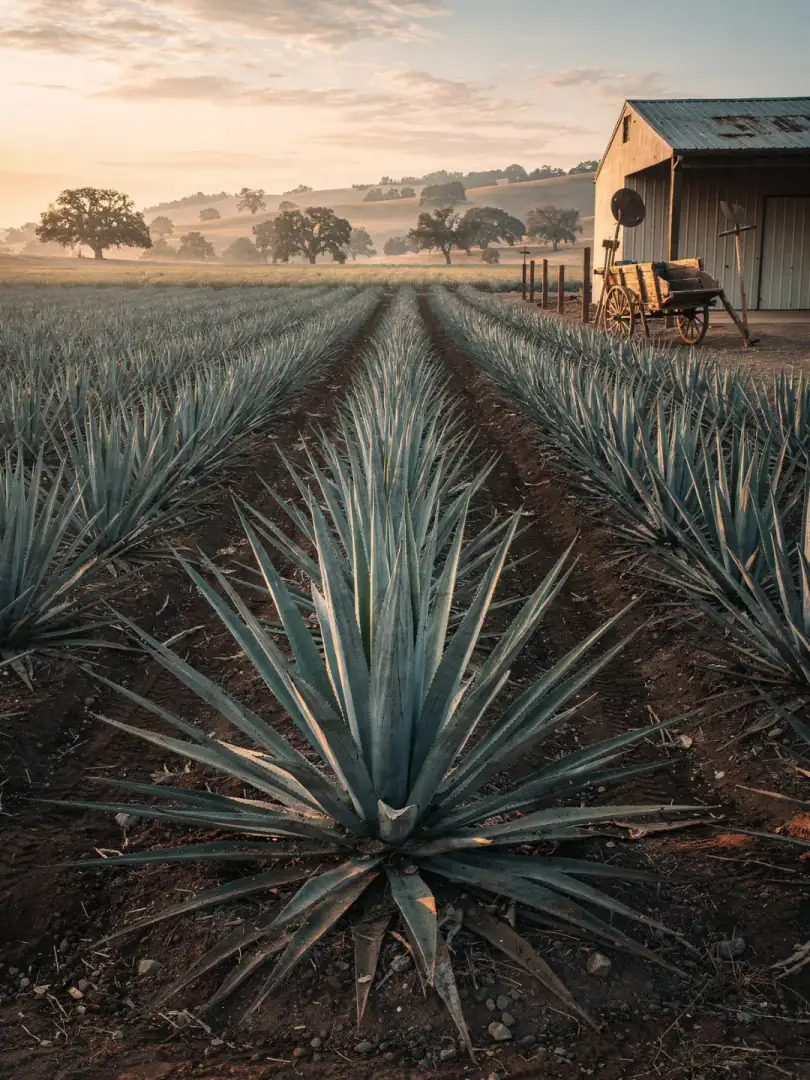
The same plant found in Jalisco also grows in Californian fields: Agave tequilana Weber, variety Azul, commonly known as Blue Weber Agave. On some plots in Southern California, Agave americana grows alongside it, the hardier "Century Plant" that once lined mission gardens. Neither grows wild here. Every plant stands in a cultivated row, irrigated and tended like a field crop.
Craig Reynolds harvests his fields in Yolo County with his own team of jimadores, as they're called in Mexico. They cut away the spiky leaves with the coa until only the piña remains, the starchy heart of the plant. The tool is Mexican, but the field lies north of Sacramento.
In Jalisco, Blue Agave takes six to eight years to reach harvest. In California, growers say it takes noticeably longer: the cooler, foggier coastal climate and shorter summers slow the plant's growth. Planting here means planning for a decade, not a season.
The most important fields lie in the Sacramento Valley, in Yolo County. The soil there has carried the name Yolo loam since the first USDA soil surveys: deep, fine alluvial soil deposited over centuries by the Sacramento River and its tributaries. It holds water well without letting it pool, giving the agave the dry feet it needs. In Southern California, around Murrieta, the soil is leaner and stonier, closer to conditions found in the Mexican highlands.
Between the jimadores of Yolo County and the young plantings near Murrieta lie several hundred miles and two very different Californias: damp river lowlands in the north, dry hill country in the south. Both, in the end, still call their harvest simply "Agave Spirit."
Fine alluvial soil deposited over centuries by the Sacramento River and its tributaries, dark and nutrient-rich.
The root: Young agave roots find nutrients and enough moisture here quickly, without waterlogging forming.