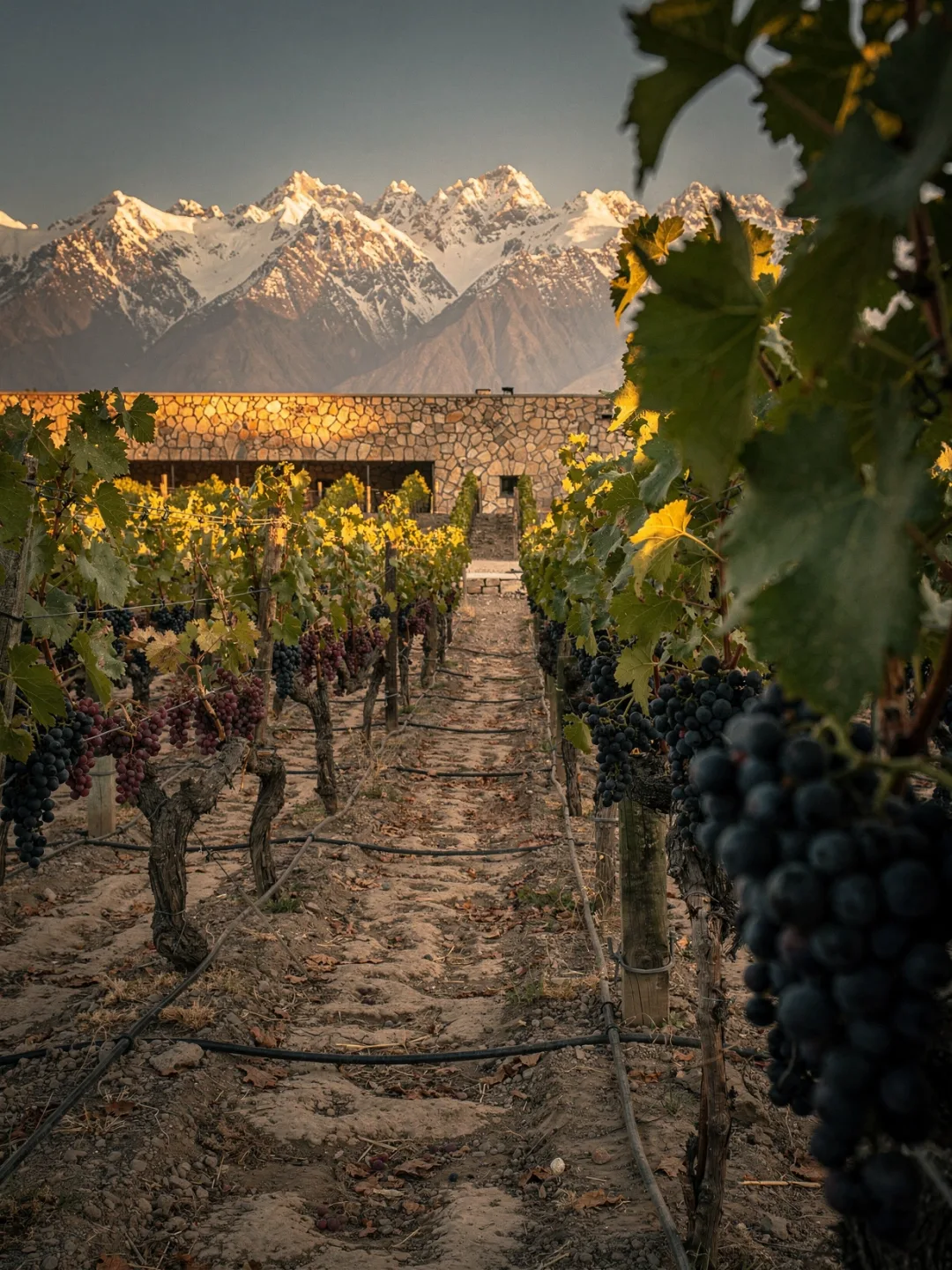
Malbec & Bonarda
Grape Varieties
A single variety defines Mendoza like almost no other wine region in the world. Malbec accounts for well over half of Argentina's total acreage of this grape, and nearly eighty-five percent of that grows in this province alone. In its homeland of Cahors, it always played second fiddle to sturdier varieties. Here it became the star.
In the glass, you recognize Malbec instantly by its color. It's almost opaque. Purple-black, much darker than a Chianti or a Rioja, and yet the tannins — the furry coating on your gums after a sip — are notably round rather than sharp. Add to that a scent of violets, plum, and dark berries, sometimes with a hint of cocoa from the oak barrel. This combination of power and softness exists nowhere else in this form.
Where the softness comes from has only recently become clear. Nicolás Catena Zapata tested one hundred thirty-five Malbec cuttings individually. He selected the five with the smallest berries and most balanced yields, because small berries mean more skin relative to juice, and the skin holds the color and aroma. This selection is now found in many new plantings in the Valle de Uco.
The second name you need to know in Mendoza is Bonarda. For nearly twenty years it was thought to be an Italian variety from Piedmont. It's actually the French Corbeau from Savoy. Researchers at the University of Cuyo only proved this in the year 2000 — it produces soft, fruity red wines with less tannin than Malbec and is often drunk young, while Malbec can age for years in the cellar.
Alongside these stand Cabernet Sauvignon and Cabernet Franc, especially in Luján de Cuyo, where they lend Malbec structure and dark bell pepper notes. As a single varietal, though, Cabernet remains the exception in Mendoza. The stage almost always belongs to the one grape that came from a desert and stayed.