Aroma Without Detours
Glassware
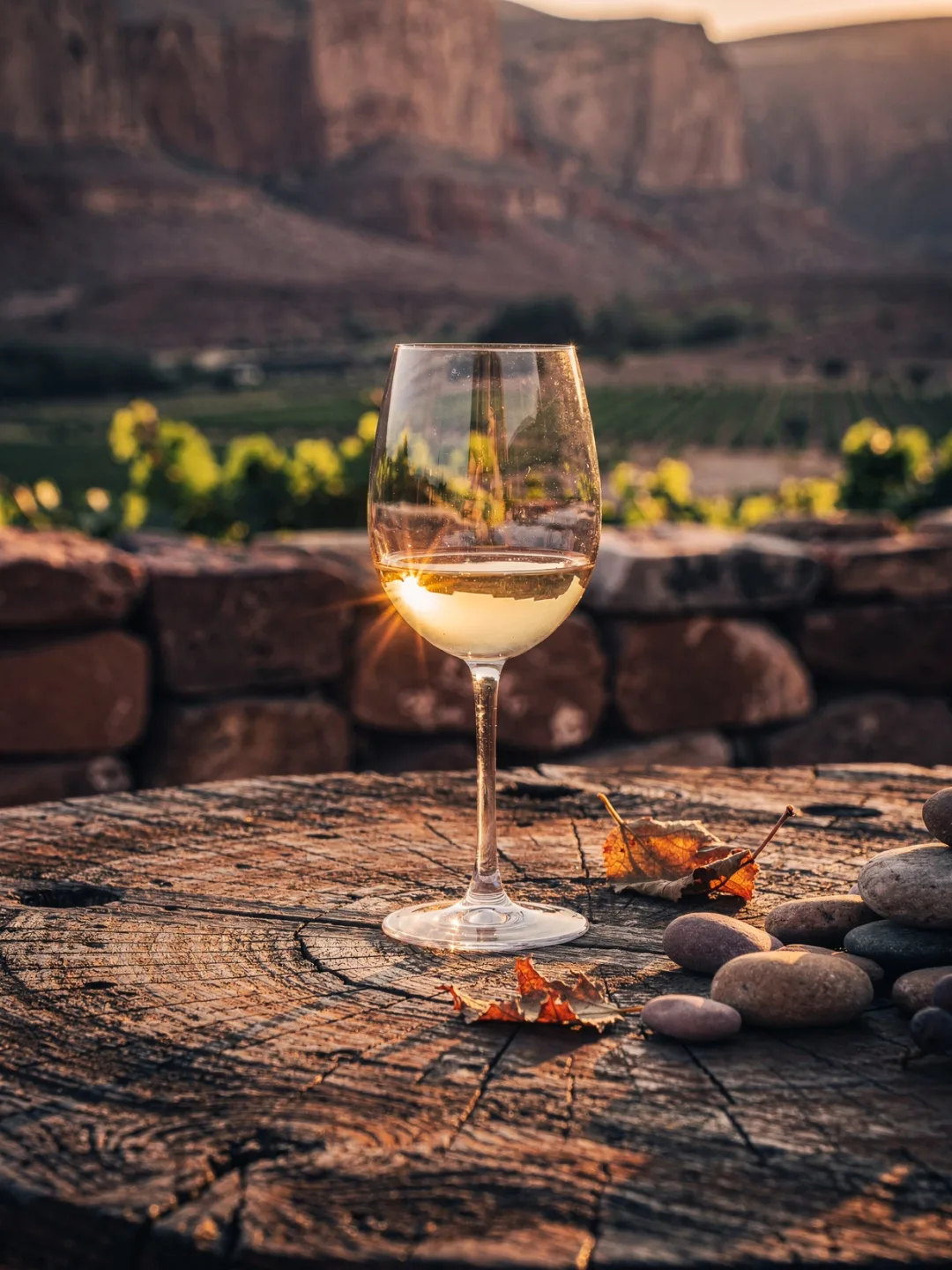
No wine from Salta needs a glass as urgently as Torrontés does. Its floral aromas — rose, orange blossom, a hint of jasmine — dissipate quickly if the glass is too open. In a glass that's too narrow, they nearly vanish altogether. What's needed is a slender tulip shape that holds the aroma just long enough for the nose to catch it.
A second problem comes from the altitude itself. Thanks to intense sunlight, Torrontés from Cafayate often reaches fourteen to fifteen percent alcohol, higher than its lowland relatives. A glass that's too bowl-shaped amplifies the alcohol's warmth in the nose and completely masks the florals. A narrower glass channels the aroma more precisely toward the tip of the nose, letting the fragrance arrive first.
Temperature counts double here too. Eight to ten degrees Celsius, colder than for most white wines, tames the impression of alcohol. At the same time, it sharpens the slightly bitter note typical of Torrontés in the finish, which comes from the thick, sun-scorched skins. Served too warm, this very bitterness tips into unpleasantness.
Malbec de altura wants the opposite. It needs a large, bowl-shaped glass with plenty of surface area, so the firm young tannins — a result of intense UV exposure at altitude — can soften somewhat before the wine reaches the tongue. Sixteen to eighteen degrees Celsius is right. Half an hour of air before the first sip visibly benefits young vintages.
The pour is the same for both: never above the widest point of the glass. Above that line, there's room left for the aroma to gather before it reaches the nose. For a wine whose origin you mostly smell, this space isn't a minor detail — it's half the tasting.