Altitude Beats Latitude
Climate
Cafayate sits at about twenty-six degrees south latitude, close to the Tropic of Capricorn — technically far too far north for cool-climate vineyards. What the sun provides in warmth, altitude balances out again: the vines grow between 1,500 and over 3,000 meters, and temperature drops with every meter of elevation gained.
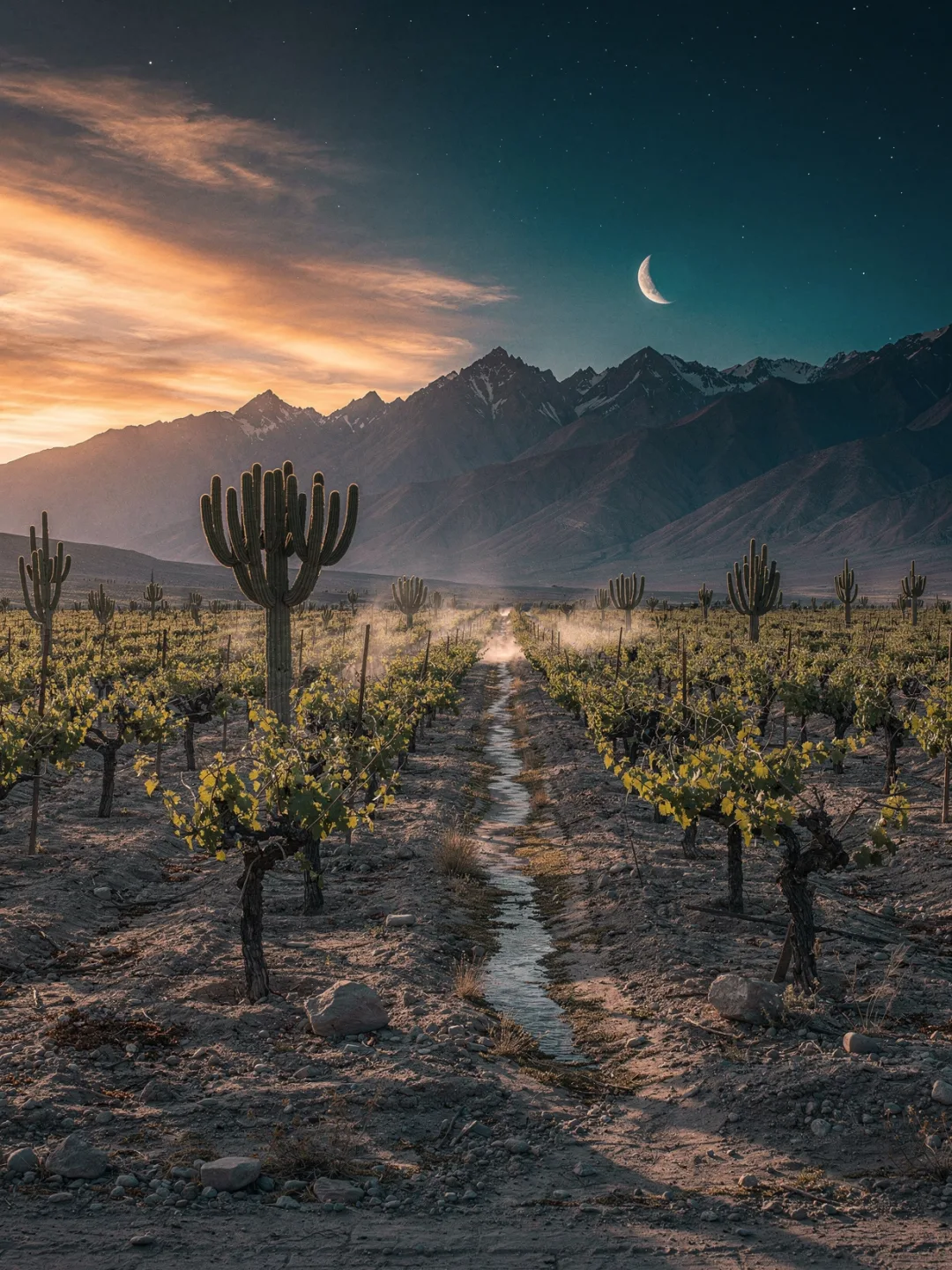
Rain is scarce. Weather stations around Cafayate record less than 250 millimeters a year, almost all of it falling between December and March. Without the rivers flowing down from the Andes, chief among them the Río Calchaquí, not a single vineyard could exist here. The water comes through canals, some of which date back to the time of the Diaguita-Calchaquí.
Day and night temperatures here diverge more sharply than almost anywhere else in wine growing. A difference of more than twenty degrees is normal. During the day, the sun burns down through the thin high-altitude air almost unfiltered onto the grapes; at night, temperatures drop quickly and dramatically. The vine ripens by day and recovers by night. It's exactly this swing that keeps the acidity in Torrontés fresh, even though the grapes endure desert heat at midday.
The radiation itself deserves its own mention. At this altitude and latitude, significantly more ultraviolet light penetrates the atmosphere than at lower elevations. Winemakers in Cafayate speak openly about their grapes needing "more sun protection" than elsewhere — thicker skins, more canopy for shade, sometimes even nets.
Wind from the Puna, the barren high plateau further west, keeps the air additionally dry. Fungal diseases struggle to take hold as a result. Winemakers rarely need to spray. Walking through the vineyards, you'll mostly see bare, pale soil between the rows — not from neglect, but because almost nothing grows here on its own, except the vines and a few hardy cacti.