Coolness through Elevation
Climate
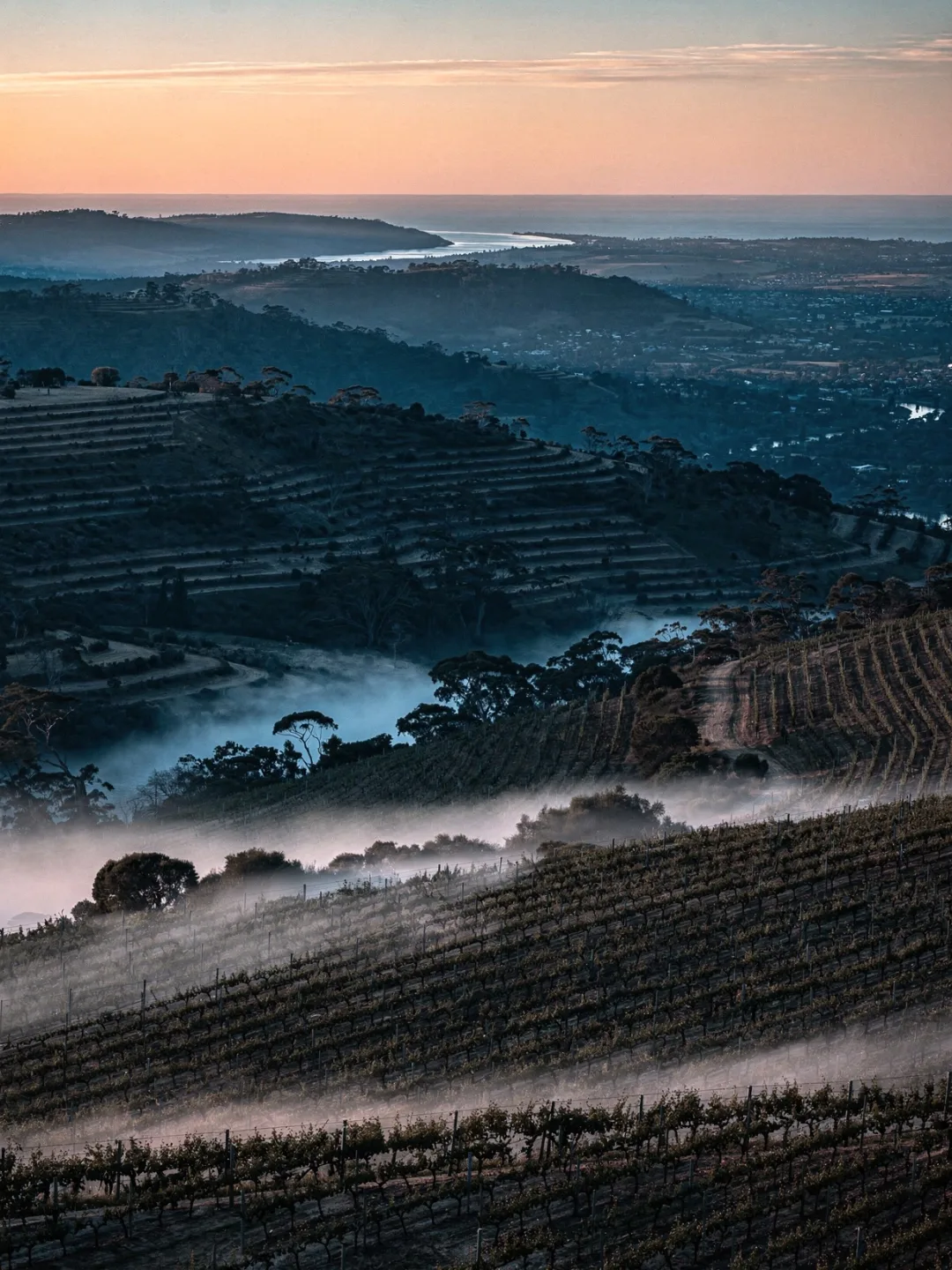
At sea level, Adelaide would be too warm for fine Sauvignon Blanc. That's why the vineyards of the Adelaide Hills aren't down in the city, but up in the hills. Between Mount Pleasant in the north and Mount Compass in the south, the vineyards climb from 400 to 650 meters, with the highest sites around Piccadilly reaching right up to the upper limit.
Every hundred meters costs about half a degree. That doesn't sound like much, but across the region's full elevation range it adds up to a good two degrees. During the growing season, the average temperature in the Adelaide Hills is around 18 degrees, while downtown Adelaide sees over 23 degrees at the same time.
On top of that comes wind from two directions. Gulf St Vincent to the west and the Southern Ocean to the south send cool air into the valleys in the afternoon. This brake extends the ripening period to over 140 days, so grapes here hang on the vine much longer than down on the warm coast. In the process, they build aroma without losing acidity.
Rain falls mainly in winter and spring. In total it amounts to around 550 millimeters a year, of which only about 270 falls during the actual growing season. Summers stay dry and mild. This keeps disease pressure low and allows winemakers to wait for harvest until the flavors are truly ripe.
This difference cleanly separates the Adelaide Hills from its neighbors. The Eden Valley is also high, but belongs to the zone around the Barossa Valley and has a different geology. McLaren Vale, on the other hand, lies almost at sea level right on the gulf and produces stronger, warmer red wines. Whoever picks grapes up here works in their own, markedly cooler climate.