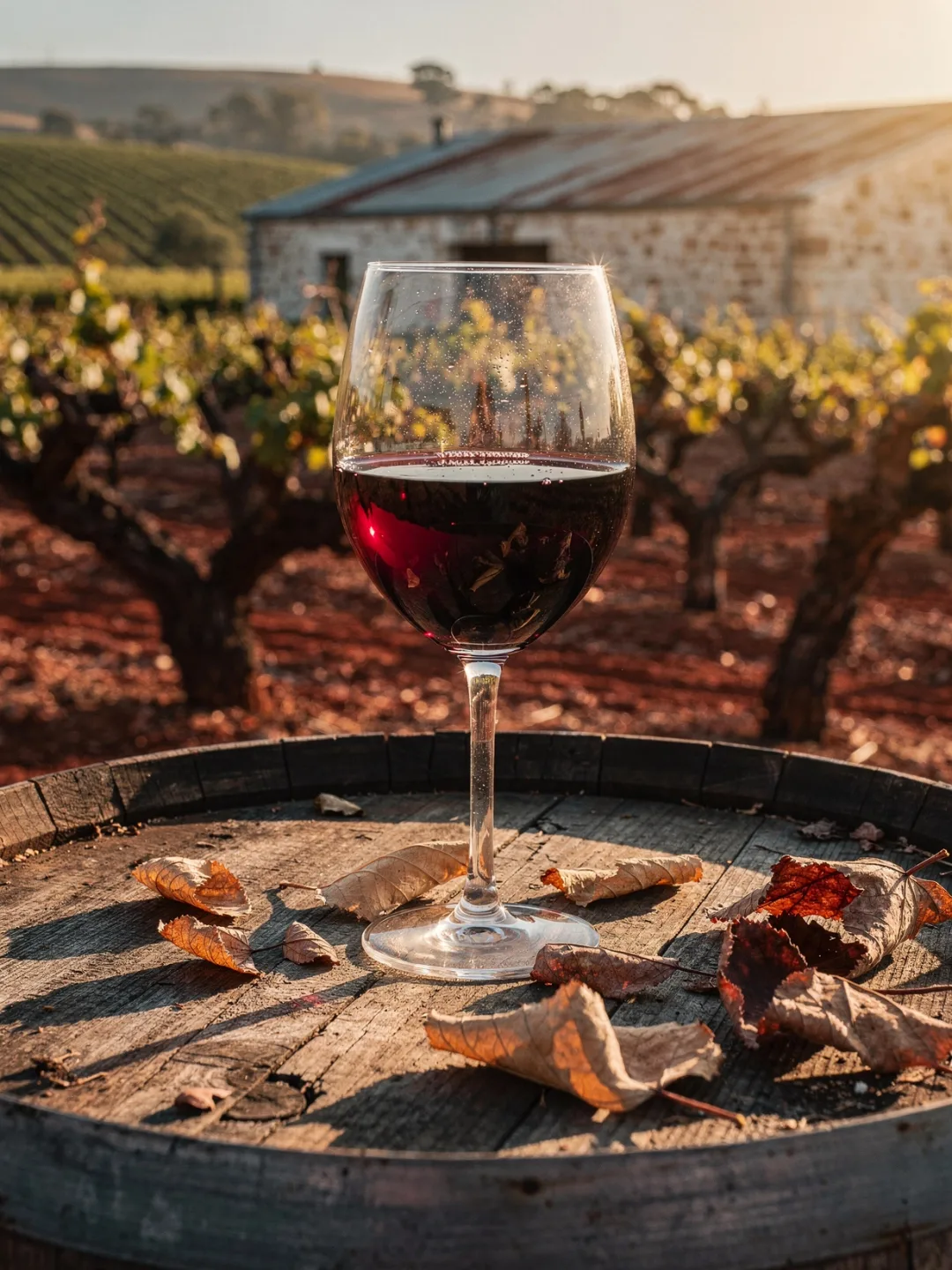
Large, bowl-shaped glasses
Glassware
A classic Barossa Shiraz rarely comes in under fourteen percent alcohol, often closer to fifteen. That fact alone determines the ideal glass shape, since a narrow glass keeps the alcohol fumes close to the nose. It makes the wine seem hot before you've even tasted it. That's why this wine needs a large, bowl-shaped glass with plenty of air above the liquid.
In the large bowl shape, the alcohol can escape upward while the heavier aromas like dark chocolate, licorice, and stewed plum stay on the nose and palate. A narrow Riesling glass would have the opposite effect on a wine like this. It would trap the heat and hide the fruit beneath it.
Tannin needs room too. Firm tannins, common in many Barossa Shiraz wines, feel more jagged in a narrow glass because the wine has little contact with air before reaching the tongue. In a wide glass, you can gently swirl the wine. It mingles with oxygen, and the tannins taste rounder, without anything actually changing in the wine itself.
Not every wine from the valley needs this kind of power. Old Grenache bush vines, for instance at the Turkey Flat vineyard in Tanunda, have stood since the 1840s. They yield paler, lighter red wines where fruit takes precedence over tannin. For these, a medium-sized glass is enough — it concentrates the fruit without letting the wine get lost in a sea of air.
Anyone tasting both styles back to back quickly understands why a single glass rarely suits an entire valley. For a cool Riesling from the neighboring Eden Valley, with its pronounced acidity, a narrower, more upright glass would be right, concentrating the freshness rather than losing it. In the end, what matters less is the standard printed on the box and more a simple rule of thumb: lots of wine and tannin call for lots of air, while lighter wines need correspondingly less glass.