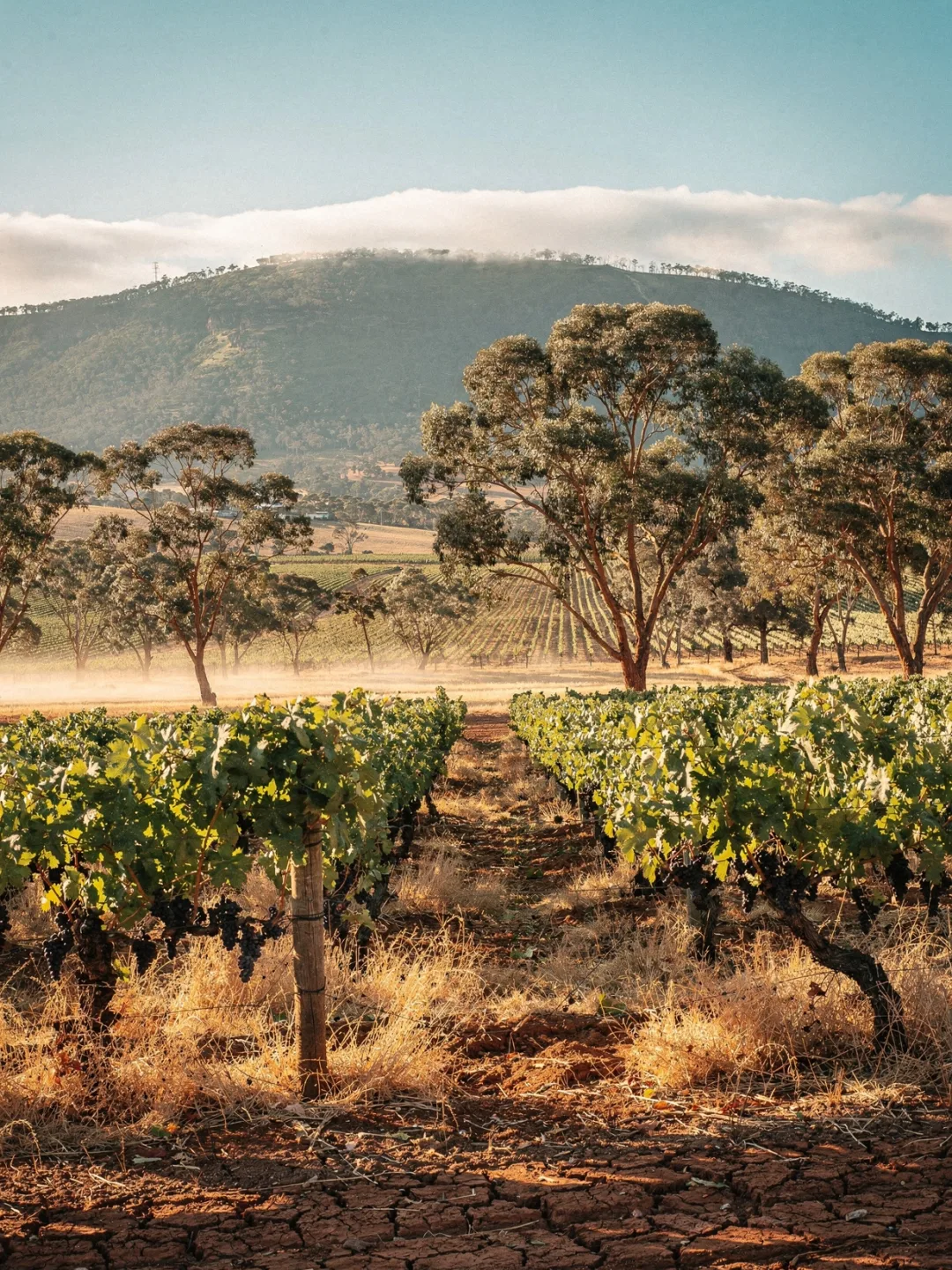
Valley floor, higher elevations
Climate
Anyone driving through the Barossa Valley in January quickly notices something: bold red wines thrive here especially well. On the valley floor around Nuriootpa, summer temperatures climb to as high as 29 degrees Celsius. In winter, they drop to between nine and fourteen degrees, with most rainfall falling between May and September. For vines that need to ripen in autumn, this timing is a blessing, since harvest almost always falls within a reliably dry stretch.
But the valley is no uniform basin. On the valley floor near Nuriootpa, at around 270 meters elevation, annual rainfall is about 470 millimeters. That's enough for many old vineyards to get by entirely without irrigation. Heading east into the higher Eden Valley, where some vineyards reach 500 meters, rainfall increases to over 680 millimeters, and the air stays noticeably cooler.
This elevation matters more than any climate statistic: a vineyard sitting two hundred meters above the valley floor often harvests later. In the cooler air, the grapes build sugar more slowly and hold onto their acidity longer. That's why a wine from the valley floor tastes round and broad, while one from the higher fringes feels tighter and cooler, even though both vineyards grow less than a hundred kilometers apart.
This is one more reason winemakers in the valley actively seek out coolness. Those who can plant along the edge of the Barossa Range to the west or in shadier side valleys. There, the afternoon sun arrives later, which is why some deliberately leave more canopy in place to shield the grapes from sunburn. At temperatures above 35 degrees, common in high summer, an exposed berry can literally burn.