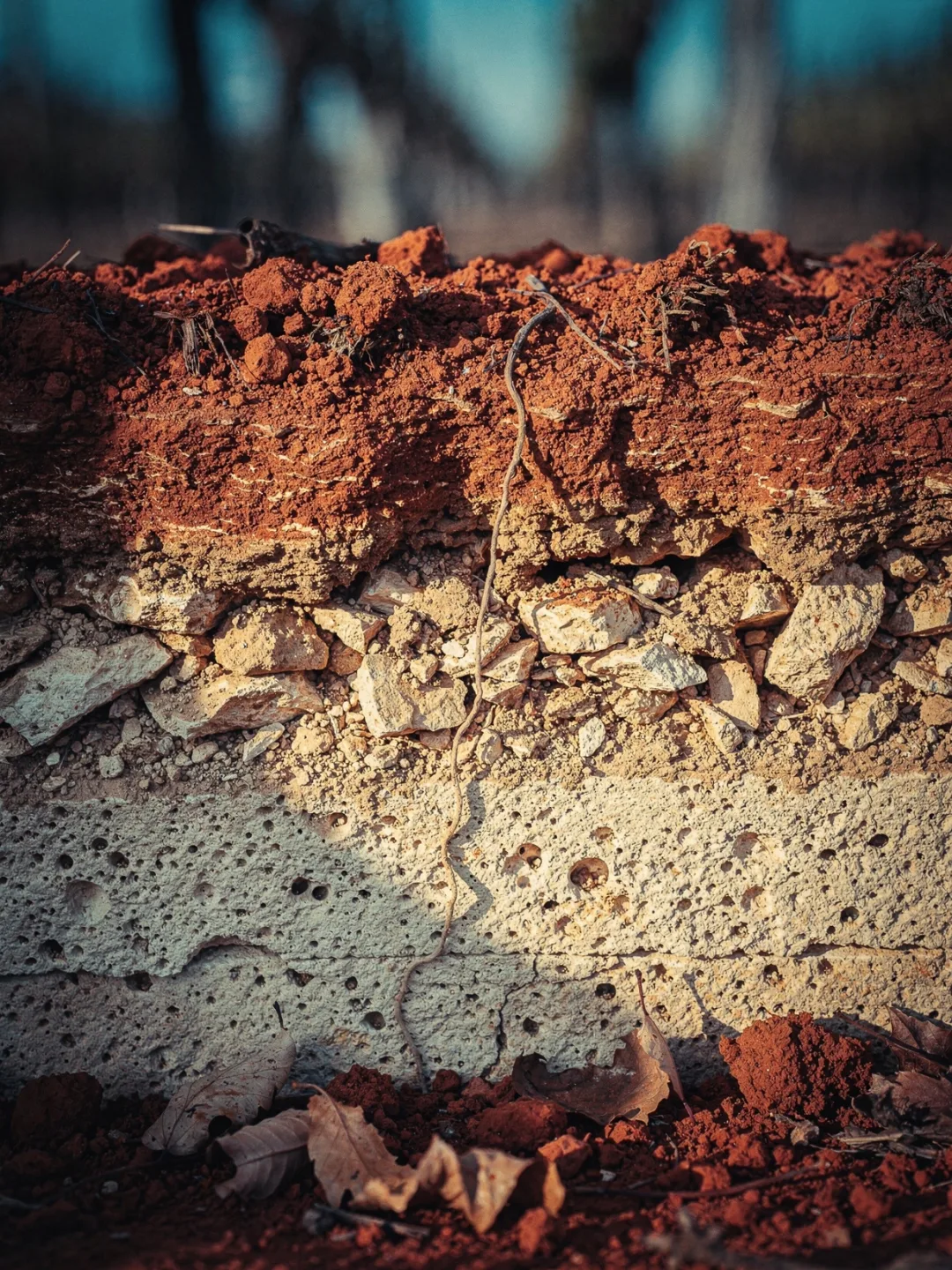
Terra Rossa & Limestone
Soils
Dig a hole in a Coonawarra vineyard. You'll quickly hit fine red clay, as red as fired brick. This is Terra Rossa, literally red soil, named by settlers it reminded of their old homeland. Here it covers a narrow strip about fifteen kilometers long and only two kilometers wide, hardly broader than a mid-sized town.
This soil didn't form on the spot but over millennia, carried by the air. Wind brought in fine dust from drier periods over the last hundred and twenty thousand years. Iron oxide stained it rust-red, and rain slowly washed it into the cracks of the underlying limestone. Calcium from that same rock keeps the clay loose, so water drains well instead of suffocating the roots.
Beneath the red layer, on average after about fifty centimeters, the limestone itself begins, a porous rock made of fossilized seabed that formed over fifteen million years ago at the bottom of a shallow ocean. Vines push their roots through the cracks of this Gambier limestone down to a shallow water table. It carries water year-round. This groundwater makes irrigation almost unnecessary in many years. The vine draws what it needs from below rather than from above.
This combination of a steady water supply from below and rapid drainage from above keeps the vines under mild stress without letting them dry out. Small, thick-skinned berries are the result. Most of the color, tannin, and aroma sit in the skin. That's why wines from Terra Rossa often taste denser than wines from the sandier surrounding land, even when the same grapes are worked with in the cellar.
Fine red clay, rich in iron oxide and calcium, formed over millennia from windblown dust. Loose enough that water drains through quickly.
The root: Fine roots sit densely here, yet the soil holds little water over the summer.