Coolness from the Sea
Climate
Sixty kilometers separate the vineyards of Coonawarra from the open sea. Yet it's precisely this sea that shapes the climate here more than the sun over the flat land. Off the coast runs the Bonney Upwelling, a cold ocean current that pushes deep water to the surface and noticeably cools the air above it. This cool air moves inland as wind and tempers the heat before it reaches the vines.
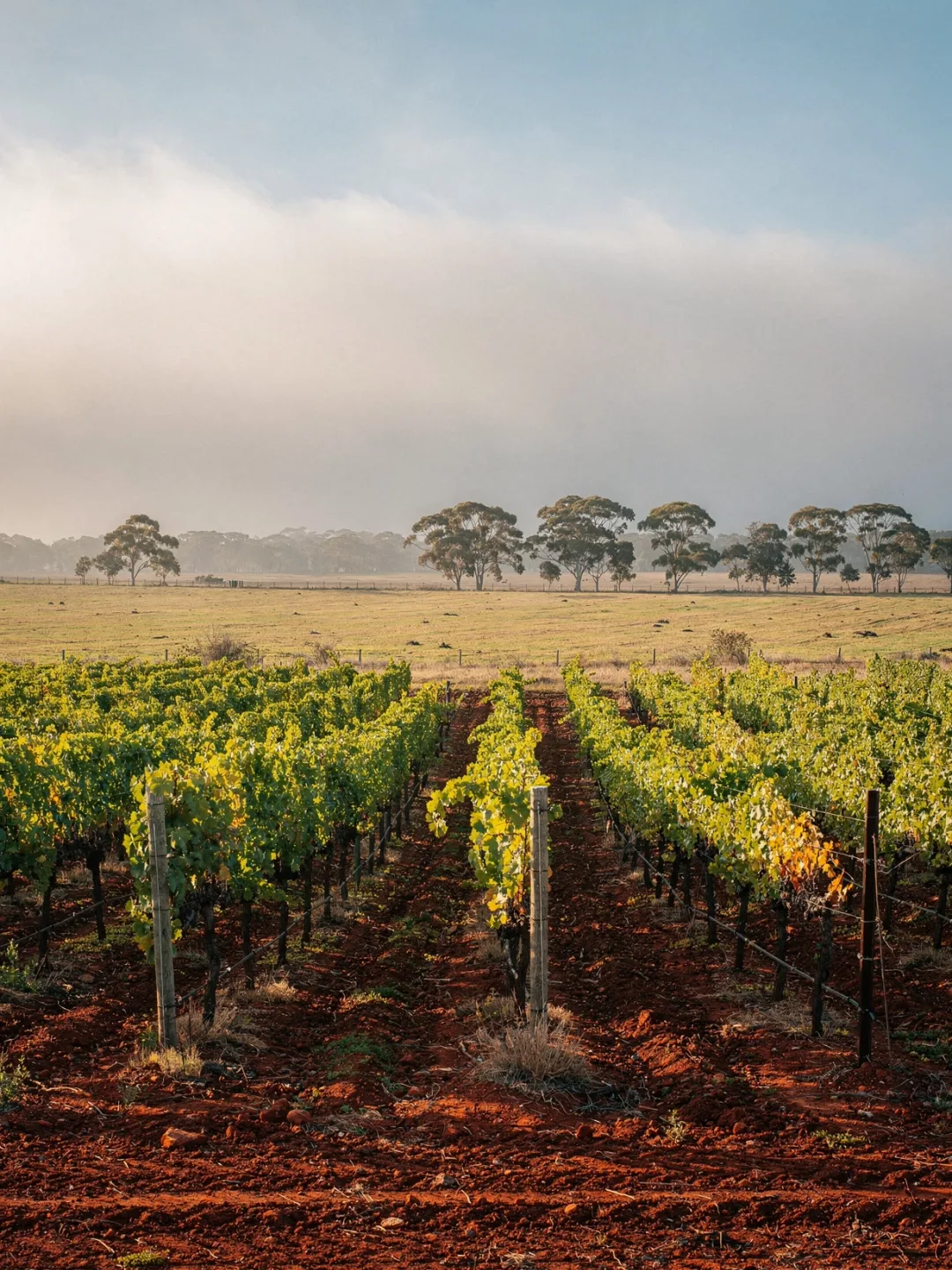
In midsummer, during the Australian January, the average temperature sits just above nineteen degrees Celsius, remarkably cool for an area at the same latitude as Morocco or southern Spain. Add to that a dense cloud cover that often hangs over the plain and further dampens the midday heat. For Cabernet Sauvignon, which needs weeks to develop its aromas without scorching, this is a gift.
Rainfall over the year totals around 585 millimeters, yet during the growing season from October to April it's only about 219 millimeters. It's precisely during this drier phase that the grapes ripen. Too much rain shortly before harvest would cause the ripening berries to split. In Coonawarra, this risk stays small.
Just an hour's drive north, in warmer parts of South Australia, grapes ripen considerably earlier and more powerfully in the sun. Coonawarra runs on a different clock. Harvest here often doesn't begin until late March or even April, weeks after the warmer inland regions. This slowness is no disadvantage. It's the reason the wines from here retain their cool, almost minty freshness, something rarely found in warmer sites.