Slender for Riesling
Glassware
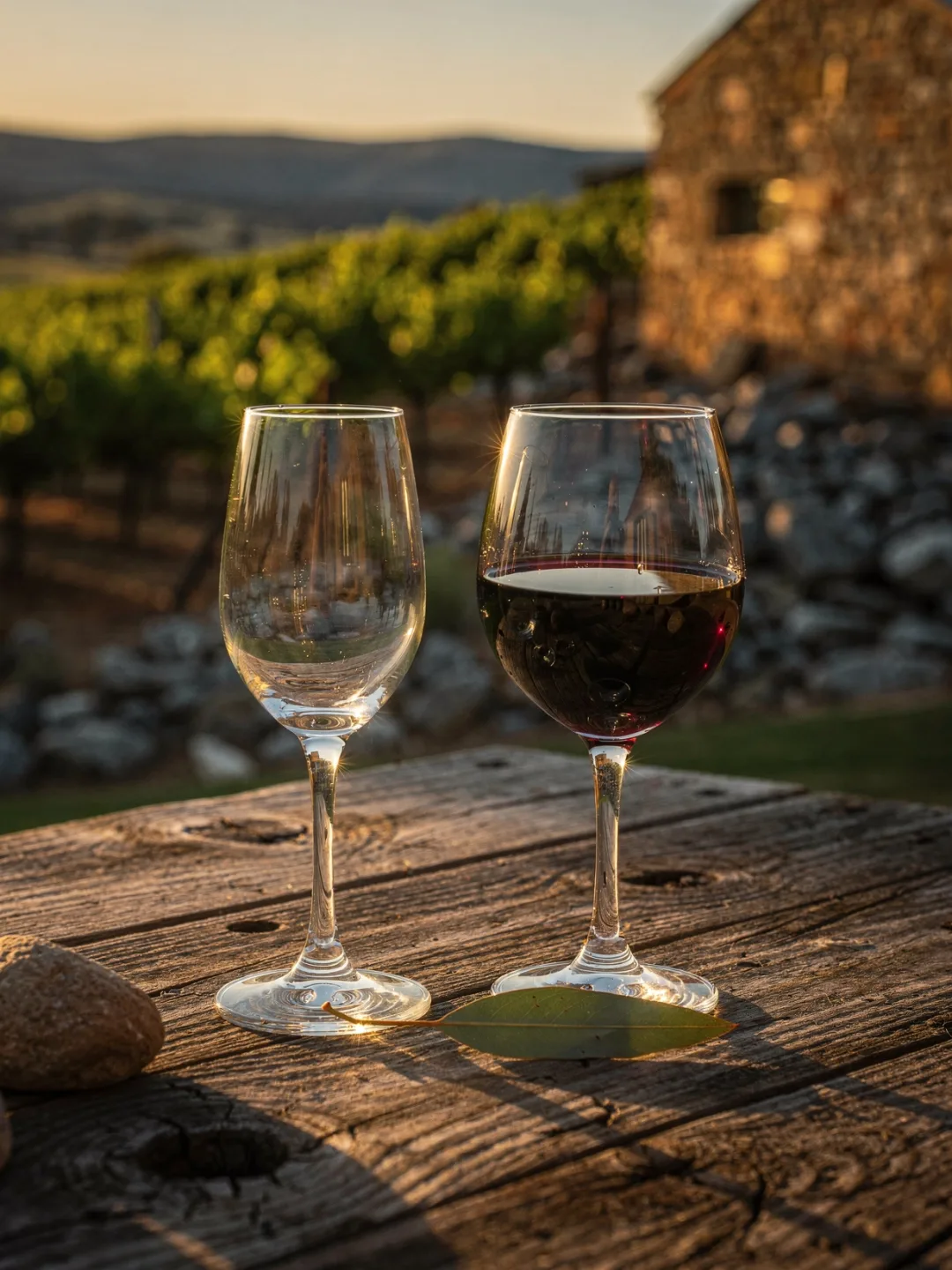
A Riesling can't handle a large glass. Its aromas are delicate: lime, jasmine blossom, sometimes a hint of wet pebble. In a wide bowl with plenty of air contact, they dissipate before they ever reach the nose. A narrow glass with a tall bowl and tight rim concentrates exactly what would otherwise be lost.
With an aged Riesling from the Eden Valley, there's a second reason as well. After five, ten, or more years, the variety develops an aroma reminiscent of petrol. Behind it is a compound called TDN, which forms over time from more innocuous precursors in the grape. The narrow glass keeps this scent concentrated enough to be recognized as part of the wine, rather than dismissed as a flaw.
A Shiraz, as made by Henschke and other estates in the region, needs the opposite. It arrives in the glass with firm tannin and dark fruit. Both traits feel hard and closed off in a narrow shape. A rounder glass with a much larger surface area lets the wine breathe, softens the initial edge of the tannin, and gradually opens up notes of dark berry, white pepper, dried herbs, and smoky wood.
Temperature matters just as much as shape. Riesling tastes best cool, between 46 and 50°F (8-10°C); otherwise its acidity comes across as shrill rather than fresh. Shiraz can handle noticeably more warmth, around 61 to 64°F (16-18°C). Serve a red wine too cold and its tannin will seem even harder than it already is.
Taste both wines in one evening and it quickly becomes clear: using the same glass for both means shortchanging one of them. The region produces two nearly opposite wine styles from the same hills. The glassware could hardly differ more.