Lime to Petrol
Tasting
Lime and green apple define the first impression, joined by a hint of jasmine blossom on the nose and an acidity that almost crackles in the mouth — this is how a young Riesling from the Eden Valley tastes. It's dry almost without exception; residual sugar has no place in this style. Tasting one for the first time, people are often surprised at how lean and taut an Australian white wine can be.
Over the years, the wine changes fundamentally. After five to ten years in the cellar, the citrus aromas gradually give way to a note that connoisseurs call "petrol." It genuinely does recall the smell of a gas station. Some drinkers love this stage above all others; others prefer the young, bright wine.
Shiraz from the Eden Valley smells different from the broader, sweeter Shiraz of the warmer Barossa Valley nearby. Dark berries and plum form the base. Layered over that is often a distinct note of black pepper, sometimes licorice or dried herbs. This peppery scent comes from a compound called rotundone, which develops more strongly in cooler sites than in hot ones.
In the mouth, the tannin is present but rarely aggressive: firm enough to give the wine structure, smooth enough to make it enjoyable even young, without feeling harsh or furry on the tongue. This is the difference elevation makes: grapes that ripen more slowly build tannin that feels rounder, rather than simply tasting bitter.
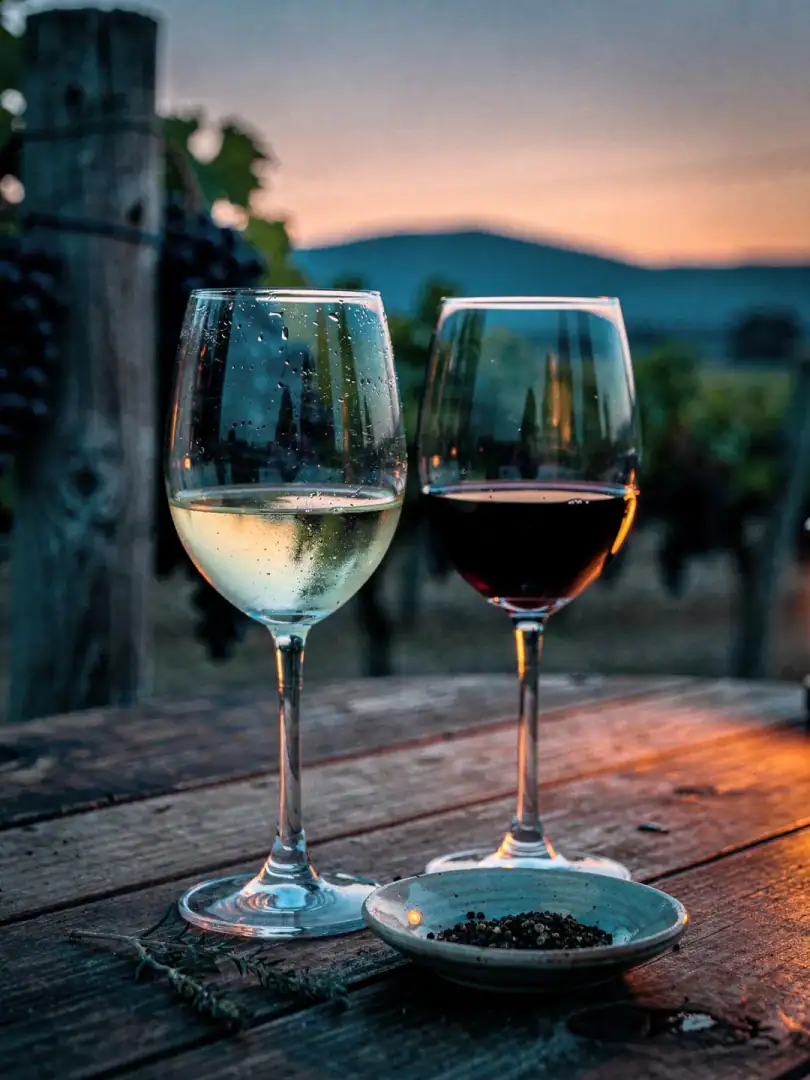
Taste both of the region's wines side by side, and it quickly becomes clear how much range these same hills contain. One wine lives on freshness and years in the cellar. The other lives on power and a spiciness rarely found this concentrated anywhere else in Australia.