Semillon & Shiraz
Grape Varieties
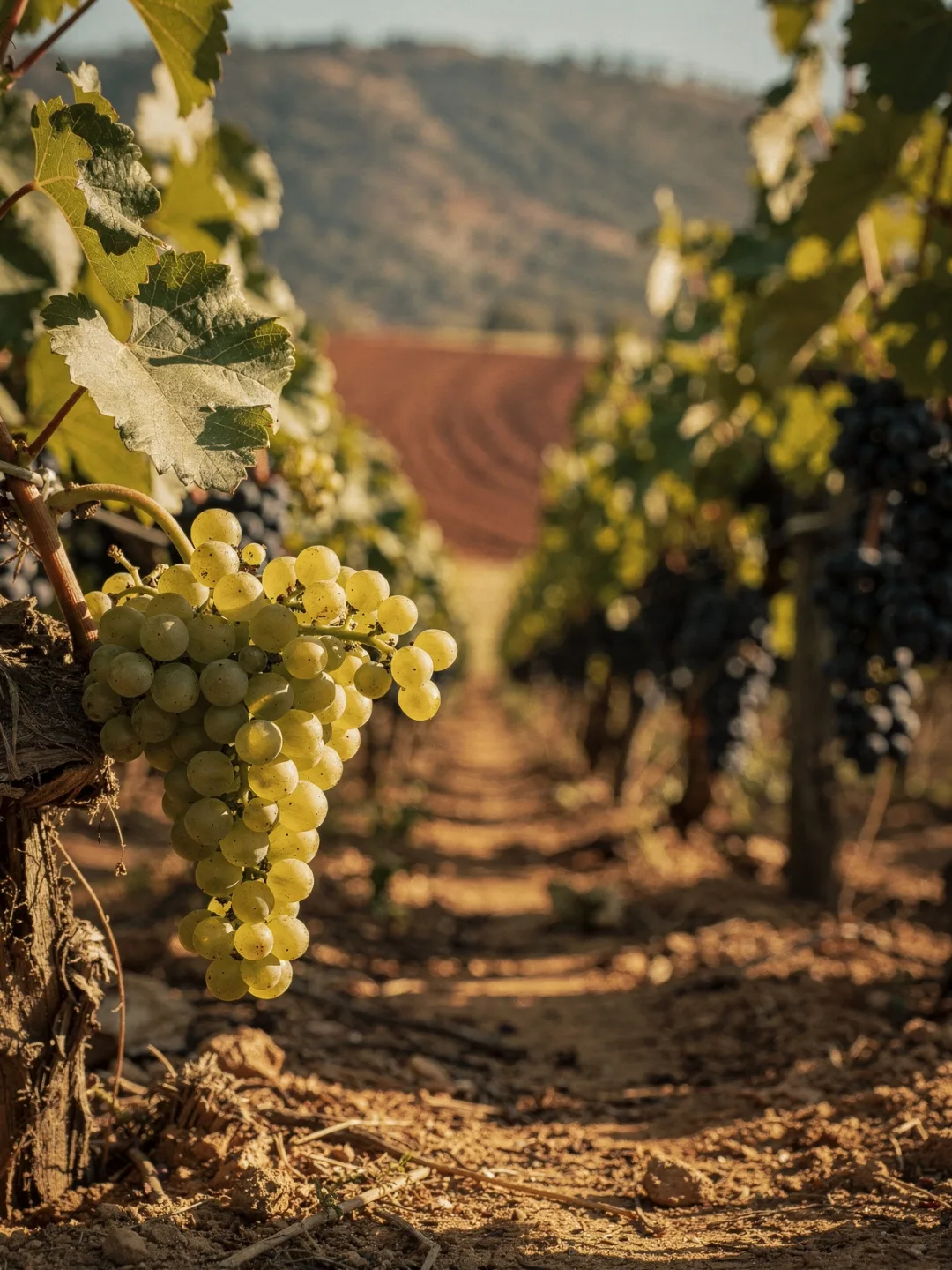
A single variety makes the Hunter unmistakable, and it's not the one you'd expect. Elsewhere, Semillon produces pale blending partners for Sauvignon Blanc, but here it yields a wine entirely its own, harvested at barely eleven percent alcohol, no fully ripe grape, but a bet placed on the future. Young, it tastes of lemon and freshly cut grass, almost watery, almost unfinished.
That's exactly the trick. Without a single oak barrel, the same wine transforms after ten or fifteen years in the bottle. It then smells of toast, honey, and lanolin, as if it had spent time in wood after all. The high acidity of the early-picked grapes is the engine behind this evolution. Without it, the wine would collapse after three years instead of lasting twenty.
The second pillar is Shiraz, descended directly from Busby's cuttings. Here it rarely shows the dense, sweet fruit of warmer Australian regions. Instead, earth, leather, and a touch of pepper come through, with a medium body and a freshness rarely found in South Australia, a legacy of the valley's damper, cooler climate.
Chardonnay arrived late and burst onto the scene. Murray Tyrrell planted the first vines on Tyrrell's Short Flat vineyard in 1968, and the resulting Vat 47 became Australia's first commercial Chardonnay in 1971. Today the variety is inseparable from the valley, often built up creamy, sometimes as lean as the Semillon beside it.
A fourth variety holds its own here: Verdelho, originally from Madeira, made into a robust, dry white wine with a tropical fruit note. Together with Semillon, Shiraz, and Chardonnay, it accounts for most of the planted area. Four varieties for an entire valley — elsewhere you'd need a dozen.