Ironstone Gravel & Granite
Soils
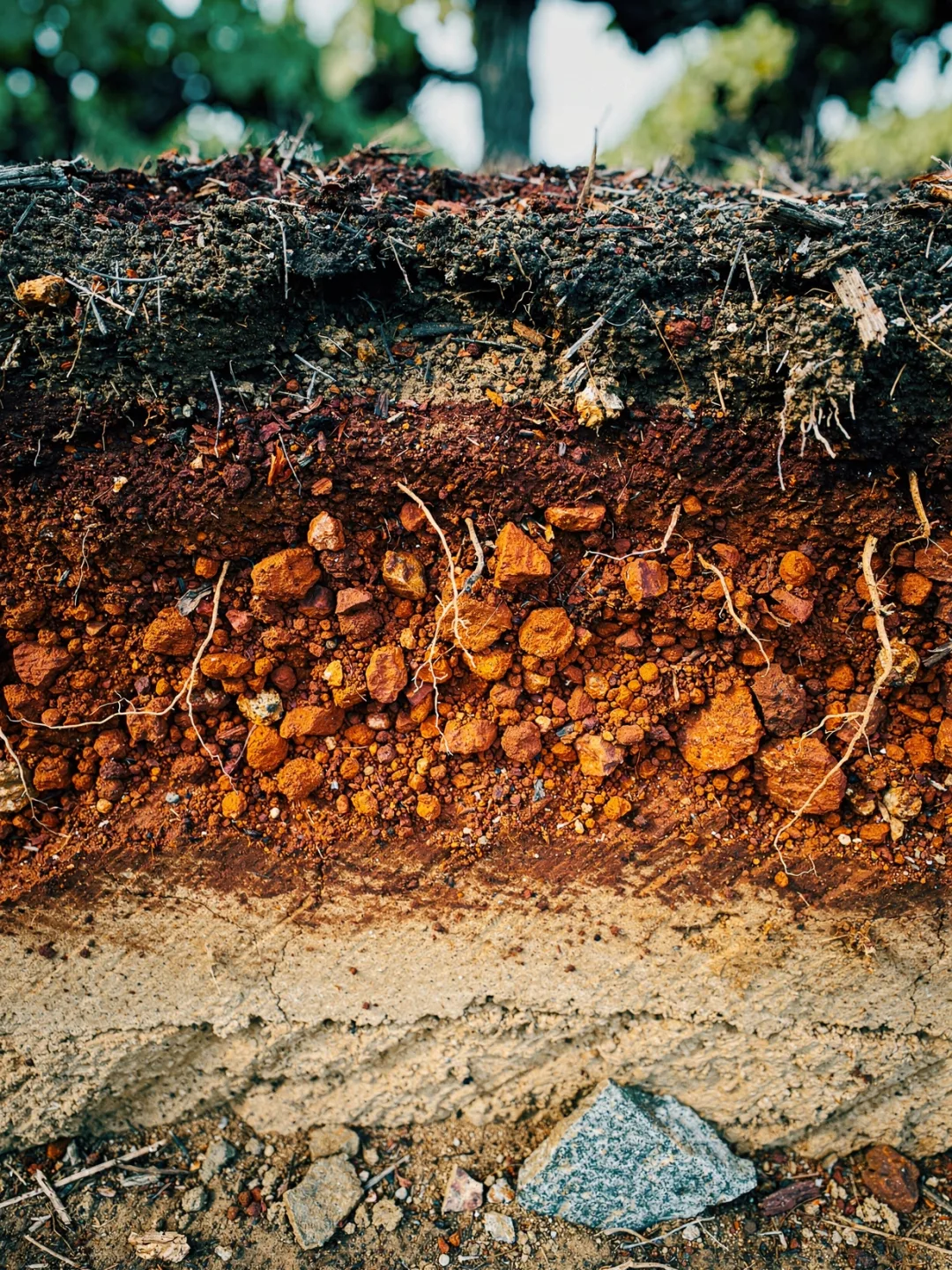
Dig a hole in a vineyard near Wilyabrup, and within a hand's width you'll hit hard, red gravel. The stones in it are rust-brown and heavy, almost like little lumps of rust, and winemakers simply call it ironstone.
This gravel formed from ancient rock. Beneath the region lies granite and gneiss, in places over a billion years old—older than the Alps and older than almost any other wine region on Earth. Millions of years of weathering baked this rock into an iron-rich, rust-red crust, which now sits as loose gravel over the bedrock.
This gravel holds barely any nutrients and little water, so roots drive deep, often a meter or more, until they reach damper ground below. There, clay stores the moisture. That downward journey is exactly what produces small, thick-skinned berries—and the skin is where most of the color, tannin, and aroma reside.
Around Forest Grove, at the heart of the region, nearly half of all vineyards sit on exactly this soil type: red gravelly clay over clay subsoil. Overall, soil scientists count around ten distinct major soil types across Margaret River, ranging from deep, lean sand to shallow, stony gravel. Hardly any winery sits on just one of them.
The gravel doesn't act directly on flavor, even though that's often claimed. No mineral travels from the rock into the grape and then into the glass. What matters is the indirect route: how quickly the soil drains water, how deep it forces the roots, and how much heat the stones store. At night, they release that heat back out.
A thin, dark layer of rotted leaf litter, rarely more than a hand's width deep in an ironstone vineyard.
The root: This is where the fine roots sit, catching the winter rain while it's still there.