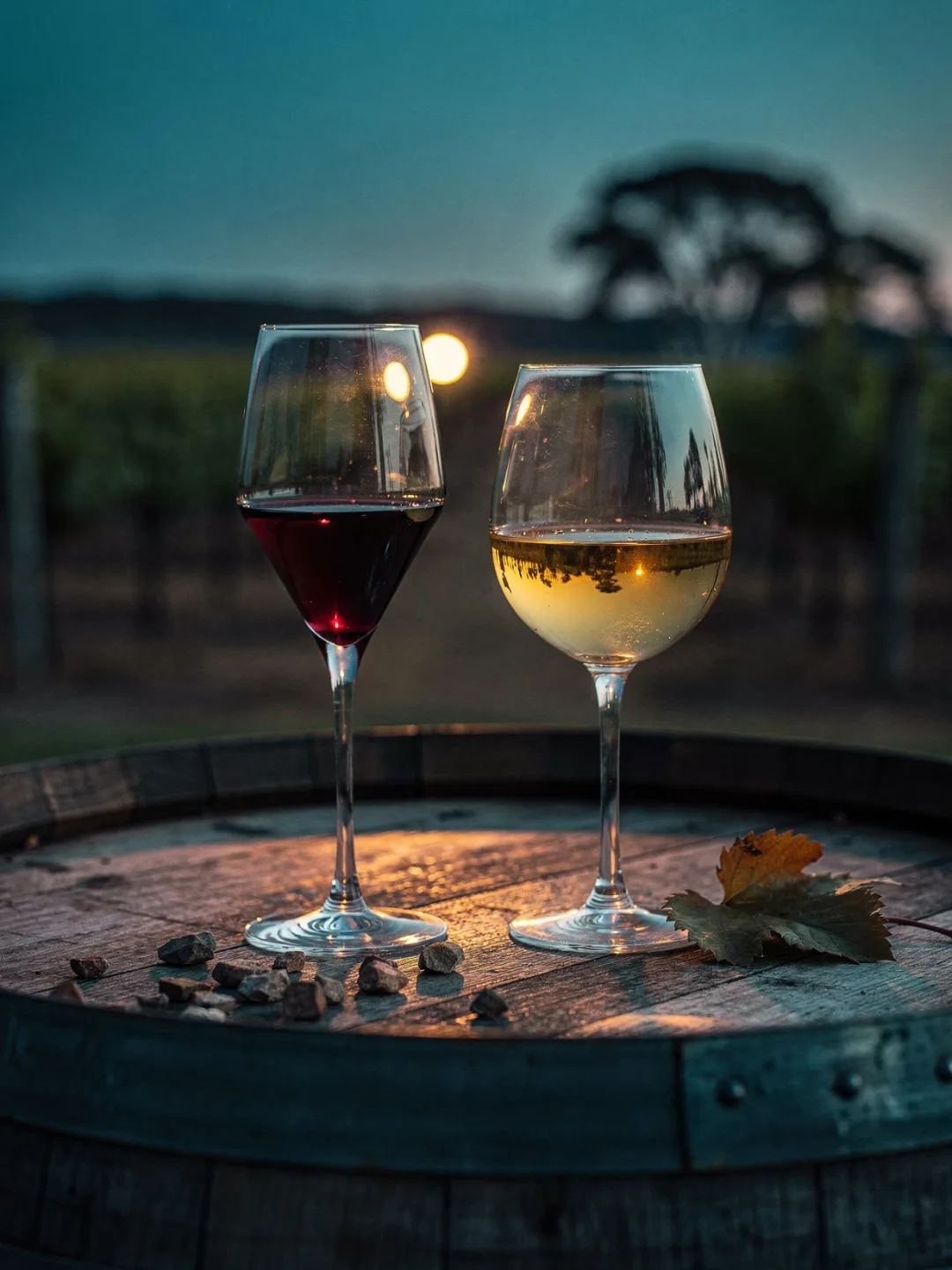
Bordeaux Glass or Balloon Glass
Glassware
Open a bottle from Margaret River, and you can never be quite sure beforehand which glass you'll need. Hardly any other wine region in the world is known for two such different wines: a taut, tannic Cabernet blend and a barrel-aged Chardonnay with plenty of acidity and little sweetness. Both grow on the same gravel, just from different vines. Two wines call for two vessels.
The Cabernet blend needs a tall glass that tapers inward at the top, the kind familiar from Bordeaux. The narrow opening steers the alcohol away from the tip of the tongue and instead concentrates the aromas of blackcurrant, cedar, and the green herbal notes so often found in the Cabernet vineyards around Wilyabrup. A glass that's too wide lets that balance fall apart. The shape here is no accident.
The Chardonnay demands the opposite. It's often aged in oak barrels and typically undergoes malolactic fermentation, which makes it creamier but can also bring reductive notes of struck match and cashew that only blow off with air. A rounder glass with a wider bowl gives that volatility the room it needs before the fruit underneath comes through.
Temperature separates the two wines even more sharply. The Chardonnay hardly tolerates more than ten to twelve degrees Celsius; any warmer and the oak suddenly becomes intrusive while the acidity fades into the background. The Cabernet blend, by contrast, needs sixteen to eighteen degrees, since its tannin turns hard and bitter when chilled. Cold noticeably reshapes both wines.
Both wines age well, and both eventually need air, though for different reasons. The Chardonnay opens up after just a few minutes in the glass. The Cabernet blend needs half an hour, or a decanter, before its tannin rounds out and the fruit beneath emerges. Patience pays off in the end.