Sandstone & Dolerite
Soils
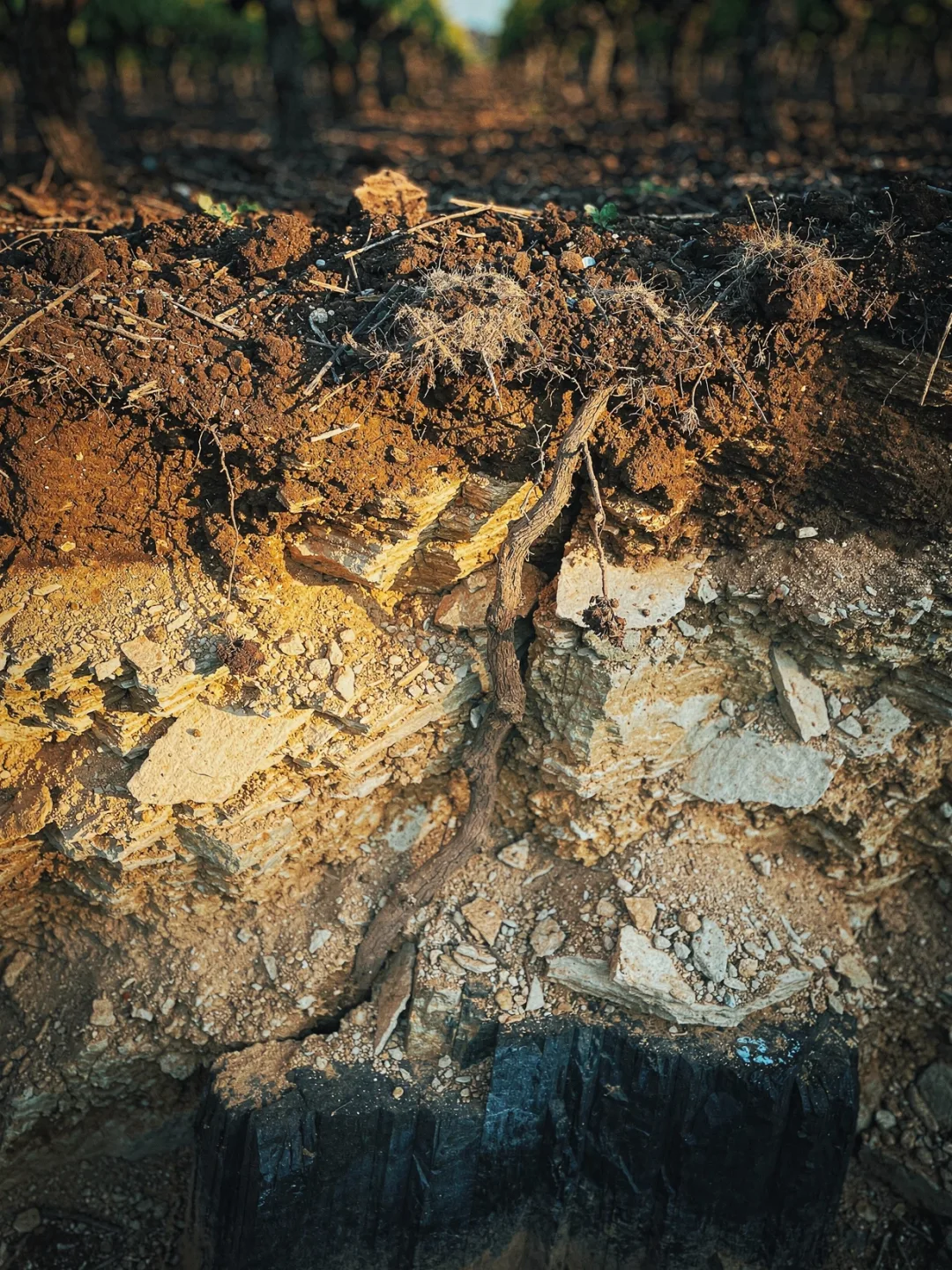
Dig a hole in the Coal River Valley and you soon hit rock. Beneath a thin layer of dark, clayey soil that specialists call Dermosol lies weathered sandstone from the Triassic period, more than two hundred million years old and crumbly enough for roots to work their way through. Smaller berries are the result. And a small berry contains proportionally more skin, more colour, more tannin.
Things look quite different a good hundred kilometres north, in Pipers River. There, instead of pale sandstone, a rich, reddish-brown rock from extinct volcanoes takes over, known as Ferrosol, rich in iron and hence so intensely coloured. Both soils are ancient, one marine in origin, the other volcanic. Yet a Chardonnay from here drinks quite differently from one grown there.
Water is the real difference, not colour. The sandstone in the Coal River Valley lets rain drain through quickly and retains almost nothing, forcing vines to dig for moisture as early as midsummer. The Ferrosol in Pipers River, by contrast, stores more, though it also releases it again. It remains fine-crumbed and loose, as volcanic soils often are.
On some of the higher-lying parcels in the Coal River Valley, a third layer comes into play: dolerite. This dark, columnar rock also forms the peaks around Hobart. It is hard, barely permeable to water, and forces roots to grow sideways rather than downward. Where it lies close to the surface, the wine often turns out denser and firmer.
Drainage matters here more than almost anywhere else in Australia. The island gets enough rain that, without permeable subsoil, vines would put their energy into leaf growth rather than fruit. Sandstone and dolerite do this job in different ways, but both do it reliably. The Ferrosol in Pipers River even needs finer drainage channels, since it naturally holds more water.
Dark, clayey topsoil with little organic matter. In the Coal River Valley, often only a hand's width deep.
The root: This is where the fine roots sit, absorbing the rare rainfall immediately before it seeps away.