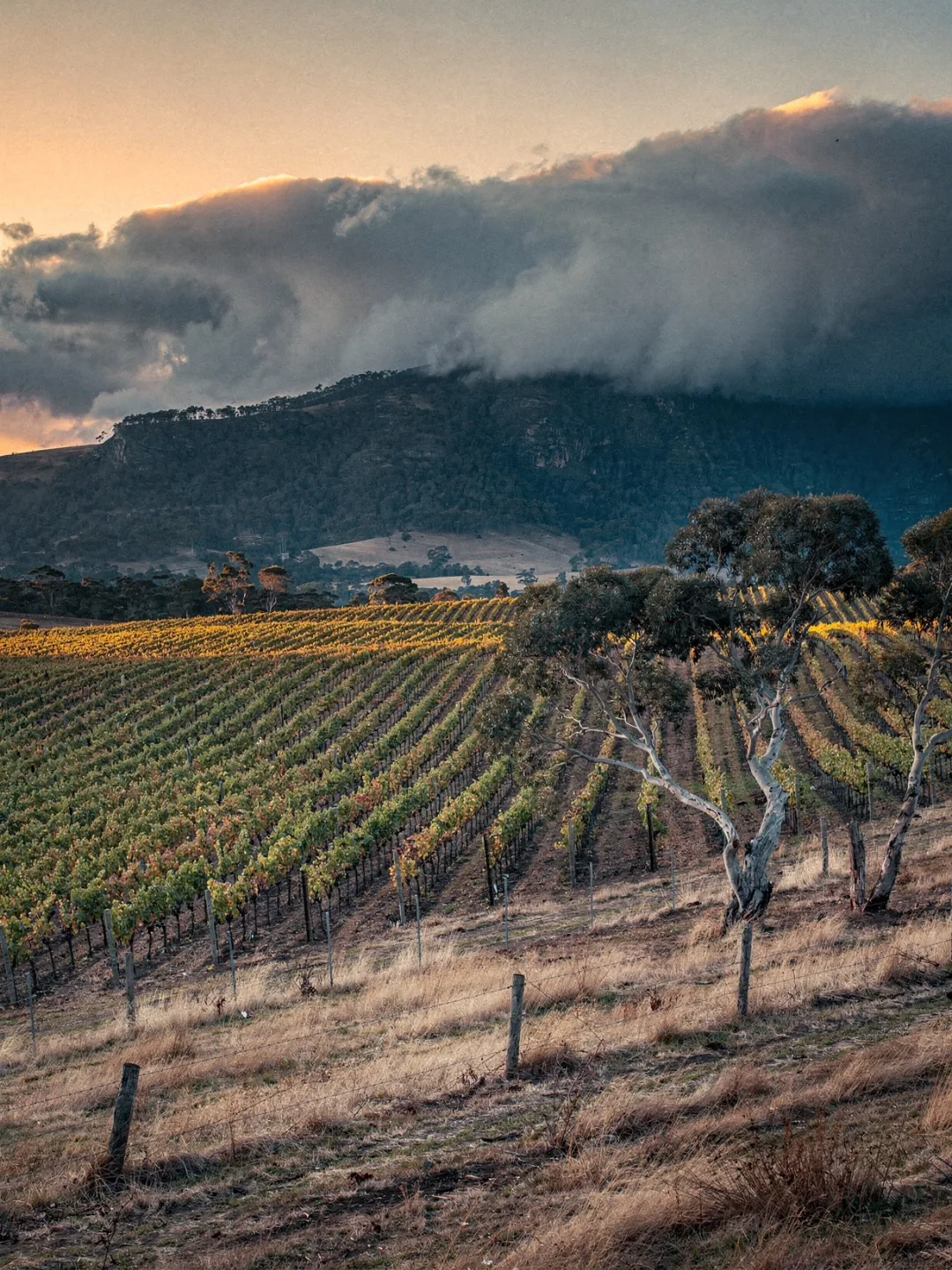
Coolest Island
Climate
No Australian wine region is cooler. Tasmania's average January temperature is around 15.6°C, lower than any other wine region on the continent, a figure closer to Champagne than to Adelaide. The Roaring Forties are responsible: those steady westerly winds that sweep around the globe between the fortieth and fiftieth parallels, blowing unimpeded all the way from Patagonia before hitting land again at all: Tasmania.
Harvest comes late and stretches over months. The first grapes for sparkling wine come off the vines in late February, while varieties for still wines don't follow until April or even May. Nowhere else in Australia does the harvest drag on so long. The reason lies in cool nights that slow sugar accumulation while preserving acidity.
But Tasmania isn't uniformly cool or wet. In the Coal River Valley, sheltered behind the Eastern Tier ridge, barely five hundred millimetres of rain fall each year, drier than large parts of South Australia. On the west coast, directly in the path of the Roaring Forties, several times that amount comes down. Between the two coasts, just a few hours' drive apart, lie completely different wine climates.
This range explains why one Tasmanian Chardonnay can taste so different from the next. A wine from the dry Coal River Valley ripens reliably through the season. One from the damp west coast struggles for every hour of sunshine in some years. Winemakers therefore rarely speak of Tasmania's climate. They almost always mean one specific place.