Pinot Noir & Co.
Grape Varieties
Will the grape become sparkling wine or still wine? In Tasmania, this question decides almost everything. Pinot Noir and Chardonnay cover both uses, sometimes from neighbouring rows in the same vineyard. Some grapes are picked early and acidic, destined for a second fermentation in the bottle. Others are left hanging until the acidity has turned into fruit as well.
Andrew Pirie brought clear direction to variety selection in Pipers River in 1974. Pinot Noir, Chardonnay and Riesling led from the very beginning, and these three are still considered the varieties that define Tasmania, because nowhere else in Australia does Riesling ripen so slowly while staying so lean.
Sauvignon Blanc and Pinot Gris came later and now grow alongside them in practically every new planting, as does Gewürztraminer, found here and there, particularly in the Tamar Valley, where some blocks still date back to the early 1960s. They've never become popular on a large scale. The climate is too uncertain for anything that needs a lot of warmth.
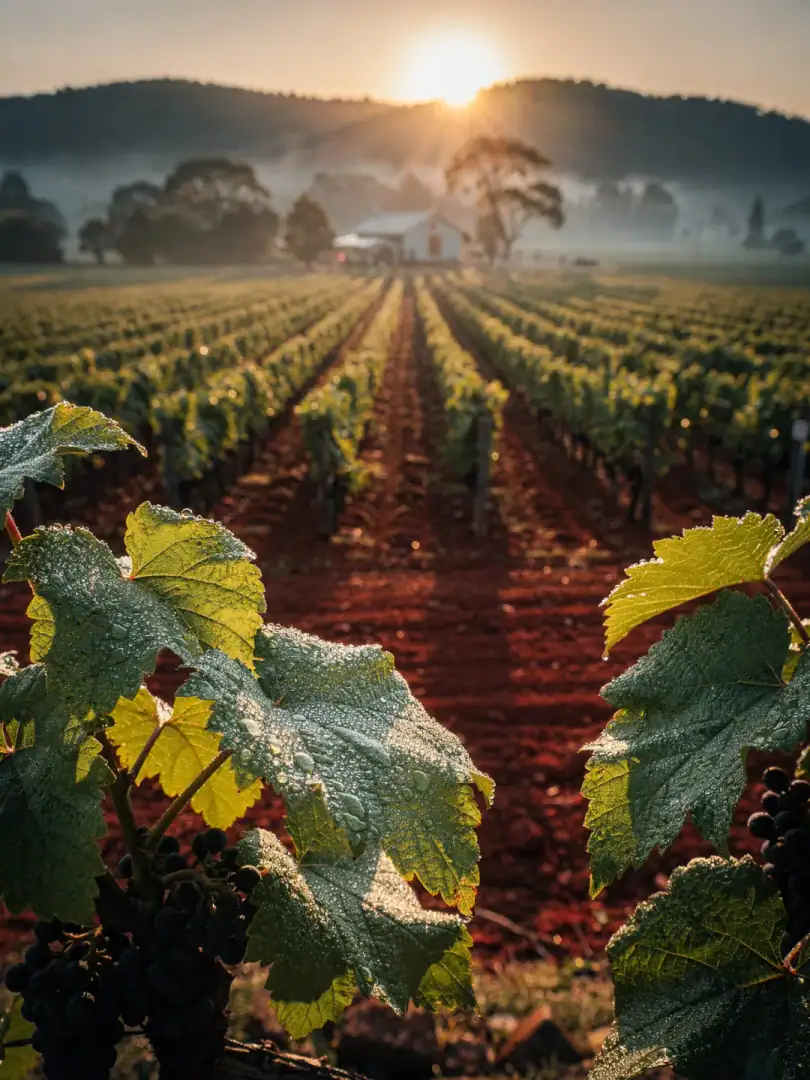
Pinot Noir, as this grape is also known here, is a thin-skinned and temperamental variety. It demands exactly the coolness that other varieties can barely tolerate, which is why Tasmania is one of the few spots in Australia where it ripens reliably without stewing. The colour stays pale. The aromas stay delicate. And on the palate there's an acidity almost unknown in the continent's warmer regions.
One variety is almost entirely absent: Shiraz, mainland Australia's great red grape. The season here is simply too short and too cool for it to ripen. Tasmania needs different answers from the rest of the continent.