Elevation Beats Heat
Climate
Anyone driving through the valley in summer feels the sun first, but the wine here lives on the night. The average January temperature is 18.9 degrees Celsius, one of the lowest among all of Victoria's wine regions, and cool enough that grapes retain their acidity instead of losing it in the heat.
Elevation makes all the difference here. On the valley floor, around Lilydale, Yarra Glen, and Healesville, the vineyards sit just 50 to 80 metres above sea level. That's warm enough for early-ripening varieties. Head further into the valley, toward Seville, Warburton, and Hoddles Creek, and the elevation climbs to as much as 400 metres. There, it stays pleasantly cool even in February.
Rain falls mostly in winter and spring, between 750 and 950 millimetres a year. During harvest, it mostly leaves the vines alone. A dry autumn is the rule here, not the exception. That's precisely why winegrowers can delay picking as long as the flavours demand, without risking rot.
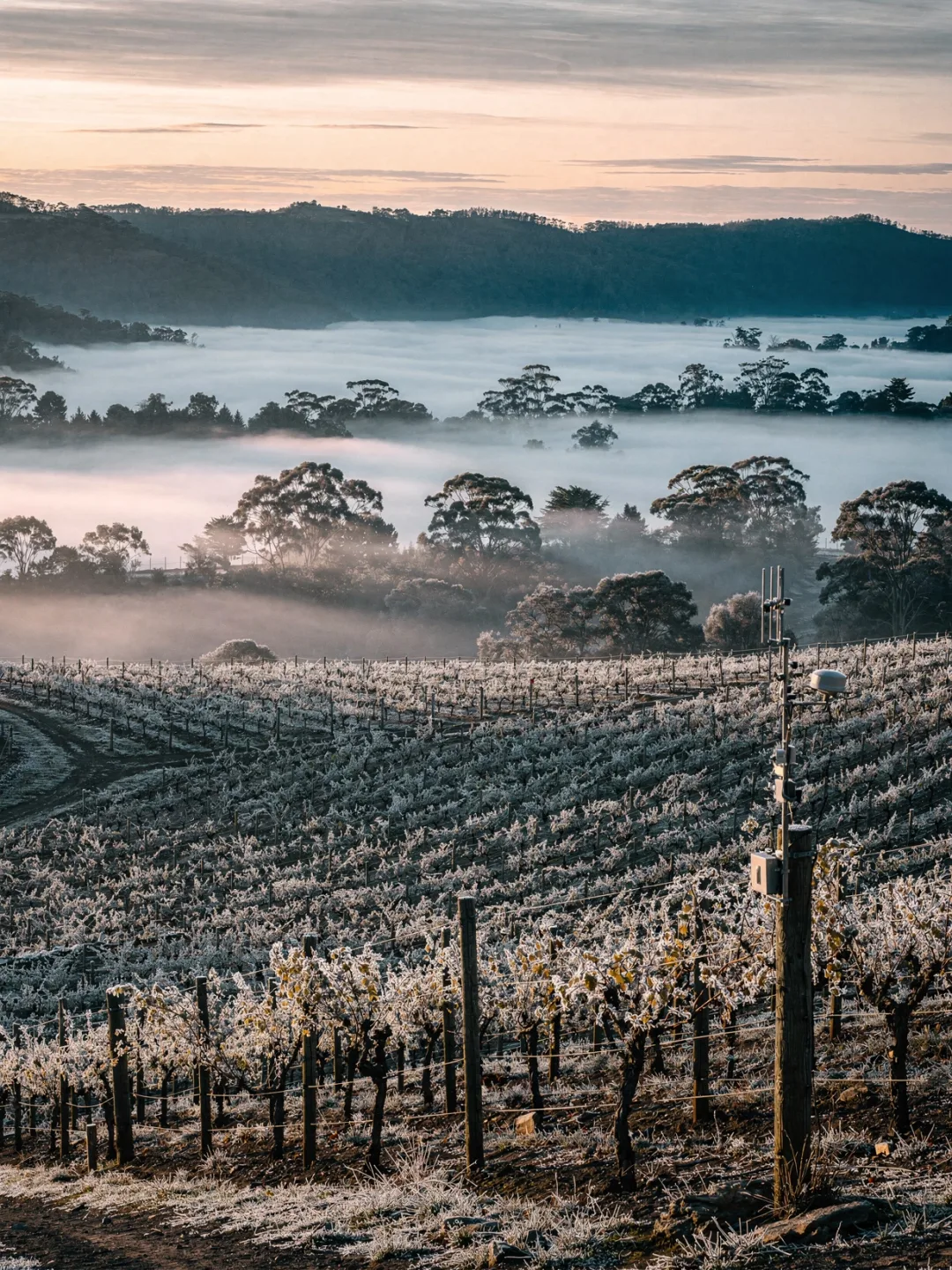
Behind the valley rises the Great Dividing Range, the mountain chain that splits half of Australia lengthwise. It's responsible for the cooler climate of the upper sites, and the valley's soils have also weathered from its ancient rock. Fog often lingers over the lower-lying vineyards near Coldstream well into the morning, cooling the berries further and sometimes delaying ripening by weeks. Late frost nonetheless remains a risk in the lower sites, especially in spring, when the young shoots emerge.