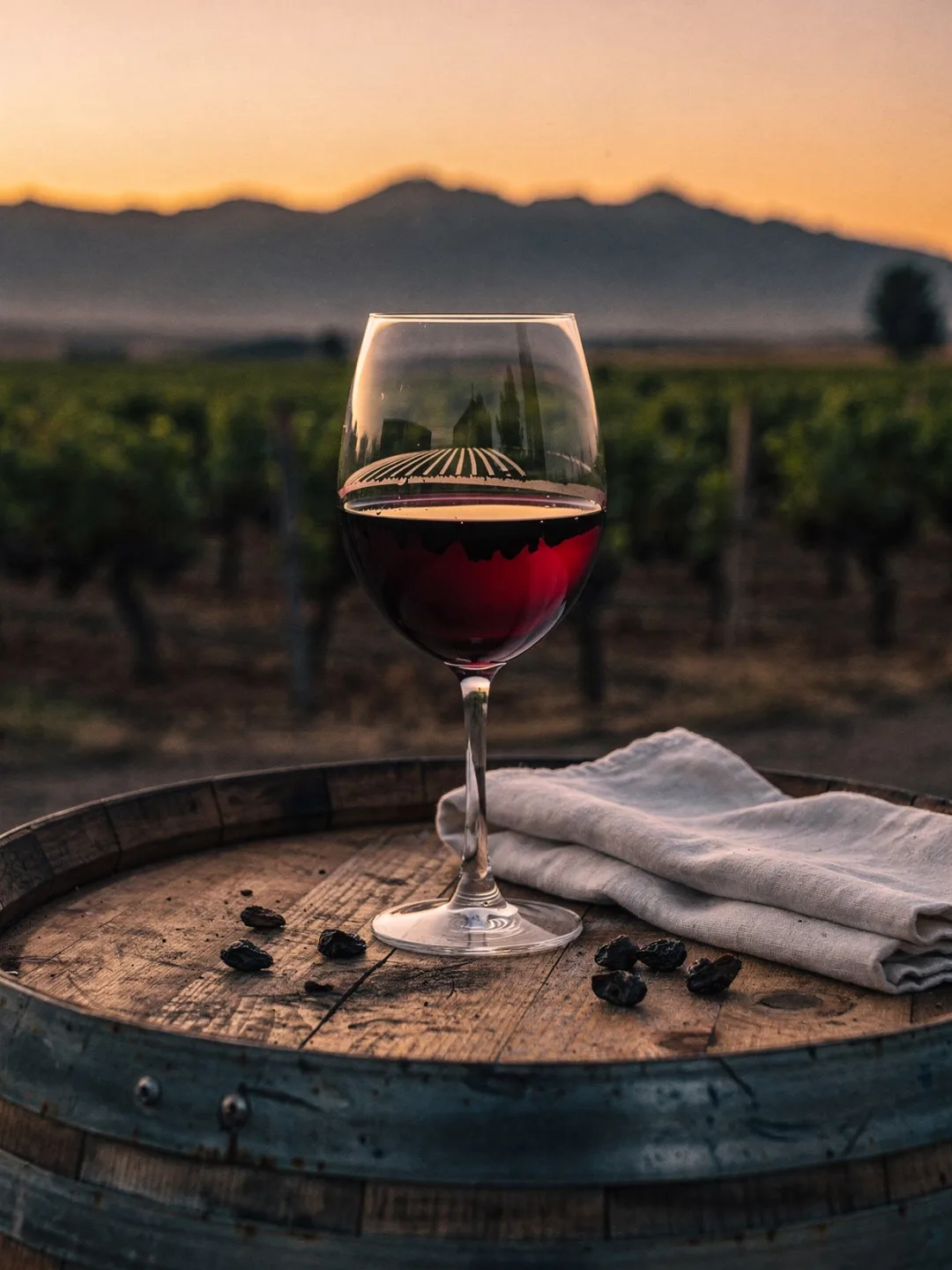
Wide Bordeaux Glass
Glassware
A wine as tannic as a Cabernet Sauvignon from the Aconcagua Valley needs room to open up, and that's exactly what the classic Bordeaux glass provides: a tall, generously bowled body with an opening that narrows gently toward the top. The large bowl exposes the wine to plenty of oxygen, while the narrower rim still holds the aromas together rather than letting them scatter instantly.
Cold protects the fruit. When it comes to temperature, one mistake gets made again and again with full-bodied red wines: serving them too warm. Sixteen to eighteen degrees Celsius is right for a young Cabernet from Panquehue, and closer to the lower end for a mature Don Maximiano. Above twenty degrees, alcohol takes over and buries the delicate fruit that Errázuriz has spent decades of experience capturing in the bottle. Ten minutes in the fridge is usually enough to fix that.
A wine like Seña almost always calls for a decanter. Sediment is only one of two reasons why. These wines age in small oak barrels and, when young, are held tight by firm tannin, almost like a corset. An hour of air loosens that grip, brings fruit and spice forward, and turns a closed-off wine into one that finally tells you what it's made of. If you don't own a decanter, just swirl more often and wait longer before that first sip.
How much goes into the glass ultimately decides how much you enjoy it. For a Bordeaux glass, that's about one hundred fifty milliliters, filled up to the widest point of the bowl and not a drop more. Above that line, there's still room for the dense aromas of blackcurrant, cedar, and toasted oak to gather. Only then does the nose actually pick them up. A glass filled to the brim wastes the very thing you bought that expensive glass for in the first place.