Andes, not Ocean
Climate
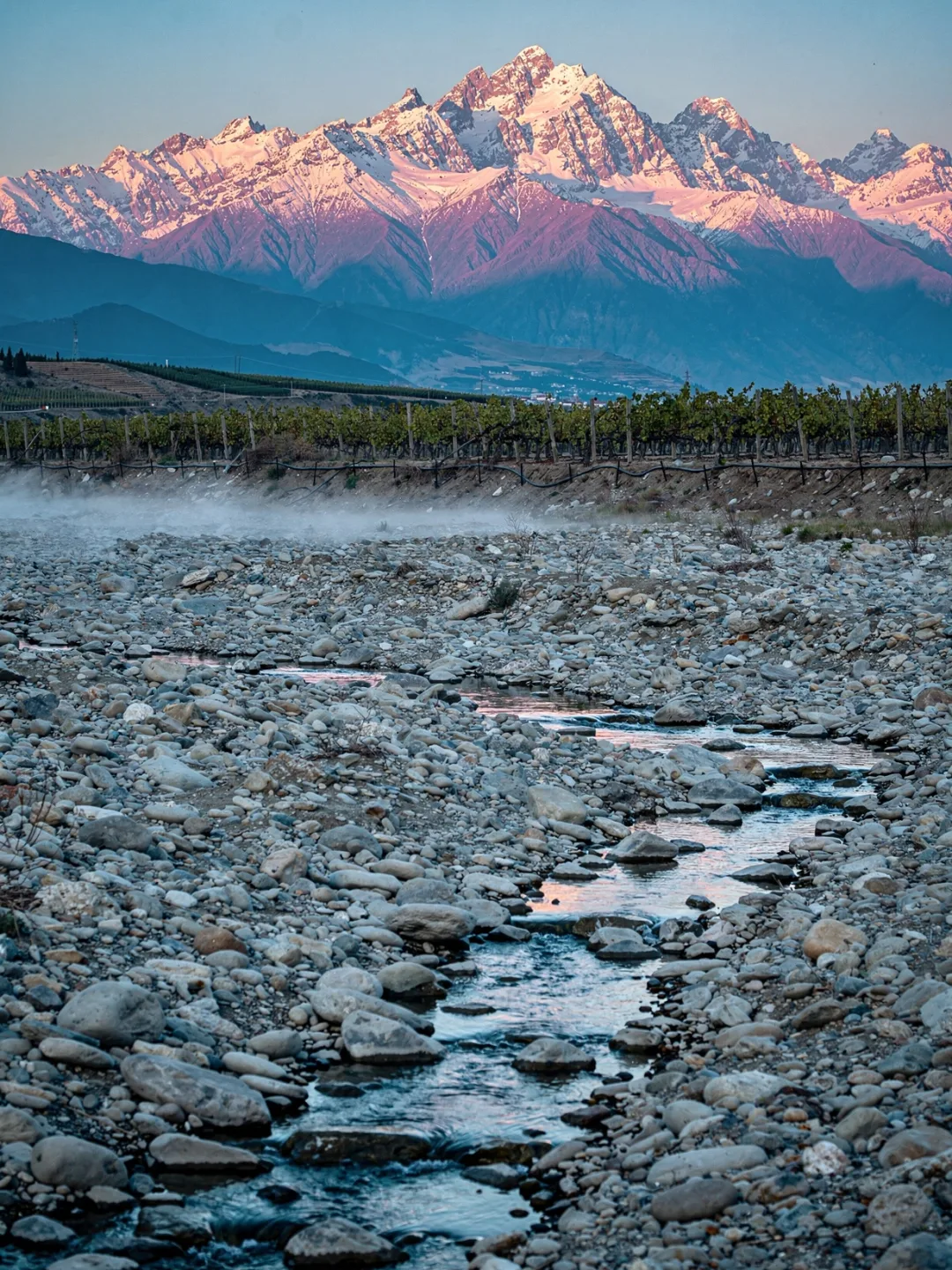
Anyone who assumes every Chilean coastal valley is cooled by the Pacific hasn't yet visited the Valle de Aconcagua. Here, the Coastal Range rises like a wall between the sea and the vineyards around Panquehue and San Felipe. It keeps out fog and moist sea air while letting the sun through almost unchecked. Cooling comes from a different direction entirely: the Andes.
At the foot of the Andes, the swing between day and night temperatures can reach up to fifteen degrees Celsius, greater than in most of Chile's coastal valleys. This range is unusual. During high summer, daytime temperatures climb past thirty degrees Celsius, while at night cool air pours down from the snow-capped peaks and pushes the numbers well down. For the vines, this difference isn't a side effect—it's the very reason quality wine grows here at all: the berry ripens by day and recovers by night, without losing acidity.
Rain is scarce. Annual rainfall in the valley averages only about two hundred to two hundred fifty millimeters, most of it falling in winter between May and August. As a result, the vines rely entirely on drip irrigation, fed by the Río Aconcagua, whose water comes from Andean snowmelt. A dry summer here isn't a risk—it's the norm. This precise control over every drop lets winemakers deliberately apply or withhold stress on the vines in lean years.
Only in one spot does the pattern break: in Aconcagua Costa, where Errázuriz has planted parcels near the coast since the 1990s. There, sea air still reaches the vines, because the valley opens more directly to the Pacific at this point than it does farther east around Panquehue. Even so, this has little to do with the neighboring Valle de Casablanca. That's a different climate altogether. Casablanca sits in its own subregion, farther south, under the year-round influence of coastal fog. Aconcagua remains the warmer, drier valley, where in the end the Andes have the final word.