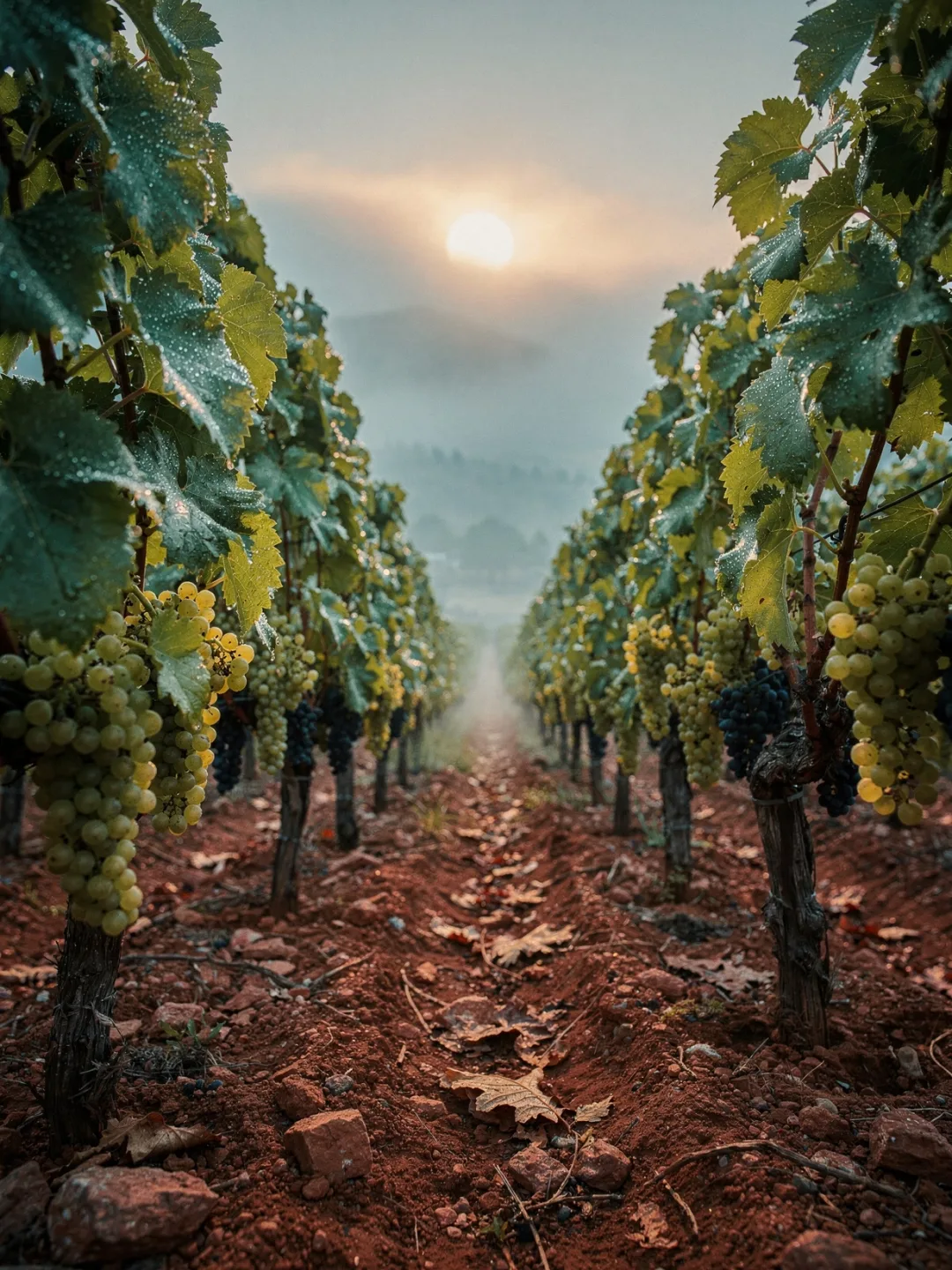
Sauvignon Blanc Leads the Way
Grape Varieties
Two white varieties dominate almost everything in Casablanca. Sauvignon Blanc and Chardonnay share the largest planted area, and depending on which statistics you consult, their ranking shifts back and forth—but both owe their reputation to the same cool morning fog that rolls through the valley every day. Think of Casablanca, and you think of one or the other.
Grapefruit, not stone fruit, is the first impression. A Casablanca Sauvignon Blanc smells of passion fruit and that green, herbaceous note reminiscent of blackcurrant leaves, while on the palate an acidity waits that almost bites. This sharpness comes from the fog. The longer a grape lingers in the camanchaca fog, the more acidity remains in the end, before the afternoon sun drives up the sugar and strips away that freshness again.
For a long time, no one knew exactly which grape was actually growing here. Until the 1990s, many vineyards actually carried Sauvignonasse, a milder, more unassuming relative from Friuli that had been mistaken for true Sauvignon Blanc for decades, until DNA testing revealed the error. Replanting followed. Today this correction is considered one of the reasons Chilean Sauvignon Blanc is taken seriously internationally at all.
Chardonnay arrived in the valley with that same first planting and quickly developed its own character. Citrus fruit, green apple, a hint of vanilla from the barrel—the lush tropical fruit of warmer valleys is almost entirely absent. Some of it ages in barrel. The rest stays in stainless steel tanks to preserve freshness.
Red wine is the exception here. Pinot Noir occupies only the third-largest area, but delivers pale, fragrant wines with red cherry, pomegranate, and a floral violet note, for which the Kingston Family in Lo Ovalle is especially known. Syrah tastes cooler and spicier. Black pepper and olive appear here instead of ripe southern fruit, alongside a few hectares of Riesling and Gewürztraminer, relics from Morandé's very first planting in 1982.