Andes Meets Pacific
Climate
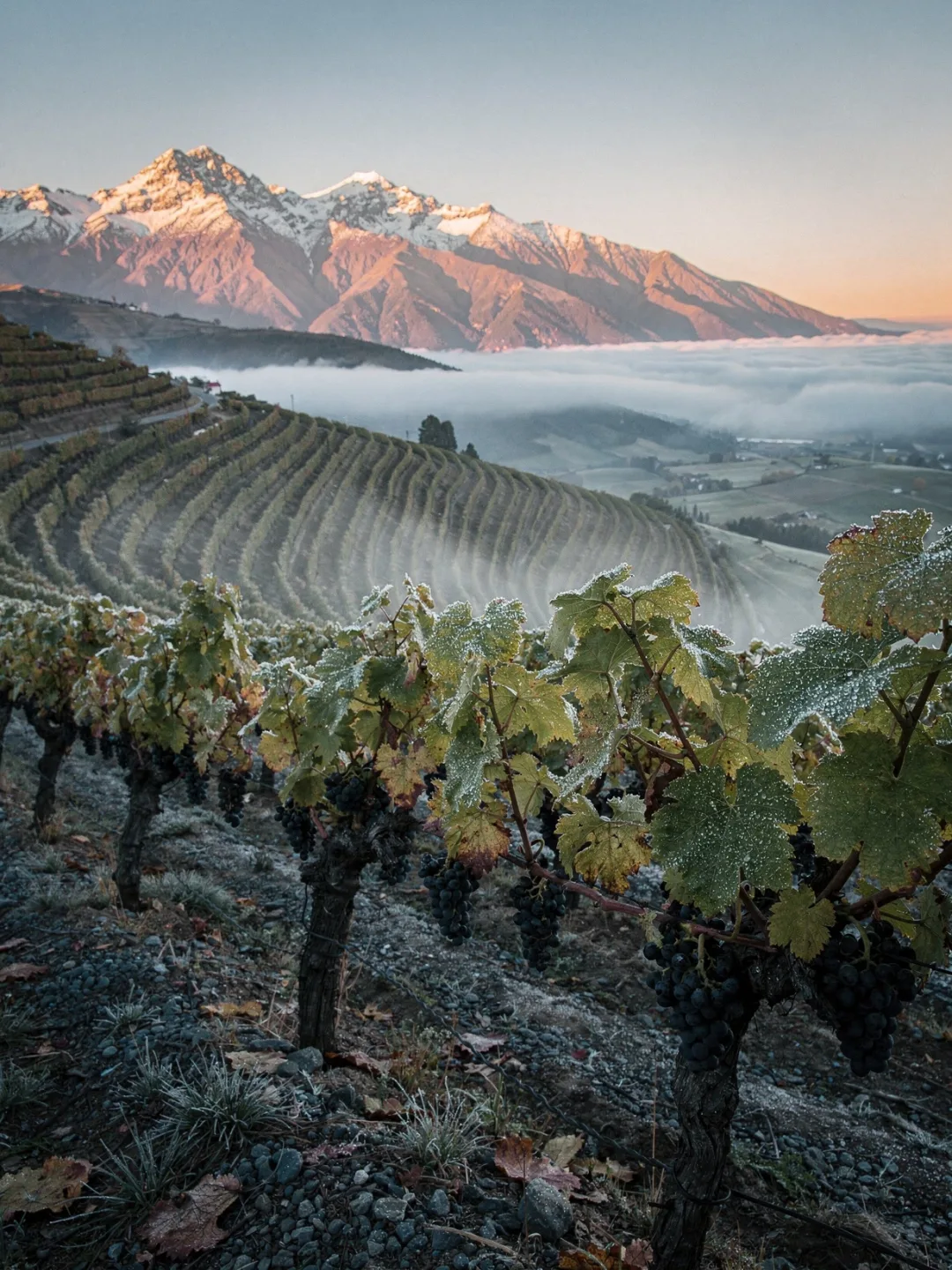
Twenty-eight degrees Celsius by day, twelve at night: that's an average summer day in Colchagua. This difference is no coincidence, but the result of two mountain ranges that enclose the valley like a pincer, the Andes to the east and the lower Coastal Range to the west.
Rain falls almost only between May and August, around six hundred millimeters a year. The rest of the year stays largely dry. From November to April you'll barely see a cloud. Fungal diseases have little chance here, and growers determine harvest timing almost solely by grape ripeness, not by the weather.
Heat isn't distributed evenly throughout the valley. Because the Coastal Range near Colchagua is relatively low, cool air from the Pacific pushes far inland along the Tinguiririca riverbed, reaching as far as Marchigüe and Lolol. This area belongs to Cardenal Caro province. There, it stays noticeably cooler, which is why the valley's few white varieties, chiefly Chardonnay, grow there. Farther east, around Apalta and San Fernando, proximity to the Andes brings more heat.
This daily swing between heat and cool holds acidity in the berries, while the skin continues to build color and tannin through the warm afternoon. As a result, a wine from Colchagua rarely shows the heavy, tired acidity found in some hot wine countries. For growers in the valley, this very interplay is the single most important climate factor.