Cabernet Meets Carmenère
Grape Varieties
One vine dominates the valley. Cabernet Sauvignon covers more area than any other variety in Colchagua, from the gravelly slopes near Marchigüe to the terraces around San Fernando, thick-canopied and so late-ripening that it easily withstands the valley's dry, warm summers.
For a long time, no one here knew they had Carmenère growing in their vineyards. Winegrowers thought it was Merlot. Only in 1994 did an ampelographer recognize the distinct Bordeaux variety. When ripe, Carmenère tastes of dark cherry and cocoa; picked too early, however, it tastes mainly of bell pepper, the telltale smell of an aroma compound called pyrazine, which only disappears with long hang time on the vine. That's why it's almost always the last grape picked in the valley, often not until April or May.
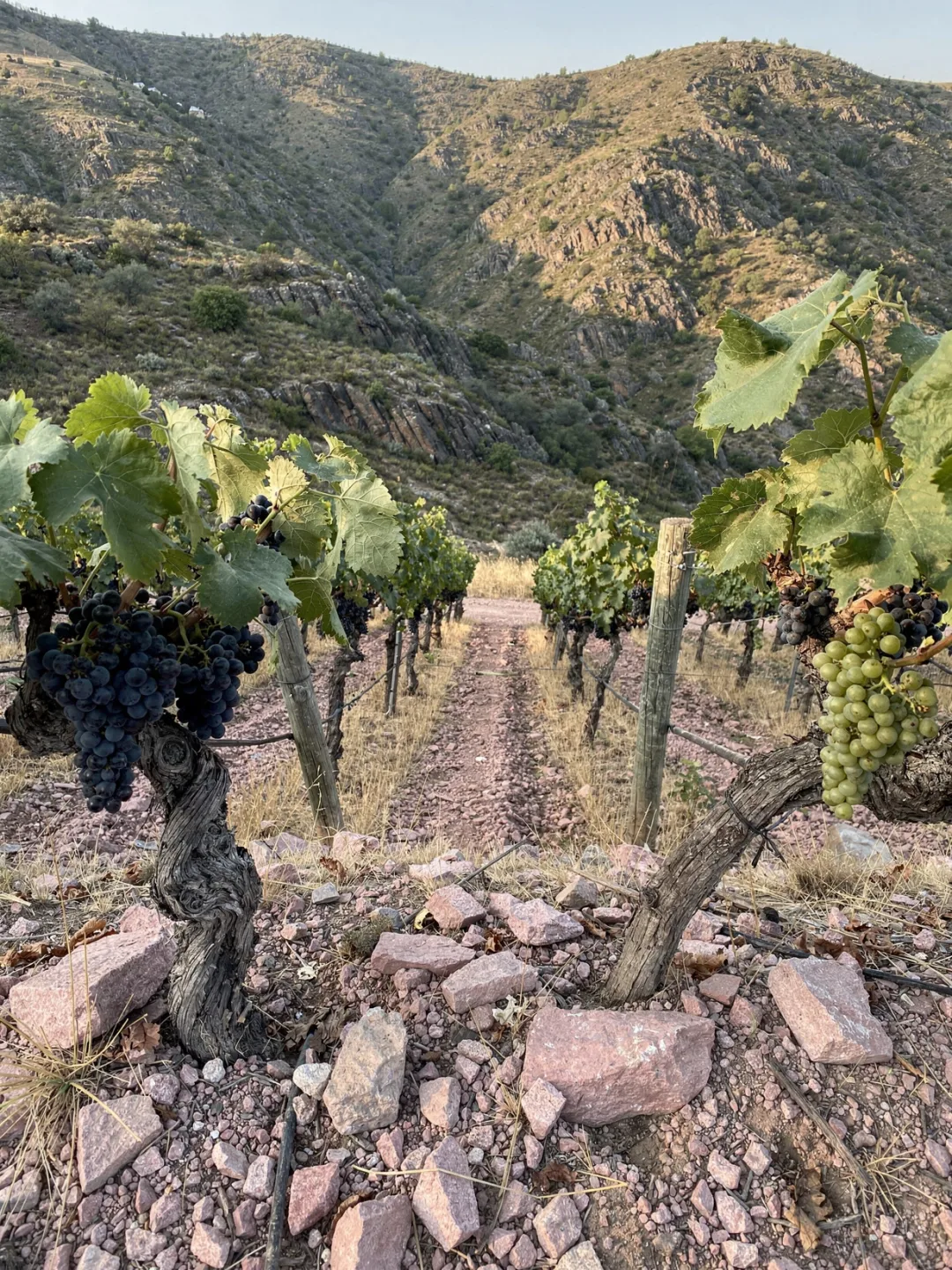
Syrah gets the steeper, stonier plots. On moderately sloped hillsides, the meager soil reins in its vigorous growth, while Cabernet Sauvignon tends to prefer the flatter, clay-richer sites with round gravel, as around Marchigüe. A typical blend from the valley combines both with a touch of Carmenère, eighty-five to ten to five percent, then ages in French oak.
Until the 1980s, most vines grew on the flat valley floor, densely planted and trained for high yield. That changed with tighter spacing and lower yields per vine. The wine became more concentrated, darker, and more tannic. These hillside sites, above all in Apalta, now yield the valley's most expensive wines.