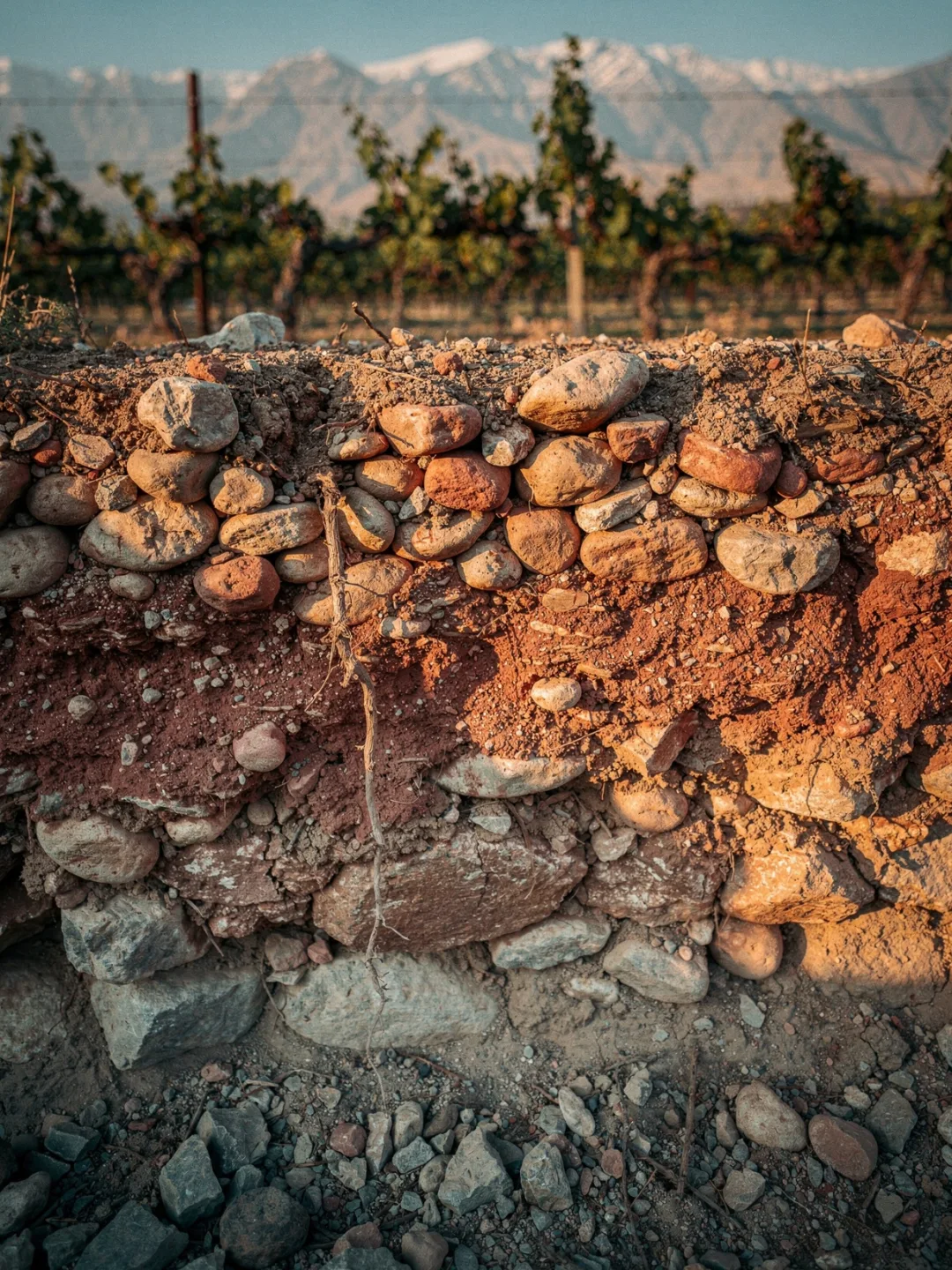
Andean Gravel in Clay
Soils
Dig a hole in a vineyard in Puente Alto. Before long, the spade hits round, fist-sized stones, embedded in a mass of clay and loam. This is no loose surface scree. It's the old bed of the Río Maipo.
Over thousands of years, the river, fed by melting Andean snow, carried gravel down from the mountains and deposited it in broad alluvial fans. Closer to the foothills, deposits from landslides add further material, so-called colluvial soil, coarser and more angular than the round river stones further downstream. Both layers mix together in Alto Maipo within a small area, which is why two neighboring plots sometimes taste surprisingly different.
Low in nutrients and free-draining — that's the short description of this soil. Rain and irrigation water run off quickly between the stones without pooling, and a vine has to drive its roots deep down just to find enough of what it needs. This very effort keeps yields low and the berries concentrated. Don Melchor's famous vineyard in Puente Alto, at a good six hundred fifty meters elevation, stands on exactly this kind of lean, gravelly soil.
One myth persists stubbornly: that the wine tastes of stone because the vine absorbs minerals from the rock. That's not true. What enters the plant are dissolved salts in such tiny amounts that no one could ever taste them. The soil works indirectly, through its water balance and the warmth it stores, absorbing heat during the day and releasing it again at night. That indirect effect is enough to turn Cabernet Sauvignon into one of the densest red wines in South America.
Dark, sandy-clay soil with little humus, interspersed with a few small pebbles.
The root: This is where the fine roots sit. After a few dry weeks without irrigation, they find hardly any water left.