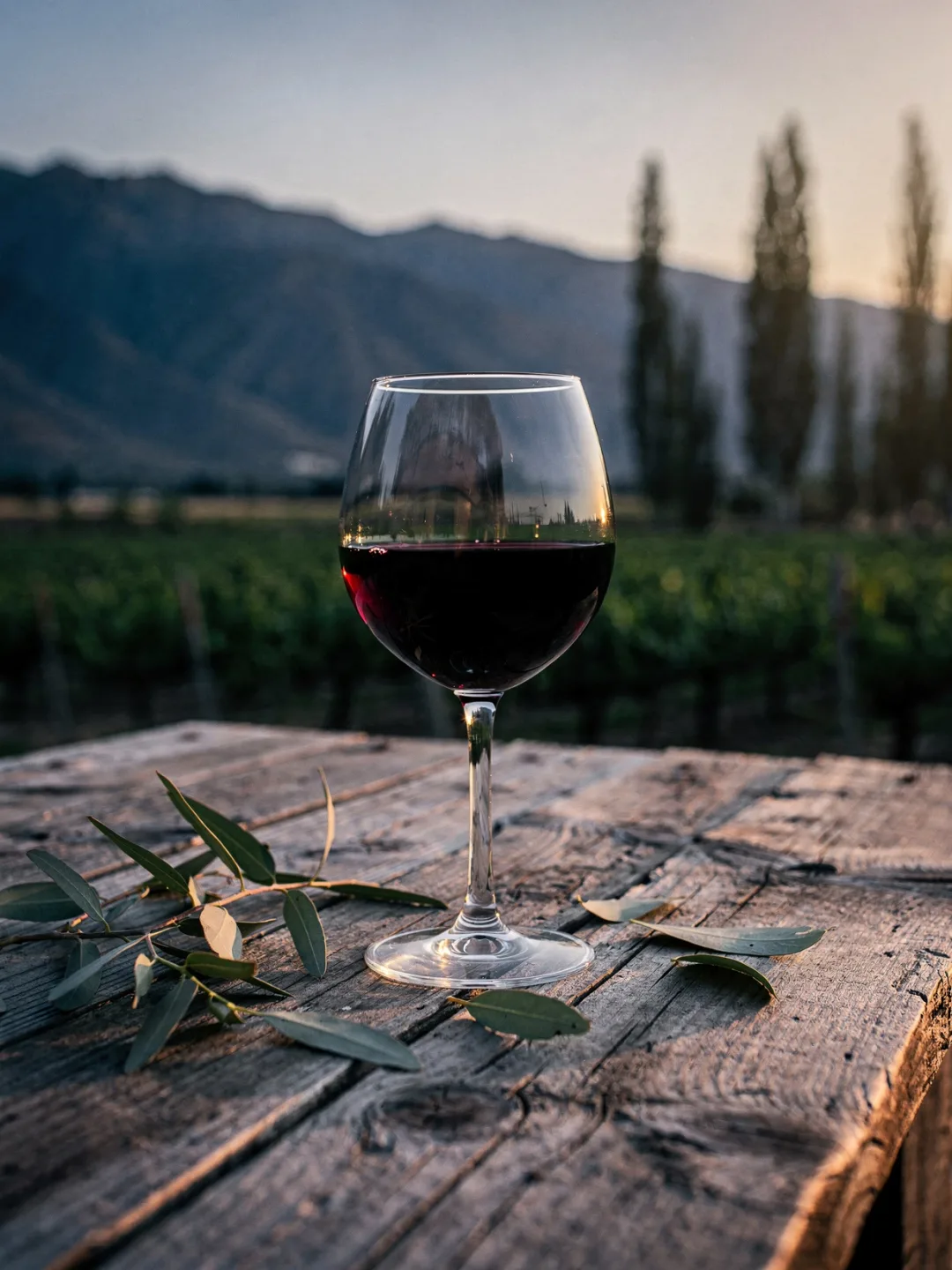
Eucalyptus in the Glass
Glassware
The glass plays a part in how a wine comes across. With the powerful red wines of the Maipo Valley, that makes a noticeable difference. Cabernet Sauvignon and Carmenère bring plenty of tannin, dense fruit, and often fourteen percent alcohol or more. A glass that's too narrow crowds all of that together and lets the alcohol rush forward before the fruit even gets a word in.
That's why a large, tall Bordeaux glass works best, with plenty of surface area in the bowl and an opening that narrows visibly. The wide bowl lets alcohol evaporate and softens its sharpness, while the narrow opening concentrates what rises up. That's exactly where the cool, menthol-like note shows up that many Cabernets from Alto Maipo carry, a hint of eucalyptus that comes from the windbreak trees planted between the plots since the 19th century. A glass that's too small swallows up precisely this detail.
Temperature is where a lot goes wrong. Sixty-one to sixty-four degrees Fahrenheit (sixteen to eighteen degrees Celsius) suits a powerful Maipo red, noticeably cooler than today's typical room temperature. At twenty degrees Celsius (sixty-eight Fahrenheit) and above, the alcohol pushes forward more, the tannin feels rougher, and the fine eucalyptus note gets lost in the overall impression. Twenty minutes in the fridge is enough to bring the wine down from room temperature to the right range.
A young wine from the valley almost always benefits from decanting. The dense tannins of Cabernet and Carmenère need air to open up. Half an hour to an hour is usually enough. Afterward, pour only up to the widest point of the glass, never higher, since space needs to remain above the wine where fruit and herbal notes can gather before they reach the nose.