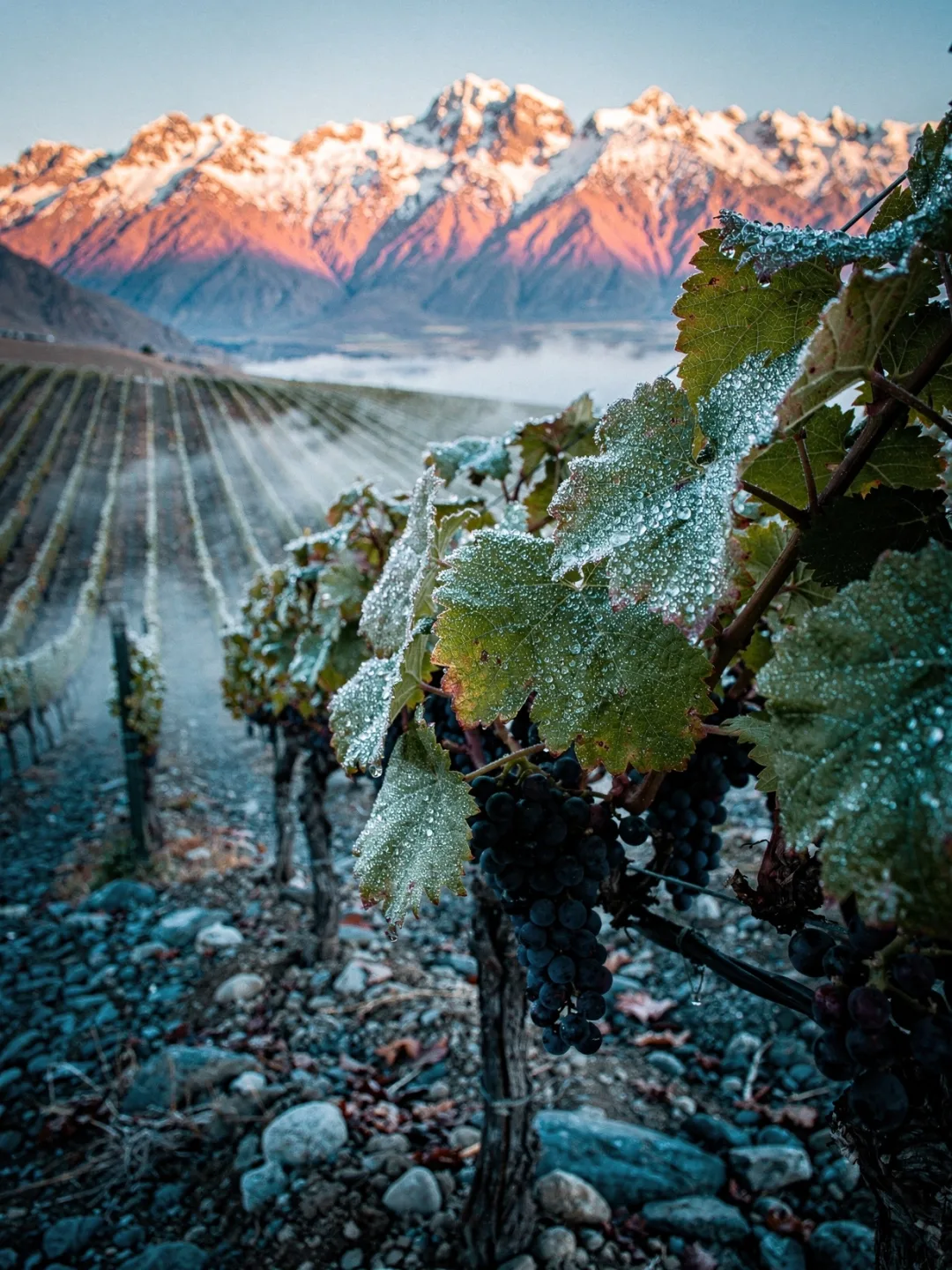
Shadow of the Andes
Climate
The Maipo Valley lies in a climate trap that suits it remarkably well. The Coastal Range to the west blocks the humid ocean air from the Pacific, while to the east the main Andean cordillera casts an equally dry shadow. In between reigns a Mediterranean climate with long, hot summers and mild, rainy winters. On average, only about three hundred millimeters of rain fall per year around Puente Alto and Isla de Maipo, almost entirely between May and August.
That vines grow here at all, the valley owes to a river and an old piece of engineering. The Río Maipo carries meltwater from the Andes down into the valley, and starting in 1820, Domingo Eyzaguirre pushed forward the construction of the San Carlos Canal, a canal system that from 1829 distributed this water across the dry plains south of Santiago. Without artificial irrigation, this landscape would have amounted to little more than steppe. With it, it became one of the most reliable wine regions in South America.
During the day in high summer, the thermometer climbs a bit past thirty degrees Celsius; in Isla de Maipo, temperatures above thirty degrees have already been recorded in January. At night, cold air flows down from the Andes into the valley. The difference between day and night often reaches fifteen to twenty degrees during ripening. This swing slows the breakdown of acidity at night, while sugar and color build up in the berries during the day. Without it, the wines would taste flat and tired.
Within the valley, elevation makes the decisive difference. Alto Maipo lies between five hundred and about a thousand meters, on the foothills of the Andes, cooler and with poorer soils than the rest of the valley. It produces the most structured Cabernets in the whole valley. Further west, in the flatter Maipo Medio around Buin, there's more sunshine, and the wines become rounder and fruitier. Near the coast, in the so-called Maipo Costa, cool winds off the Pacific bring freshness, which by now also supports white varieties there.