Waiting for Ripeness
Winemaking
In the Maipo Valley, harvest begins in the Southern Hemisphere autumn, usually in March, and stretches into May. Cabernet Sauvignon and Merlot come off the vines first, often as early as March or April. Carmenère waits longest. It hangs until late April, sometimes into May, because its green bell pepper note only disappears with late ripeness. Anyone who picks too early presses that flaw straight into the tank.
After harvest, the grapes are destemmed and lightly crushed. The skins remain in the tank during fermentation, contributing color and tannin. Many winemakers leave the must on the skins for weeks afterward, a so-called extended maceration. This softens harsh tannins and deepens color, but demands a careful touch: too long, and the wine turns bitter instead of powerful.
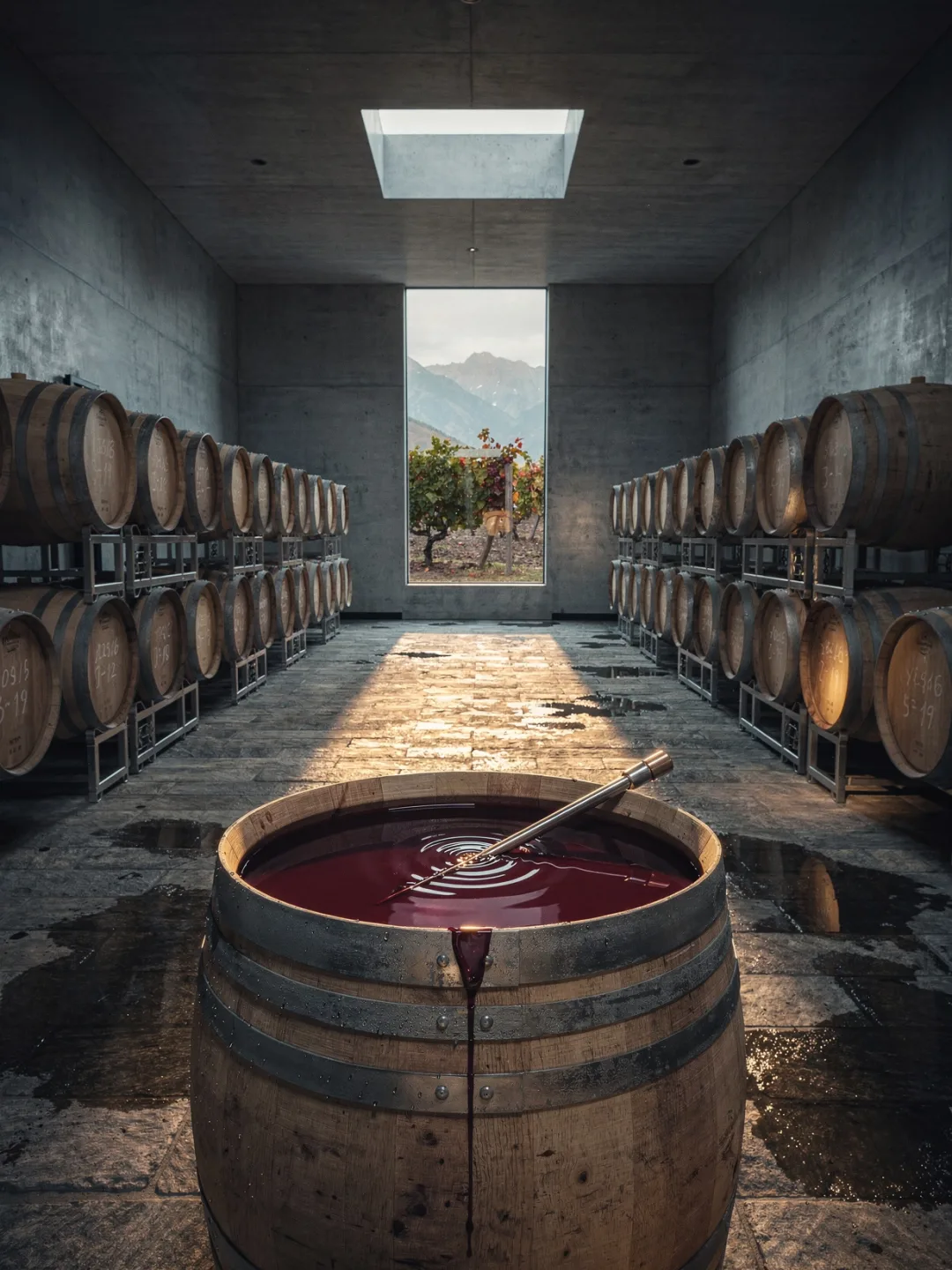
The wine then typically ages in small French oak barrels, often new or nearly new. Almaviva, for instance, lets its blend of Cabernet Sauvignon, Carmenère, Cabernet Franc, and Petit Verdot rest in barriques for about twenty months, a large share of them new. The wood contributes toasty aromas and vanilla, but also fine, soft tannin that rounds out the powerful structure of the grapes without masking the dark fruit.
Many of the valley's finest wines are deliberate blends. Pure Cabernet Sauvignon can come across as austere and angular, pure Carmenère as soft but flat. Together they complement each other: one supplies structure, acidity, and the cool herbal note, the other richness, dark fruit, and a hint of black pepper. This style, rediscovered in the 1990s, is now considered typically Chilean, born, of all things, from a mix-up that went unnoticed for a century.