Cabernet & Carmenère
Grape Varieties
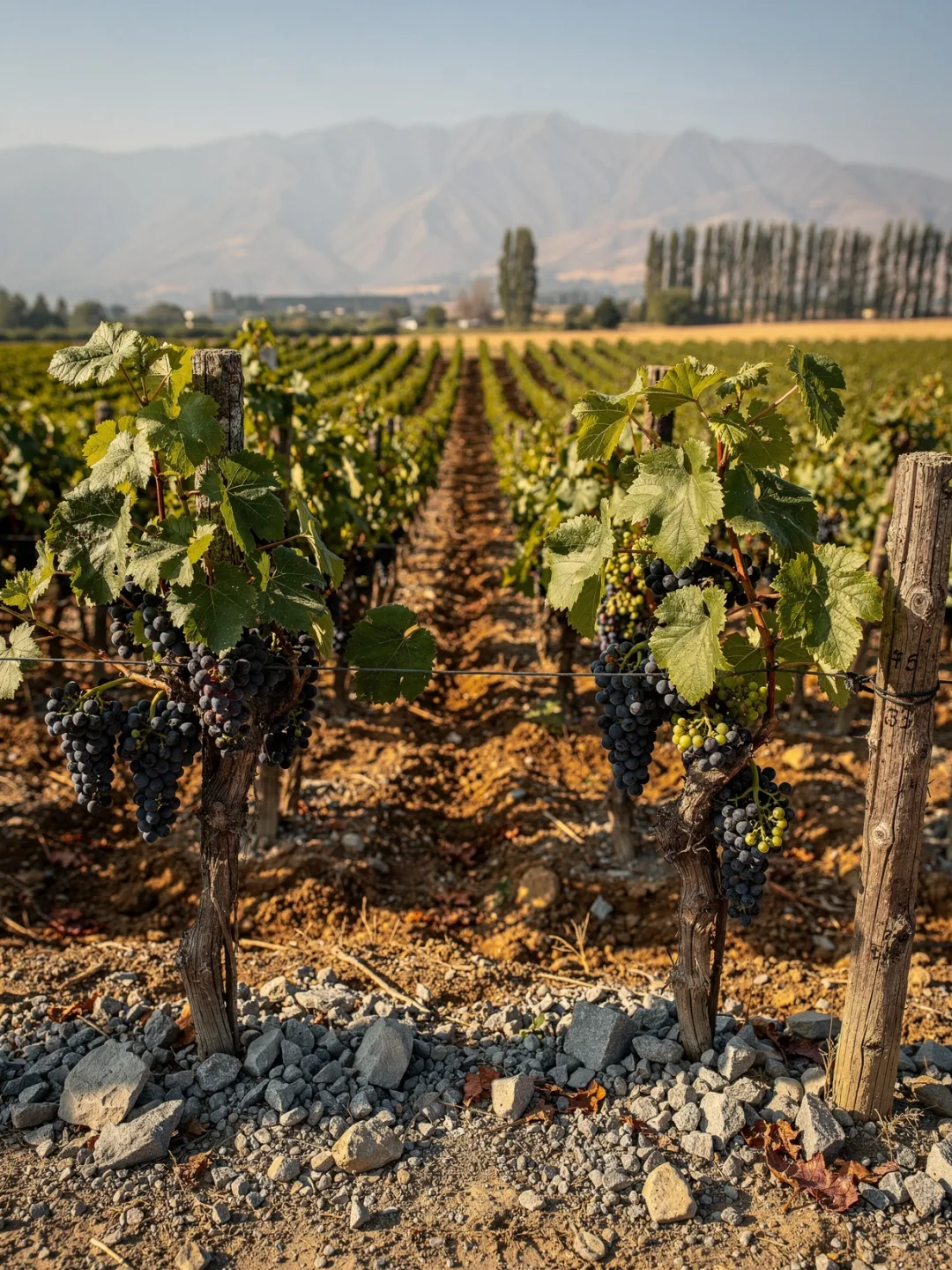
Cabernet Sauvignon shapes the Maipo Valley more than any other variety. It occupies the largest share of vineyard land in the best sites around Puente Alto and Pirque. There, the Andes cast their shadows over the rows early in the day. Its skin is thick, its berries ripen late, and in the glass it shows dark, with plenty of tannin and a blackcurrant note that's instantly recognizable.
The second important variety is Carmenère, once called Grande Vidure in Bordeaux. There, it ripened later than any other grape variety in the Médoc, often weeks after the surrounding Cabernet. When all vines had to be grafted onto American rootstocks after phylloxera, Carmenère barely set fruit on them, and winegrowers abandoned it as a result. In Chile, however, without phylloxera and without grafting, it kept growing undisturbed. That's how it became the variety that sets the country apart from all others today.
Anyone who picks it too early runs into a problem: a sharp smell of green bell pepper. The culprit is pyrazine, an aroma compound that breaks down naturally as ripening continues. That's why Carmenère often hangs on the vine in the Maipo Valley until late April, sometimes into May, noticeably longer than Cabernet Sauvignon or Merlot — and only these extra weeks bring out the dark fruit, black pepper, and mild sweetness the variety is prized for today.
Alongside these grow true Merlot and a bit of Syrah. There are also small plantings of white varieties like Sauvignon Blanc, usually in cooler sites closer to the coast. Many of the valley's best-known wines are blends anyway. Almaviva, for instance, blends Cabernet Sauvignon with around a fifth Carmenère, plus a little Cabernet Franc and Petit Verdot. This brings together the powerful, cool structure of one variety with the soft, spicy richness of the other. This combination exists in this form almost nowhere else.