Granite of Cauquenes
Soils
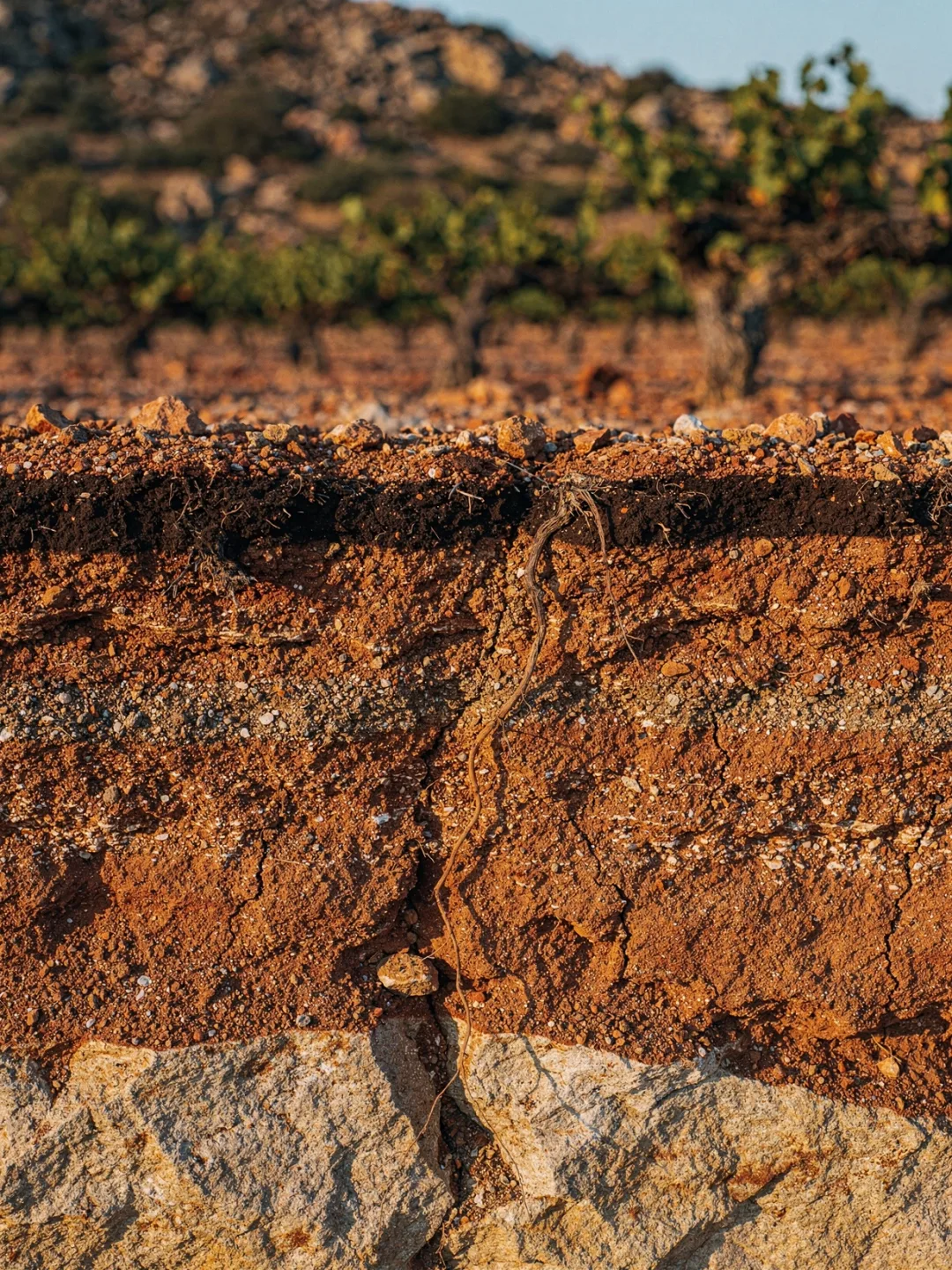
Dig a hole in a vineyard near Cauquenes, no deeper than thirty centimeters. You'll hit fine, reddish sand that crumbles between your fingers like coarse flour. Chilean farmers call it Maicillo, named for its resemblance to ground corn. It's nothing more than weathered granite, broken down into grains of quartz, feldspar, and mica. The name stuck.
The granite itself comes from the Coastal Range, which runs low and flat through Maule here. Over millions of years, rain broke down the feldspar in the rock, while the iron locked within it rusted into color. That very iron gives Maicillo its warm, reddish-brown hue. Quartz, by contrast, stays hard and grainy, keeping the soil airy and loose even after years without a drop of rain.
For a vine root, loose means accessible. It pushes effortlessly between the grains but finds barely any nutrients and even less water. So it keeps driving downward, often several meters deep, until it hits firmer, barely weathered bedrock. The result is small, thick-skinned berries. Color and tannin live in the skin, and a vineyard with little juice relative to skin automatically tastes denser.
Not every vine in Maule roots so deep. Along the Claro, Loncomilla, and Tutuvén rivers lies alluvial land, built up over millennia by floods carrying sediment down from the Andes: clay-rich loam, finer and more fertile than any Maicillo. That's where the irrigated Cabernet Sauvignon of the valley floor grows, generous in yield but softer and less concentrated in the glass than its dry-grown neighbor up on the slope.
One misconception persists here too. The granite doesn't literally show up as flavor in the wine, as if the root were passing rock straight through to the glass. What actually matters is indirect: how much water the soil stores, how quickly it warms in the sun, how deep it forces the root to search. With lean Maicillo, that indirect path is long, and long paths make concentrated wines.
A thin, reddish-tinted layer of decomposed grass over leached granite sand. Organic matter is scarce here on the dry hillside.
The root: The fine roots sit here, but they find only what the last winter rain left behind — in summer, this layer dries out first.