Rain from the South
Climate
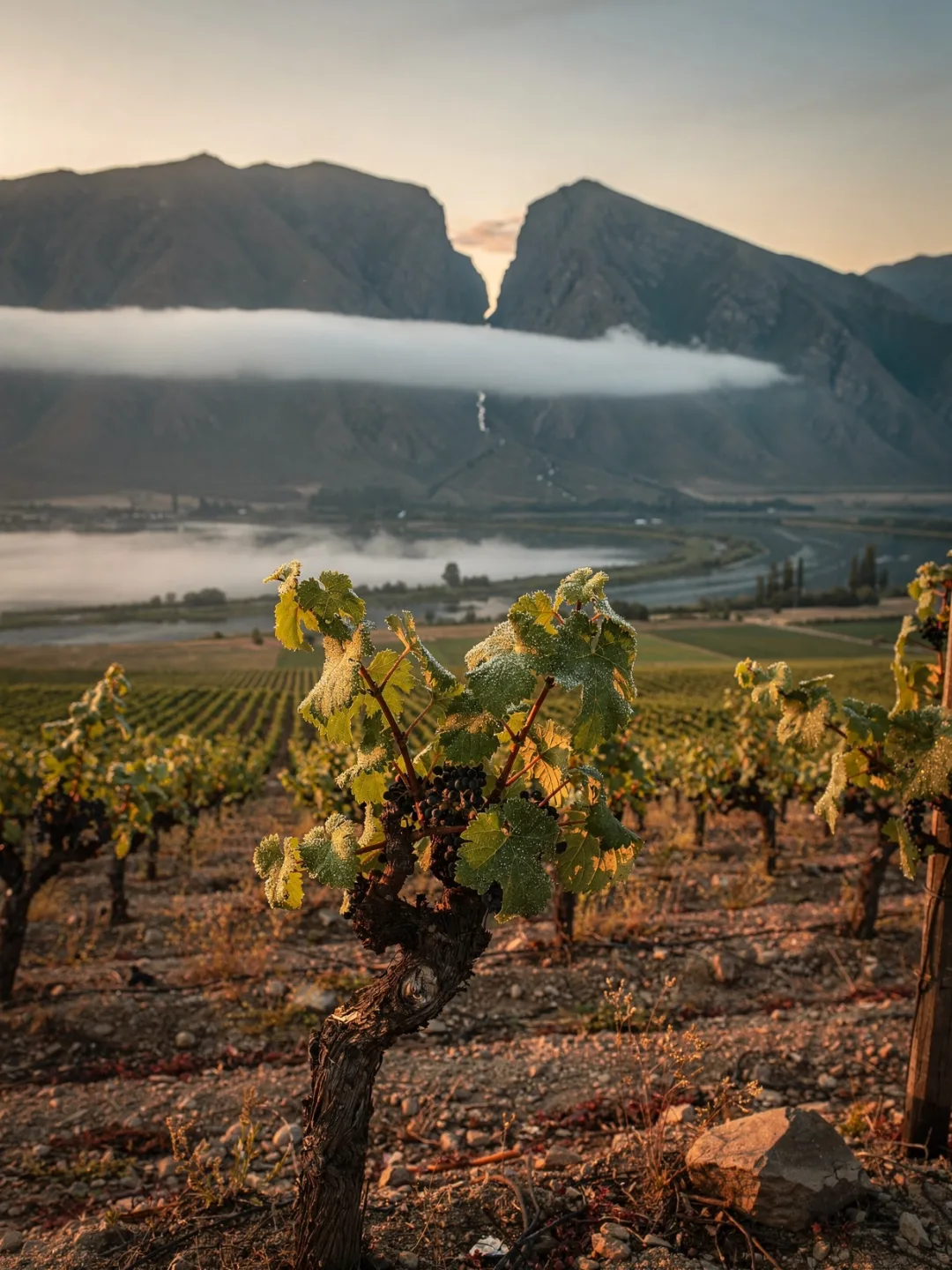
Maule lies roughly two hundred fifty kilometers south of Santiago, and this distance shapes the character of its wines. It rains considerably more here than in the more famous Maipo further north, averaging a good seven hundred millimeters a year. Nearly all of that rain falls between May and August. From November through March, the sky stays dry, week after week, sometimes month after month.
It's precisely this dry summer that makes the vineyards of Cauquenes possible. The vines there live entirely on the water the winter has pressed into the soil; irrigation simply doesn't exist in the Secano Interior. There's no hose in sight. A vine root with no hose beside it grows deep, and deep roots still find some moisture even in the driest February.
The coastal mountain range filters rather than blocks. It's lower and more broken through here in Maule than further north, so cool, moist air from the Pacific pushes far inland along the river valleys of Claro and Loncomilla. Temperatures drop noticeably at night, and this coolness preserves acidity in the berries while the day still provides enough warmth for ripening.
Not every year unfolds the same way. A single wet winter can push the harvest back by weeks, while a dry one forces even old bush vines into a state of stress from which they barely recover. Since the 2010s, central Chile has seen a noticeably steady decline in rainfall overall, something climate researchers now call a megadrought. For unirrigated vineyards, that's not an abstract statistic but the question of whether the next harvest will be worth bringing in at all.
In February 2017, the other side of dry summers made itself known. Massive wildfires raged for days through the hills of Maule and neighboring regions, fueled by heat, wind, and the very same dryness that otherwise ripens Carignan so well. Entire hillsides vanished into smoke. Vineyards remained shrouded in it, and some burned entirely. Anyone driving through the Secano Interior today still sees charred tree stumps among the old vines.