País Meets Carignan
Grape Varieties
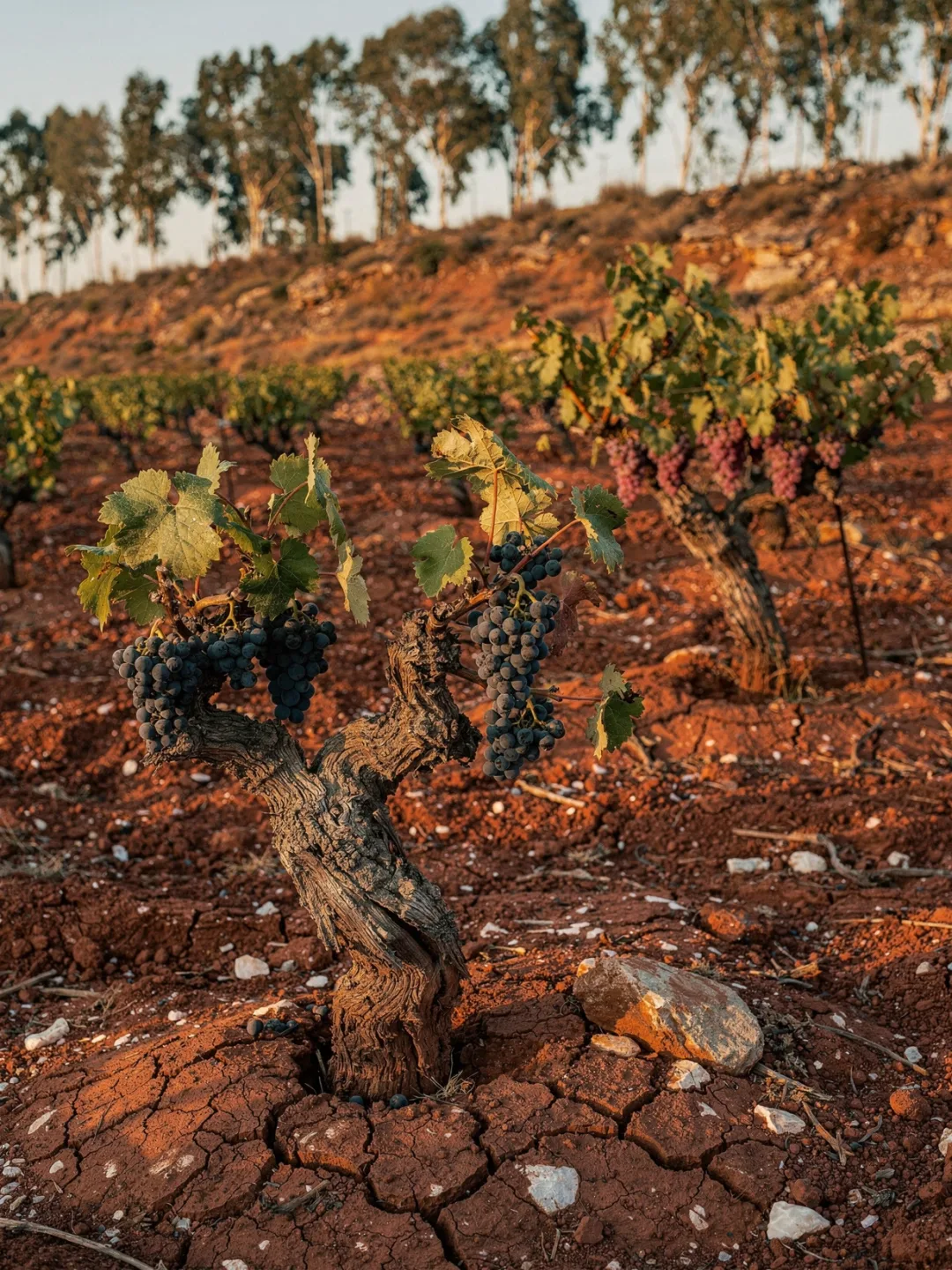
Two grape varieties tell the whole story of this valley. País arrived with the missionaries in the sixteenth century, grew vigorously, yielded abundantly, and produced pale, acid-driven wine meant for everyday drinking, never for aging. Its berries are thin-skinned and pale, which is why the wine often comes out nearly translucent. It was traditionally drunk young and unfiltered. To this day, farmers still bottle it this way as Pipeño, straight from the barrel, without much fuss.
Carignan arrived later, and for an entirely different reason: the Ministry of Agriculture distributed the variety after the 1939 earthquake to give thin País more acidity, color, and tannin. It originally comes from the area around Cariñena in Aragón and made its way through southern France before reaching Chile. It ripens late and needs plenty of sun. On the granite of Cauquenes, unirrigated and trained as bush vines, it nevertheless yields an enormously concentrated wine.
Twelve wineries built the rules of VIGNO on this foundation. The association requires at least sixty-five percent Carignan from unirrigated bush vines at least thirty years old, with the remainder allowed to come from other old varieties such as País, Cinsault, or Garnacha. All member estates must come from the same dry hill country, the Secano Interior. That way, every bottle remains a patchwork of survivors.
Not every vine in Maule lives so frugally. Down on the irrigated valley floor, along the Claro and Loncomilla rivers, Cabernet Sauvignon now dominates, covering more area than any other variety in the entire region. Merlot and Chardonnay fill in the gaps. Two winemaking styles sit only a few kilometers apart here, and they taste completely different from one another.
Taste both side by side and you understand Maule in an instant. One wine comes from the irrigation line and tastes of fullness and fruit. The other fights its way through a dry summer and granite, and it shows: effort, herbs, and something salty on the finish. Both carry the same regional name and could hardly taste more different.