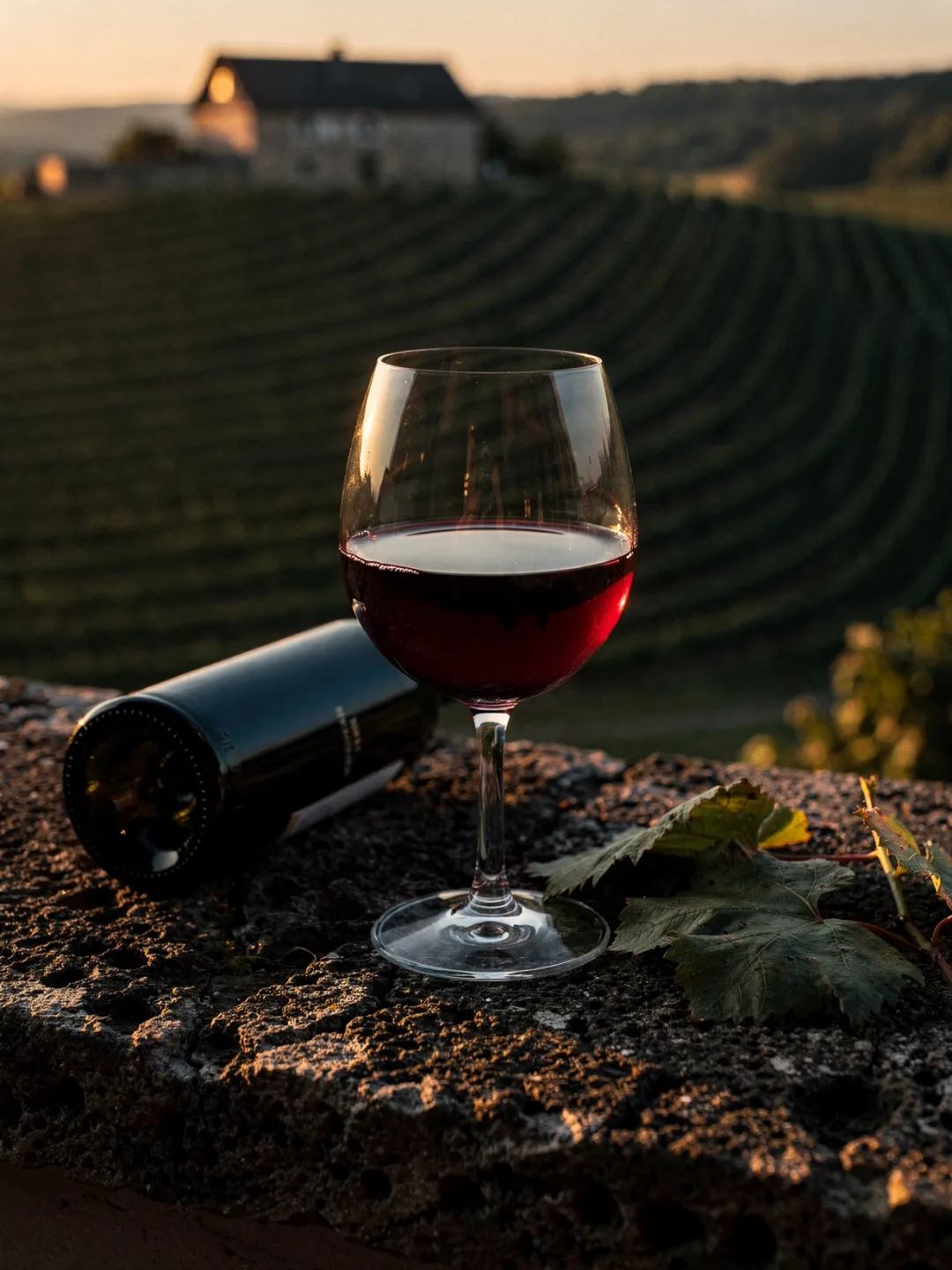
Burgundy glass for Spätburgunder
Glassware
A glass helps decide how a wine tastes, and for Baden's two most important grape varieties, two very different shapes are needed. Badisch Spätburgunder grows in one of the warmest climates in Germany. This gives it more alcohol and riper fruit than its relatives from the Ahr or the Pfalz. A glass with a wide bowl and a narrowing opening, the classic Burgundy glass, gives this fullness room to breathe. The alcohol doesn't sting sharply in the nose within it.
With Gutedel, the exact opposite applies. The variety naturally has low acidity and a restrained aroma, and in a large glass it nearly gets lost. A smaller, more upright glass keeps the little aroma there is concentrated. It's served cool, between eight and ten degrees Celsius, almost like a white wine from Alsace just across the Rhine.
Klingelberger from Durbach demands a middle path. It has more acidity than Gutedel, but the granite soils of the Ortenau make it rounder and less shrill than a Riesling from the Mosel. A slender Riesling glass with a bit more of a bowl lets its aroma of ripe apple and stone fruit breathe. The acidity stays in the background instead of pushing to the front.
When it comes to temperature, Baden often makes things too easy for itself. Because everything here is warmer, the wine often ends up too warm in the glass as well. Sixteen degrees Celsius is plenty for a young Spätburgunder. A Grosses Gewächs from the Kaiserstuhl with ten years of bottle age, on the other hand, can take half an hour in a carafe before its aroma of cherry and undergrowth fully opens up.