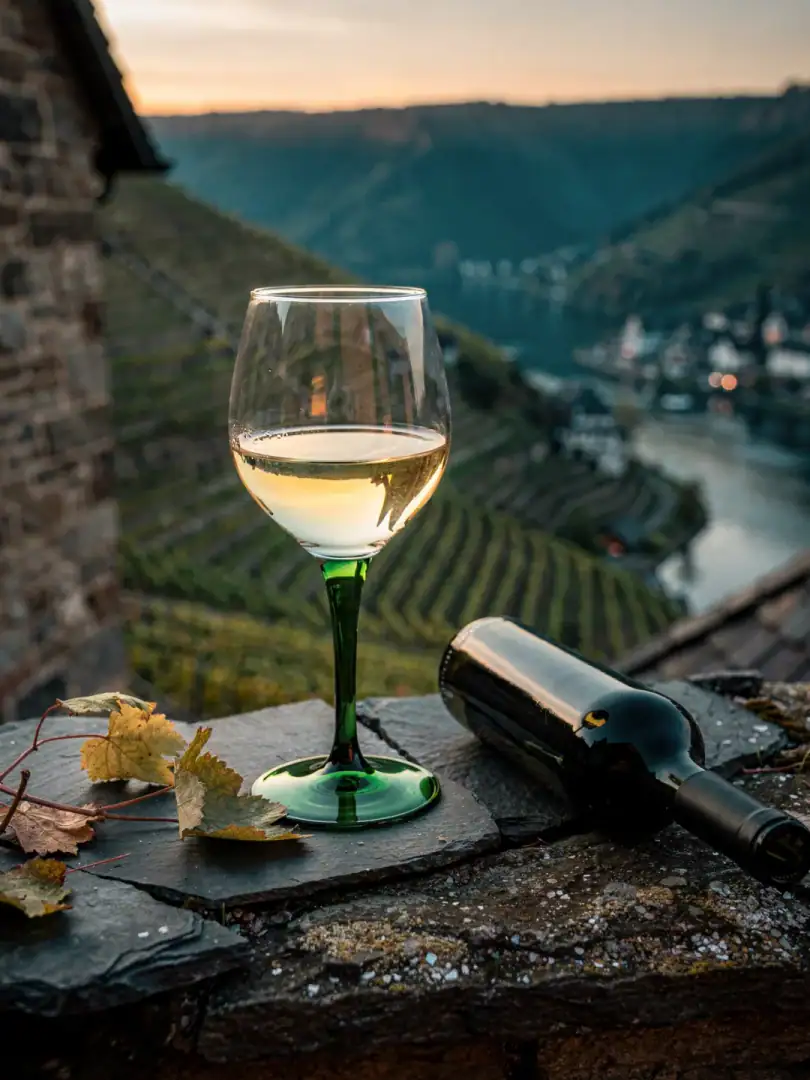
Green Stem, Slender Shape
Glassware
Traditional Mosel glasses are recognizable from a distance: they have a green stem, while glasses from the Rhine carry a brown one. This isn't a matter of fashion — it's an old craft tradition. Green glass was easier to produce with local raw materials, and the color stuck around long after it was technically necessary. Today it appears mostly on the winemaker's own table; for serious tastings, people reach for a clear glass instead.
For Riesling, shape matters far more than color. A narrow glass that tapers slightly toward the top holds the cool, precise aromas together: citrus, green apple, plus that stony note many call mineral. A wide glass, the kind used for heavy red wines, lets these delicate notes escape before they even reach the nose. Less opening, more aroma.
Serving temperature varies more here than for almost any other style of wine, because sweetness plays a role. A dry wine from a steep site like Ürziger Würzgarten is best poured at eight to ten degrees Celsius, colder than many expect, since high acidity can otherwise come across as harsh. A sweet wine with plenty of residual sugar can handle even a touch more chill, so the sweetness doesn't taste heavy but stays held in check by the acidity.
With the rare, very sweet styles, the pour size changes too. An Eiswein, highly concentrated and often carrying over 150 grams of residual sugar per liter, isn't poured like an ordinary wine. It's served in small glasses of fifty to seventy milliliters, barely more than a thimbleful — plenty for an aroma that lingers long on the palate regardless.
One last difference concerns swirling. Because Mosel Riesling rarely brings much alcohol, usually between seven and eleven percent, it unfolds more slowly in the glass than a heavier wine. Swirl and sniff right away, and you'll often miss that calm first nose of pure fruit. Patience pays off here.