Rain Shadow & Warmth
Climate
Two low mountain ranges shield the Nahe like a roof. The Hunsrück and Soonwald intercept the moist westerly winds off the Atlantic before they reach the valley, dropping their rain on their own slopes instead. What's left is around 500 to 600 millimeters of annual rainfall in Bad Kreuznach, right in the heart of the region — noticeably less than in most other German wine regions, and among the driest figures in the country.
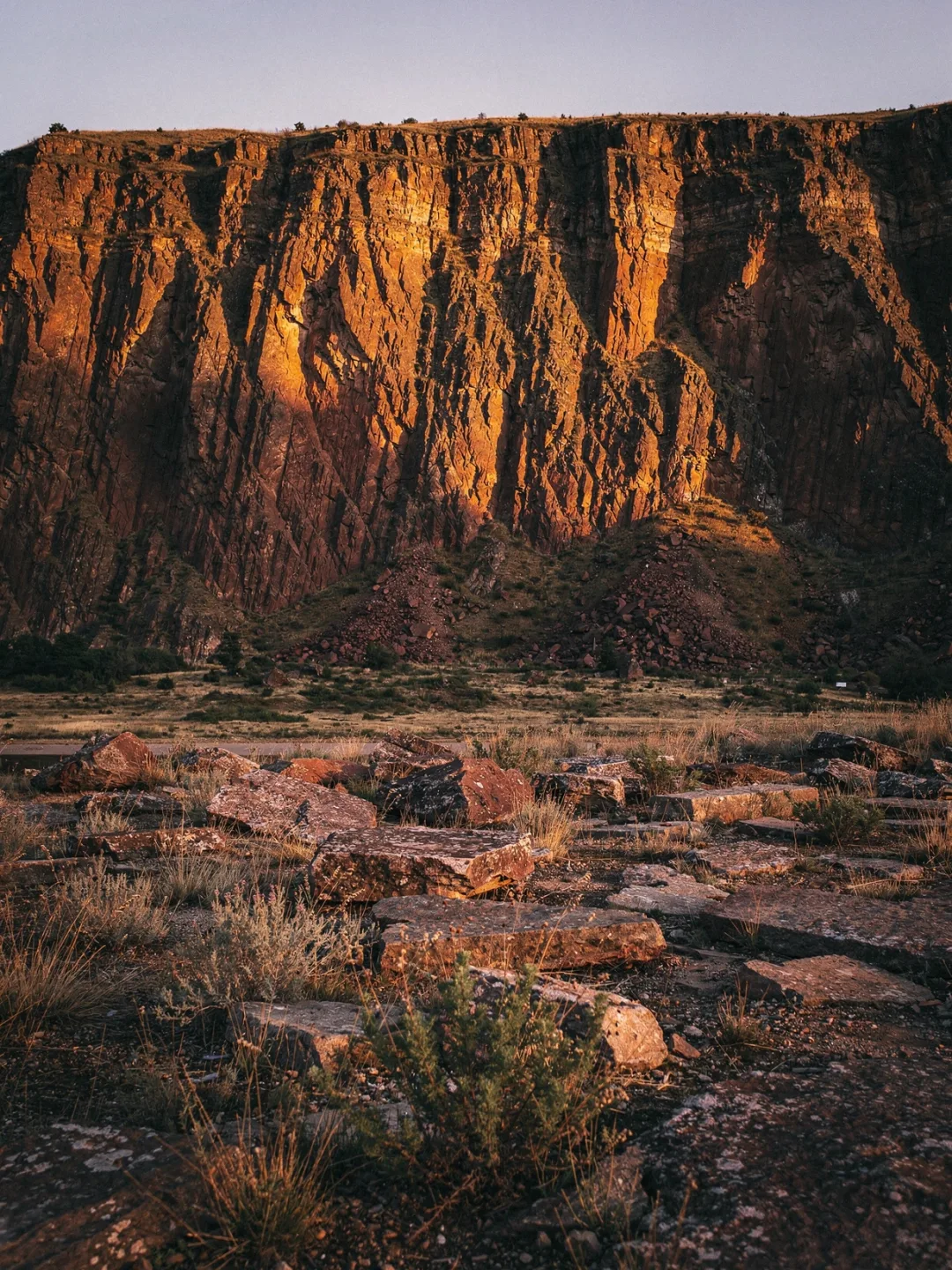
Dryness alone doesn't make a great vineyard. What matters is what happens to the moisture that's saved: the narrow river valleys between Bad Kreuznach and Bad Münster am Stein-Ebernburg store the sun's warmth like a funnel. The bare rock faces release it slowly. At the Rotenfels, it gets so hot and dry that feather grass grows there, a steppe plant more at home in Eastern Europe. Alongside it survive entire communities of heat-loving plants that have grown here since the end of the last Ice Age.
This warmth is distributed unevenly. Around Schlossböckelheim and Traisen, where the Rotenfels turns its dark face to the sun, lie the warmest microclimates in the whole region. Higher sites toward the Hunsrück, by contrast, stay noticeably cooler. It's precisely this variation packed into a small space that lets growers find nearly the right slope for every variety without ever leaving the region.
As everywhere, harvest dates are shifting here too. What once began in early October now often starts in September for early-ripening varieties. In especially hot years, even the late Riesling sites around the Rotenfels ripen markedly earlier than they did thirty years ago. Dry summers, already favored by the rain shadow of the Hunsrück and Soonwald, are becoming a challenge in their own right. What was once an advantage now demands close attention to the water supply of every individual slope.