Riesling & Burgunder
Grape Varieties
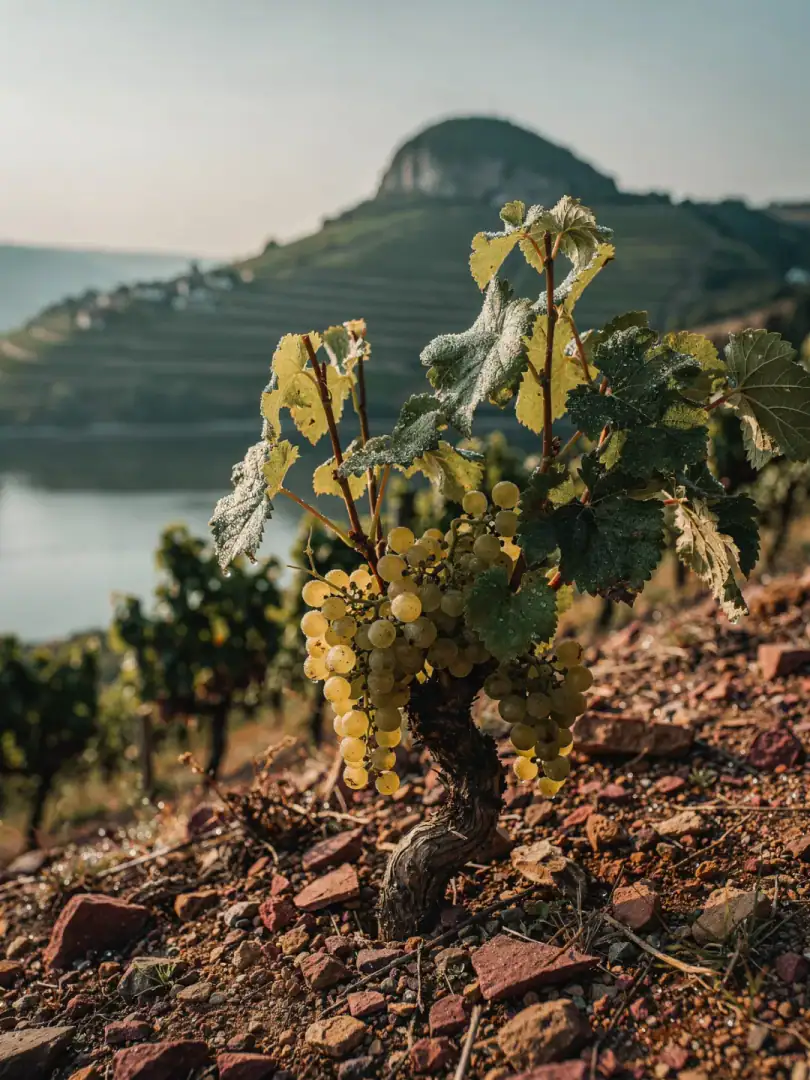
Riesling defines the Nahe like no other variety, covering nearly thirty percent of the vineyard area — surprisingly high for a region that spent centuries in the shadow of larger neighbors. The variety buds and ripens late. That protects it from spring frosts, but demands patience well into October. In the glass it shows high acidity alongside delicate fruit, usually peach or apricot, and it's exactly this balance that makes it so reliable here on the Nahe.
Long before the Riesling boom, another variety called this place home. Müller-Thurgau, a crossing of Riesling and Madeleine Royale, still covers about a tenth of the area. It ripens earlier, asks less of the soil, and for decades gave growers a dependable, if unremarkable, everyday wine. Today it's regarded as something of a footnote. Without it, many estates would hardly have survived the difficult postwar decades.
Almost as important are the Burgunder varieties: Grauburgunder and Weißburgunder together account for over fifteen percent of plantings. They thrive especially well on the loess and loam soils around Bad Kreuznach, where they produce richer, often creamier wines than Riesling. Spätburgunder, the red member of the same family, prefers the heat-retaining porphyry slopes of the middle Nahe. Dornfelder rounds out the reds with darker color and lower acidity, handy for growers wanting a robust red even in less sunny years.
Right at the margins stands the variety that opened this very story. Weißer Orléans, once widespread and now nearly extinct, survived only on that steep slope near Odernheim am Glan, undiscovered and untended for centuries. No estate grows it on any real scale. Still, its rediscovery is a reminder of just how many varieties vanished on the road to today's Riesling dominance.