Peach & Flint
Tasting
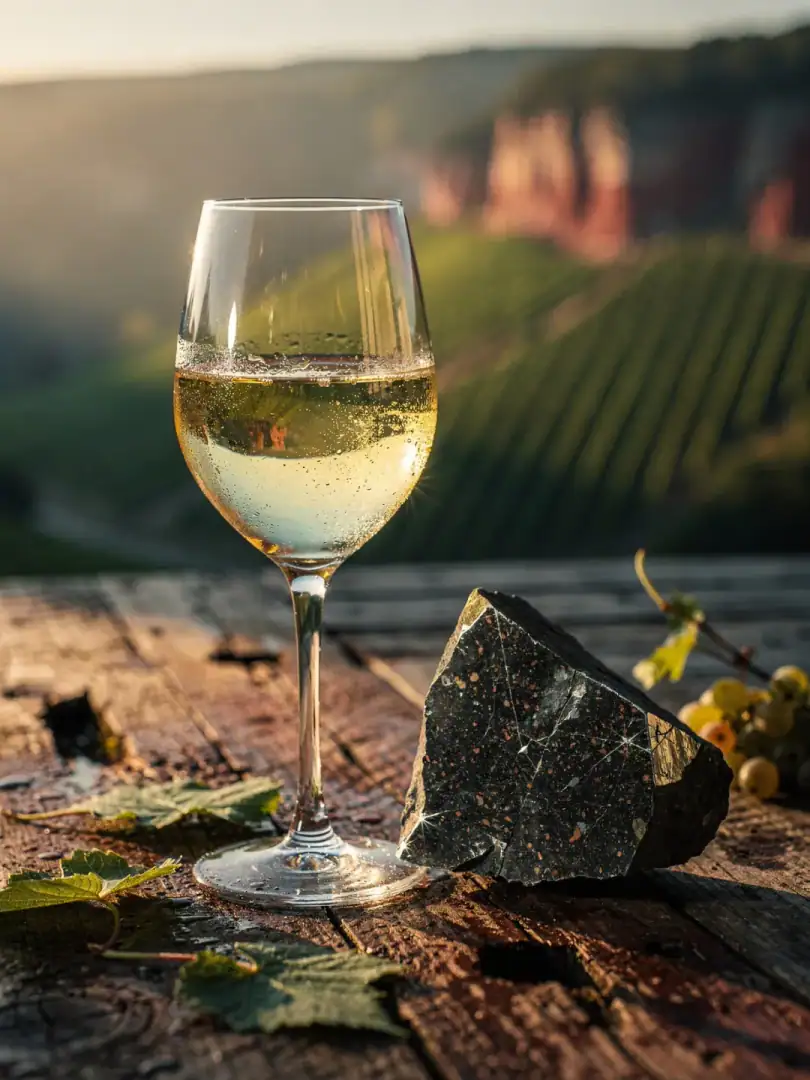
Hold a glass of Nahe Riesling against something white, and you'll usually see a pale green-gold, rarely darker than straw. Only old, noble-sweet vintages, like the legendary 1921 Kupfergrube, shift toward deep amber over the decades. A young, dry Riesling, by contrast, stays pale, almost translucent. That's no coincidence — it's a sign of the cool nights it ripened through.
On the nose, fruit comes first: peach, sometimes apricot, or in cooler sites, green apple. Try Rieslings from the Kupfergrube or other porphyry sites, and you'll often find a smoky note alongside, reminiscent of struck flint. This note doesn't come directly from the rock, as was long believed, but emerges from the interplay of ripeness, yeast, and the particular sulfur compounds found in certain sites. Even so, it remains a reliable marker of origin.
On the palate, acidity strikes first, firm and direct, a legacy of the dry rain shadow behind the Hunsrück and Soonwald. It sits along the sides of the tongue and gets the saliva flowing. Without enough fruit behind it, a wine like this can quickly feel hard and unfinished. But when that acidity meets ripe fruit, it creates the tension for which Nahe Rieslings are so prized among sommeliers.
In the end, what matters is how long the flavor lingers and whether sweetness and acidity stay in balance. A dry Kabinett from Traisen or Norheim often finishes tight, almost saline. A fruity Spätlese pushes back differently: its residual sweetness counters the strong acidity, and it's this interplay, not sweetness alone, that determines whether a wine tastes rounded or merely sweet.