Basalt & Bunter Sandstein
Soils
Climb a few hundred meters up the slope at Pechsteinkopf behind Forst, and the soil changes color. Pale loam gives way to deep, almost black rock: basalt, solidified lava from a single volcanic fissure that opened roughly fifty-three million years ago. It's the only deposit of its kind in the entire Palatinate.
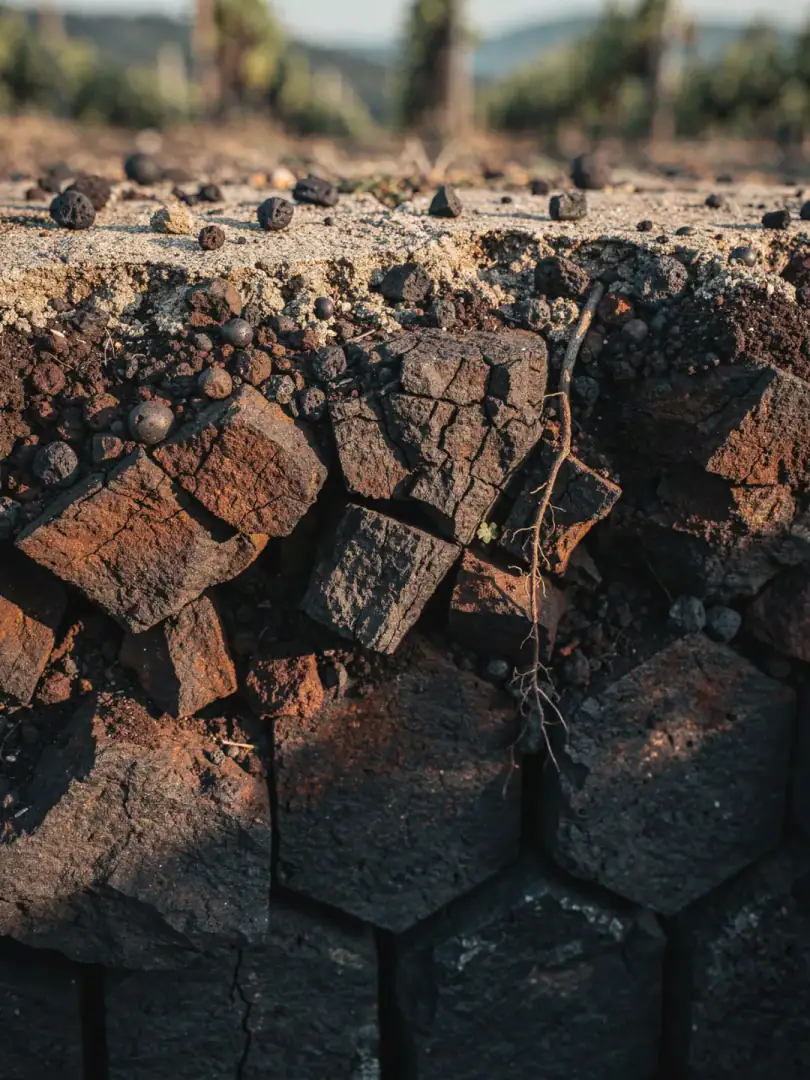
Until the 1980s, basalt was quarried here for roads and railway ballast, and some of the tailings ended up right in the vineyards next door. That was both chance and good fortune. Dark rock stores heat better than pale loam and releases it again at night, exactly what Riesling needs to keep ripening even on cool nights. When quarrying ended, two disused pits remained, which filled with groundwater and today form two small crater lakes in the middle of the Palatinate Forest, just steps from the vines.
The Pechstein is the exception. Across most of the Palatinate lies loess, fine, lime-rich dust. Wind carried it across the land after the last Ice Age, and today it covers almost half of all the vineyards. Loess holds water well, warms up quickly and is easy to work, a soil that produces reliable but rarely thrilling wines. Along the Haardt edge, though, where the Palatinate Forest begins, red Bunter Sandstein comes to the surface, lean and free-draining. It's here that the region's more slender, austere Rieslings grow.
What the vine root actually draws from basalt is not the much-cited mineral taste in the glass. Roots absorb ions, not flavors. The soil works indirectly, through the heat it stores, through the water it holds or drains away, and through the depth to which it forces the root to grow. At Pechstein, the fractured basalt forces roots deep into the cracks, where they still find moisture even in a dry Palatinate summer. That's why wines from this single hectare have carried their own name on the label for decades, while the surrounding land has long since reverted to farmland.
Sandy loam mixed with dark chunks of basalt from the disused quarry next door.
The root: The fine roots here take up whatever the rain brings, and are the first to run dry.